

AI's Role: Beyond Automation to Human Augmentation

Natalie Monbiot discusses how humans can partner with AI, leveraging its strengths while preserving unique human skills and judgment.

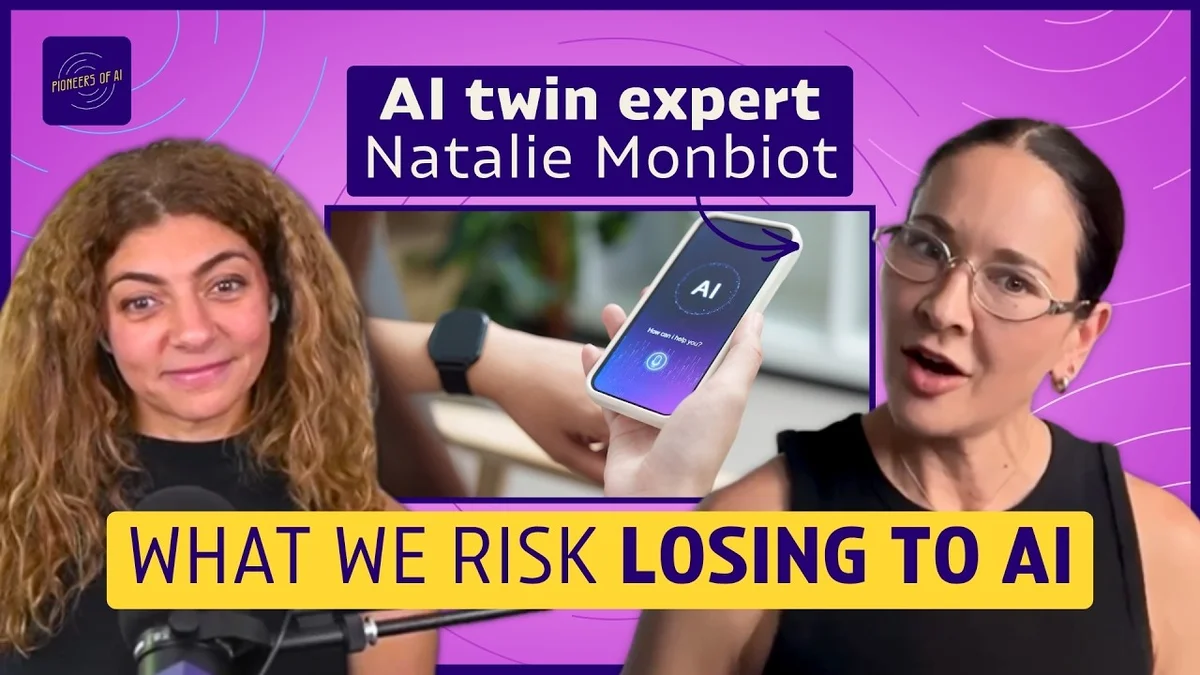
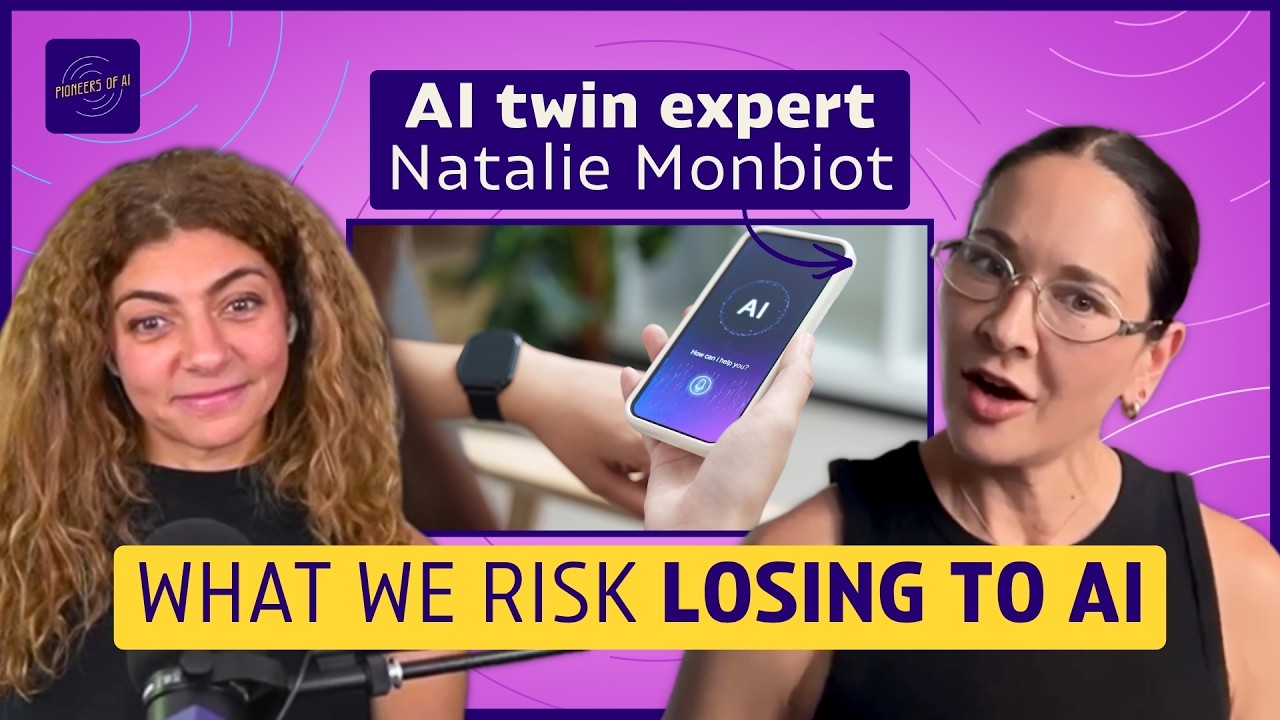
Split screen showing two women discussing AI, one with curly hair and a headset, the other with glasses.
Pioneers of AI
Visual TL;DR
AI Evolves Beyond AutomationDriver
AI systems learn and replicate human knowledge, work, and thinking
Future of WorkOutcome
Emphasis on collaboration between humans and AI systems
From the article 5 mentionsThe conversation underscored that the future of work involves a symbiotic relationship between humans and AI.
Human-AI PartnershipContext
Shifting focus from automation to strategic delegation of tasks
From the article 2 mentionsMonbiot emphasized that as AI becomes more integrated into our professional lives, the focus shifts from mere automation to a more nuanced partnership, where humans must strategically delegate tasks to AI while preserving their unique value.
Digital Twins ExtendCore
AI systems as digital replicas of our knowledge and work
From the articleMonbiot highlighted that the concept of a 'digital twin' is no longer solely about creating a digital replica of oneself.
Preserving Human ValueContext
Maintaining unique human skills and judgment in AI collaboration
From the article 2 mentionsMonbiot emphasized that as AI becomes more integrated into our professional lives, the focus shifts from mere automation to a more nuanced partnership, where humans must strategically delegate tasks to AI while preserving their unique value.
Human Judgment CrucialContext
Essential for tasks requiring oversight and nuanced decision-making
From the article 5 mentionsMonbiot's own process, for instance, involves using AI for voice note transcription and initial drafting, but she emphasizes the crucial human element of refining, editing, and adding original thought.
Strategic Task DelegationContext
Deciding which tasks are best suited for AI and humans
AI Augments HumansEffect
Leveraging AI strengths while enhancing human capabilities
From the article 9+ mentionsThis requires a conscious effort to maintain a clear distinction and to ensure that AI serves as a tool to augment, rather than replace, human ingenuity.
Contents(5)

In a recent discussion on "Pioneers of AI," Natalie Monbiot, founder of the Virtual Human Economy, explored the evolving relationship between humans and their AI counterparts, particularly in the context of work and creativity. Monbiot emphasized that as AI becomes more integrated into our professional lives, the focus shifts from mere automation to a more nuanced partnership, where humans must strategically delegate tasks to AI while preserving their unique value.

The Evolving Nature of AI Collaboration

Monbiot highlighted that the concept of a 'digital twin' is no longer solely about creating a digital replica of oneself. Instead, it extends to the AI systems that learn and replicate our knowledge, work, and even aspects of our thinking. This evolution means that individuals and organizations are constantly deciding which tasks are best suited for AI and which require human oversight and judgment. The key, she suggests, lies in understanding the distinct capabilities of both humans and AI to create a symbiotic relationship.

The Division of Labor: A Historical and AI Perspective

Drawing a parallel to Adam Smith's concept of the division of labor in manufacturing, Monbiot discussed how AI is creating a 'cognitive division of labor.' While Smith noted that dividing tasks in a pin factory led to immense efficiency, he also cautioned about the dehumanizing aspect of repetitive work. Monbiot points out that with AI, the risk is not just about repetitive tasks but about the potential for AI to take over the 'thinking' itself, potentially leading to the atrophy of human cognitive skills.

The full discussion can be found on Pioneers of AI's YouTube channel.

Drawing the line between you and your AI twin (w/ Natalie Monbiot) | Pioneers of AI - Pioneers of AI
Drawing the line between you and your AI twin (w/ Natalie Monbiot) | Pioneers of AI, from Pioneers of AI

She stressed that simply offloading all tasks to AI is a flawed strategy. Instead, the focus should be on creating a partnership where AI handles the routine and data-intensive aspects, such as synthesizing information or generating initial drafts, thereby freeing up human capacity for more creative, strategic, and judgment-based work. Monbiot's own process, for instance, involves using AI for voice note transcription and initial drafting, but she emphasizes the crucial human element of refining, editing, and adding original thought.

Preserving Human Value in the Age of AI

Monbiot argued that the true value humans bring in an AI-augmented world lies in their unique qualities: creativity, critical thinking, emotional intelligence, and the ability to make nuanced judgments. She cautioned against a scenario where humans become mere passive recipients of AI-generated outputs, leading to a 'flattening of thought' and a loss of essential human skills. The goal, she posited, should be to use AI to enhance human capabilities, not replace them entirely, especially in areas requiring originality and deep understanding.

The Importance of Human Judgment

Monbiot shared a personal anecdote about a consultant who realized that his value wasn't just in his knowledge, but in his presence, network, and the trust he had built with clients. This highlights that AI can replicate knowledge and skills, but it cannot easily replicate the human element of relationship-building and nuanced judgment. Therefore, the crucial task for individuals and organizations is to identify which tasks leverage unique human strengths and which can be effectively delegated to AI. This requires a conscious effort to maintain a clear distinction and to ensure that AI serves as a tool to augment, rather than replace, human ingenuity.

The Future of Work: Collaboration, Not Replacement

The conversation underscored that the future of work involves a symbiotic relationship between humans and AI. By strategically dividing labor and focusing on human strengths like creativity and critical thinking, individuals and organizations can harness the power of AI to achieve greater efficiency and innovation. The key is to view AI not as a replacement for human intellect, but as a powerful collaborator that can amplify our own capabilities.

© 2026 StartupHub.ai. All rights reserved. You may not republish this article in full without a license. Search engines and AI research tools may crawl and summarize for reference. Bulk reproduction or model training requires a license. See our terms.
Daniel Singer

Written by

Daniel Singer

Editor, StartupHub.ai

Daniel Singer is the editor of StartupHub.ai, a technology expert and thought leader on AI and its applications across sectors, from fintech and healthcare to developer tooling and consumer software. He writes and tests the tools covered here thoroughly and regularly, and built StartupHub.ai to give founders, operators and buyers a clearer read on what they are actually being sold.