Visual TL;DR
The 'Harness' as OutputContext
AI systems generate their own adaptive rules and structures
From the article 8 mentionsA key insight Chandegra shares is that in adaptive engineering, the "harness" itself becomes an output, rather than a static input.
Complicated vs. ComplexContext
distinguishing between solvable and emergent problem spaces
From the article 4 mentionsChandegra draws a distinction between "complicated" problems and "complex" problems.
Rajiv Chandegra (Annicha Labs)Core
proposes shift from fixed to adaptive AI engineering
From the articleRajiv Chandegra of Annicha Labs proposes a shift in AI engineering, moving beyond rigid, pre-defined systems towards a more dynamic and responsive approach.
Fixed Harness LimitationsDriver
rigid, pre-defined frameworks struggle with dynamic environments
From the article 3 mentionsTo address these limitations, Chandegra introduces the concept of "adaptive engineering." In this model, the harness is not pre-defined but emerges dynamically from the interactions of agents.
Introducing Adaptive EngineeringContext
moving beyond static, prescriptive frameworks for AI development
From the article 7 mentionsChandegra explains that adaptive engineering requires a fundamental shift in how we think about AI systems.
Emergent, Self-Organizing SystemsEffect
AI agents that can adapt and evolve in real-time
From the article 2 mentionsThe result is a self-organizing, constantly evolving, multi-agent system where the harness is not a fixed blueprint but a dynamic emergent property.
Future of AI EngineeringOutcome
dynamic, responsive AI development for evolving challenges
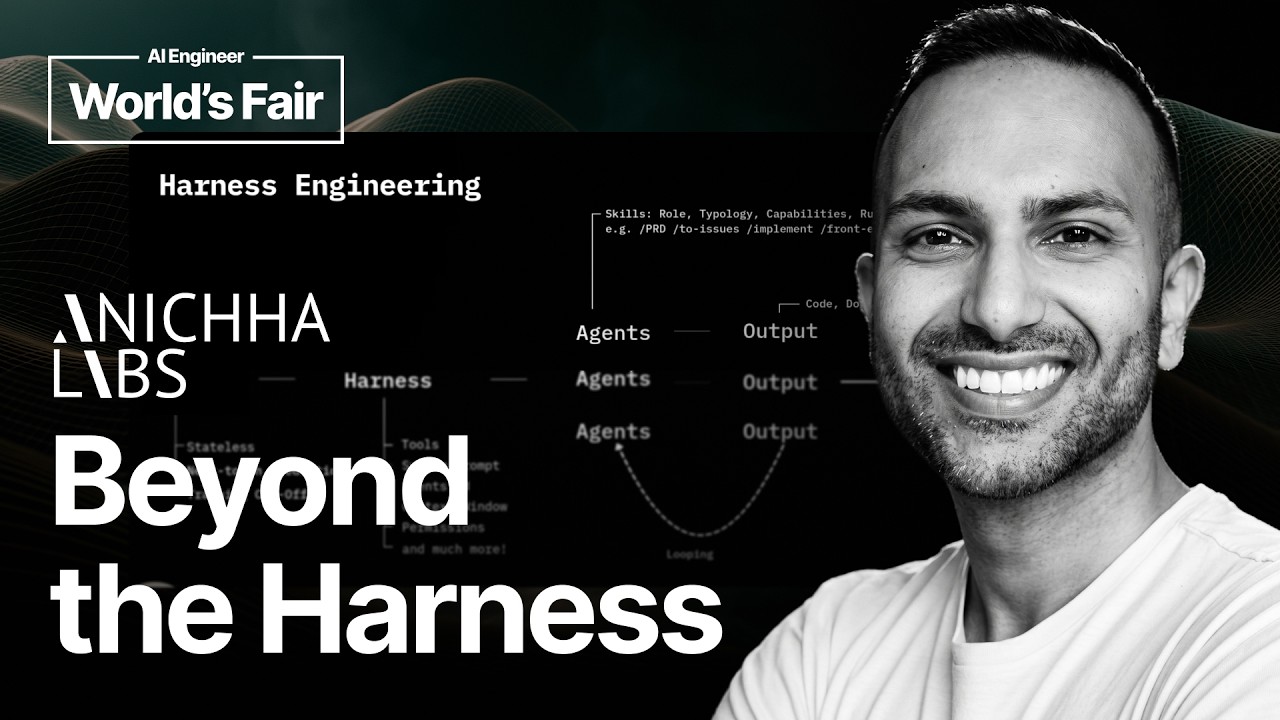
From the article 9+ mentionsIn his presentation, "Beyond the Harness: A Journey Towards adaptive engineering," Chandegra argues that the future of AI development lies in creating systems that can adapt and evolve in real-time, rather than relying on static, prescriptive frameworks.