


AI Pen Testing: Open Source AI Finds 23 Flaws in Mock Network

IBM security experts discussed an experiment where the AI agent OpenClaw found 23 vulnerabilities in a mock network, highlighting AI's potential and challenges in cybersecurity.

3 min read
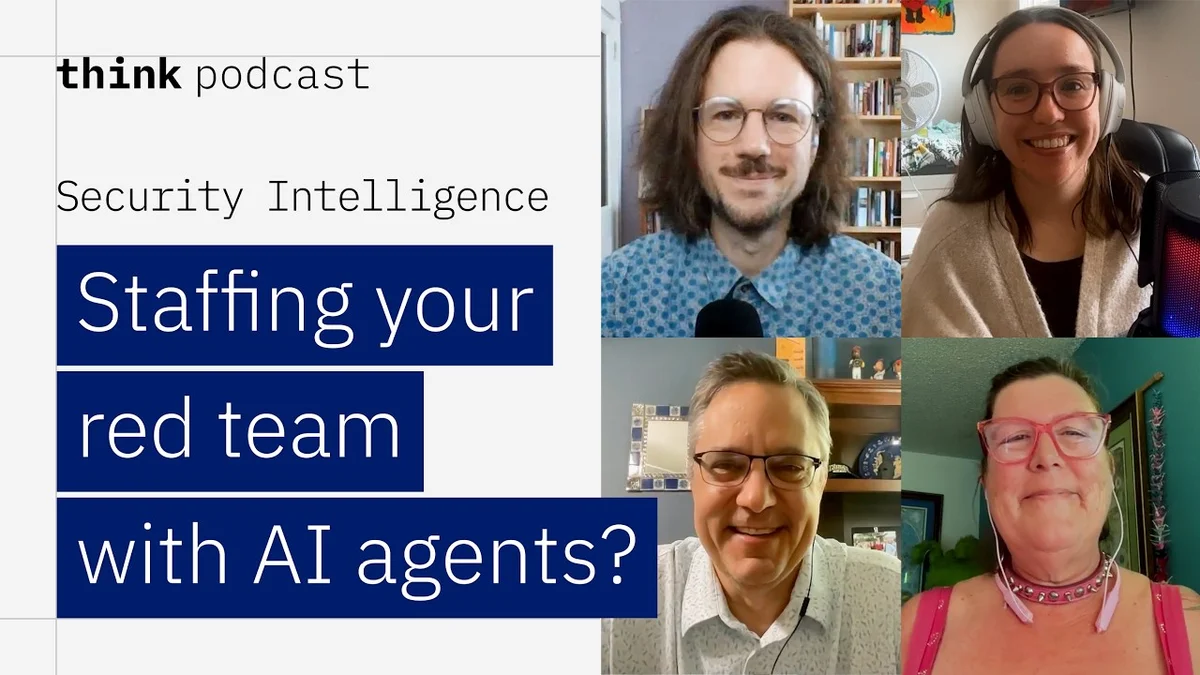
Matt Kosinski, host of Security Intelligence, speaking on a video call.
Image credit: Security Intelligence· IBM

In a recent discussion on the Security Intelligence podcast, IBM's Matt Kosinski, Claire Nuñez, and Kimmie Farrington explored the evolving role of AI in cybersecurity, particularly in the context of automated penetration testing. The team recounted an experiment where an open-source AI agent, OpenClaw, was deployed to identify vulnerabilities within a simulated legacy network.

The experiment aimed to test the capabilities of AI agents in mimicking human red team operators. OpenClaw was instructed to act as a penetration tester, given the broad goal of finding and potentially exploiting weaknesses in the target environment. The results were notable: the AI identified a significant number of actionable findings, specifically 23 high-quality vulnerabilities, within the given timeframe.
The OpenClaw Experiment

The core of the discussion revolved around the effectiveness and limitations of using AI for penetration testing. The participants acknowledged that while AI can automate many tasks, the nuances of security testing often require human intuition and judgment. However, the experiment with OpenClaw demonstrated a promising step towards AI-assisted security assessments.

Related startups

The full discussion can be found on IBM's YouTube channel.

Should you let OpenClaw pen test your system? Plus: Cybersecurity for ephemeral software - IBM
Should you let OpenClaw pen test your system? Plus: Cybersecurity for ephemeral software — from IBM

The AI agent was able to navigate the simulated network, identify potential entry points, and discover vulnerabilities that might be time-consuming or easily missed by human testers. This capability is particularly relevant in today's rapidly evolving threat landscape, where the sheer volume of data and complexity of systems can overwhelm human security teams.

AI's Role in Security: Promise and Peril

Claire Nuñez highlighted a critical aspect of the experiment: the need for guardrails. While AI can be a powerful tool for finding vulnerabilities, it can also be unpredictable. The team noted that without proper constraints, an AI agent could potentially cause unintended damage or engage in actions that are not aligned with the security team's objectives.

This led to a discussion about how to best integrate AI into security workflows. The consensus was that AI should be viewed as an augmentation tool, rather than a replacement for human expertise. The human element remains crucial for contextualizing findings, prioritizing remediation efforts, and making strategic decisions based on the AI's output.

Kimmie Farrington, speaking from a security detection engineer's perspective, expressed a cautious optimism. She noted that while AI agents like OpenClaw are impressive, their direct application in live environments would require robust safety mechanisms. The goal is to leverage AI to enhance efficiency and uncover threats, not to introduce new risks.

The Future of AI in Cybersecurity

The conversation touched upon the broader implications of AI in cybersecurity, including the potential for AI to both create and defend against threats. As AI models become more sophisticated, they can be used by attackers to discover novel exploits or automate malicious activities at scale. Therefore, defensive AI tools are essential for staying ahead.

The experiment with OpenClaw serves as a valuable case study, illustrating the current state and future potential of AI in offensive security operations. It underscores the importance of ongoing research and development in ensuring these powerful tools are used responsibly and effectively to bolster organizational security.

As AI continues to advance, the security industry will likely see more sophisticated AI agents capable of performing complex tasks, but the critical role of human oversight and ethical considerations will remain paramount.

© 2026 StartupHub.ai. All rights reserved. Do not enter, scrape, copy, reproduce, or republish this article in whole or in part. Use as input to AI training, fine-tuning, retrieval-augmented generation, or any machine-learning system is prohibited without written license. Substantially-similar derivative works will be pursued to the fullest extent of applicable copyright, database, and computer-misuse laws. See our terms.