

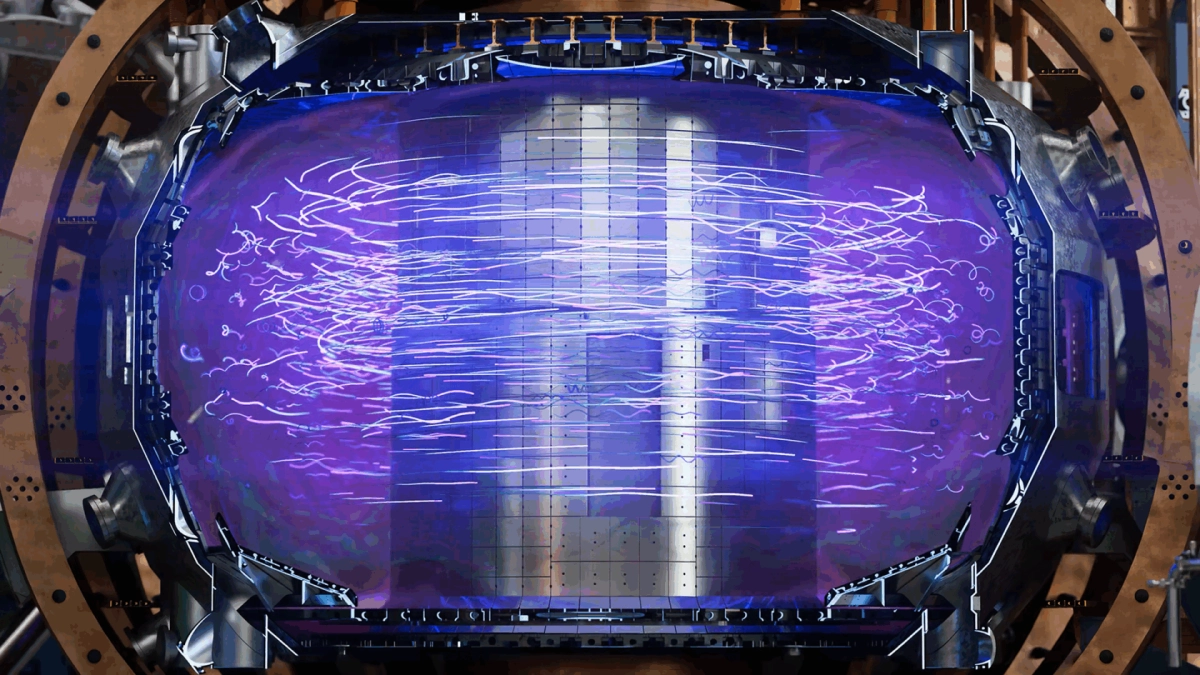
NVIDIA and General Atomics have unveiled an AI-enabled digital twin for fusion reactors, a critical advancement in the pursuit of clean energy. This collaboration, leveraging NVIDIA's Omniverse platform and supercomputing resources, aims to dramatically accelerate the path to commercial AI fusion energy. According to the announcement, this groundbreaking project marks a significant shift in how fusion research is conducted, moving from slow, physical experimentation to rapid, virtual iteration.
The core challenge in fusion remains controlling superheated plasma, a volatile state of matter reaching hundreds of millions of degrees Celsius. Traditionally, simulating this behavior to prevent reactor damage consumed weeks of supercomputer time, severely limiting research velocity. Now, AI surrogate models, trained on decades of real-world data, can predict complex plasma dynamics in mere seconds, fundamentally changing the research paradigm. These models, including EFIT for plasma equilibrium and CAKE for boundary prediction, run on NVIDIA GPUs, offering real-time insights superior to conventional physics-based simulations. This computational leap allows operators to maintain plasma stability and rapidly iterate on experimental designs, crucial for taming the "bottled star" metaphor that defines fusion's promise.
The Digital Twin Advantage
The centerpiece of this effort is a fully interactive digital twin of the DIII-D National Fusion Facility, built within NVIDIA Omniverse. This virtual reactor dynamically integrates sensor data, physics simulations, engineering models, and the new AI surrogates into a unified, real-time environment. It allows an international team of 700 scientists from 100 organizations to conduct "what-if" scenarios and refine experimental parameters without risking the physical machine. Key controls can be explored and optimized in the digital twin, enabling rapid progress toward commercial fusion before any real-world experiments are run.
This approach fundamentally redefines fusion research, shifting it from a purely physics-driven endeavor to one heavily augmented by advanced computing and intelligent algorithms. The digital twin acts as a true "fusion accelerator," enabling rapid testing of novel ideas and optimizing reactor designs at an unprecedented pace. This interactive capability is a game-changer for a field historically constrained by slow, expensive physical experiments, promising to unlock efficiencies previously unimaginable.
The implications for AI fusion energy are profound; by turning weeks of simulation into seconds of interactive feedback, this digital twin promises to compress decades of research into a fraction of the time. This collaboration between NVIDIA and General Atomics represents a tangible step toward making limitless, clean fusion power a commercial reality. It signals a new era for energy innovation, where AI and digital twins become indispensable tools in solving humanity's most complex scientific challenges.