


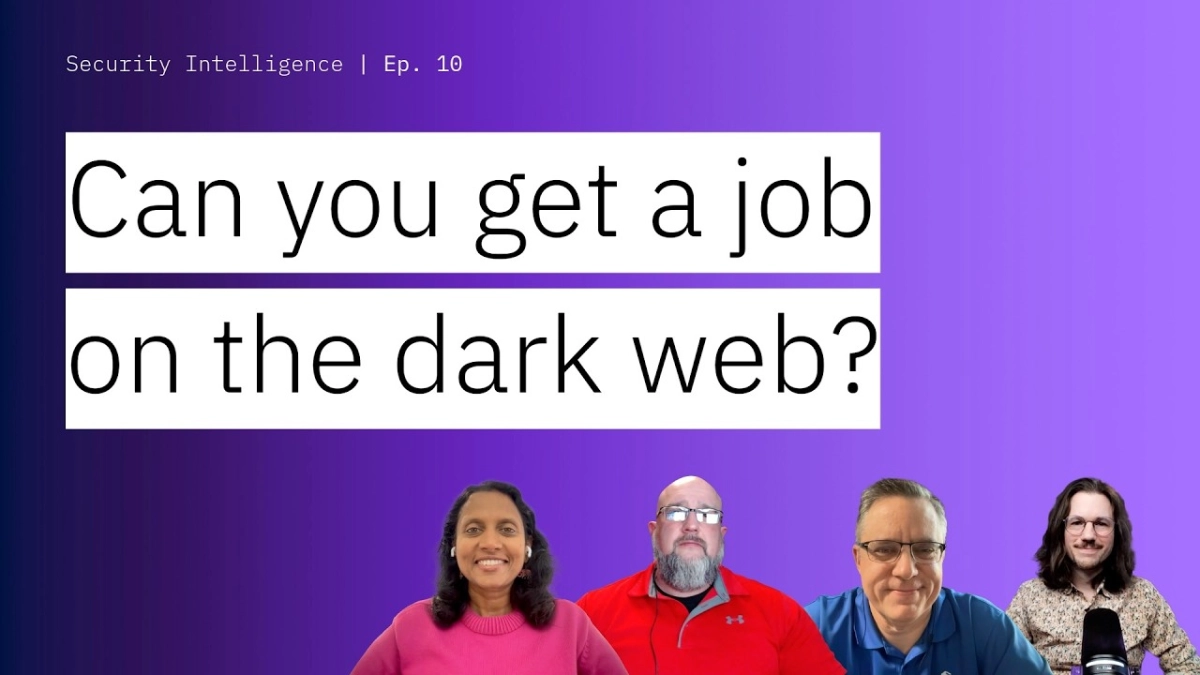
The intersection of artificial intelligence and cybercrime is a rapidly evolving landscape, as highlighted in a recent Security Intelligence podcast episode featuring IBM X-Force experts. Host Matt Kosinski, joined by Suja Viswesan and Dave McGinnis, delved into how threat actors are leveraging AI to enhance their illicit operations, from sophisticated fraud schemes to the burgeoning dark web job market. The discussion also touched upon the critical need for proactive security measures and collaborative efforts in this dynamic digital environment.
"I am thankful that many enterprises are coming together to fight this," remarked Suja Viswesan, Vice President of Security Products at IBM, emphasizing a crucial shift in the cybersecurity paradigm. She elaborated on this sentiment, stating, "It's not a competition anymore; it's cooperation. Everybody coming together to fight this." This collaborative spirit is vital as threat actors become increasingly sophisticated, utilizing generative AI to create convincing phishing campaigns, deepfakes, and even AI-powered malware. The ease with which AI can now automate and scale these malicious activities presents a significant challenge to both individuals and organizations.
One of the key insights from the discussion was the alarming rise of AI-driven fraud rings. These sophisticated operations are not merely opportunistic; they are meticulously designed to exploit vulnerabilities and human psychology. "AI fraud schemes are getting quite elaborate," noted Nick Bradley, X-Force Incident Command, underscoring the advanced tactics employed. The podcast detailed how these schemes often involve creating highly convincing fake websites, advertisements, and even personalized phishing emails that are difficult to distinguish from legitimate communications. This sophistication is amplified by AI's ability to analyze vast datasets and identify patterns, allowing threat actors to target individuals with unprecedented precision.
The report on the dark web job market also painted a concerning picture. As AI tools become more accessible, they are democratizing cybercrime, lowering the barrier to entry for aspiring malicious actors. The dark web is now a thriving marketplace for cyber talent, offering specialized roles for individuals with skills in areas such as AI exploitation, social engineering, and malware development. "The dark web job market thrives," Kosinski observed, highlighting the constant demand for skilled cybercriminals. This illicit economy fuels the proliferation of advanced threats, creating a continuous cycle of innovation and adaptation in the cyber threat landscape.
Related Reading
- Bridging the Enterprise AI Gap: Fine-Tuning LLMs on Google Cloud
- Enterprise AI's Next Frontier: Deep Research on Private Data
- AI Industry's Ascendant Influence in Washington
Furthermore, the discussion shed light on the innovative, albeit illicit, applications of AI. The story of an insider threat who attempted to repurpose wind turbines for cryptojacking operations served as a stark reminder of the creative ways malicious actors are seeking to exploit technology. While the individual was ultimately caught, the audacious nature of the scheme underscored the need for robust internal security protocols and vigilant monitoring of all network-connected assets. This incident, though somewhat outlandish, illustrates the lengths to which threat actors will go to monetize their activities, even by repurposing critical infrastructure.
In conclusion, the podcast episode provided a comprehensive overview of the current threat landscape, emphasizing the significant impact of AI on cybercrime. The insights shared by the IBM X-Force team underscored the escalating sophistication of threat actors and the critical need for organizations to adopt a proactive, collaborative, and technologically advanced approach to cybersecurity. As AI continues to evolve, so too must our defenses, ensuring that the tools designed for progress are not exploited for malicious purposes.


