

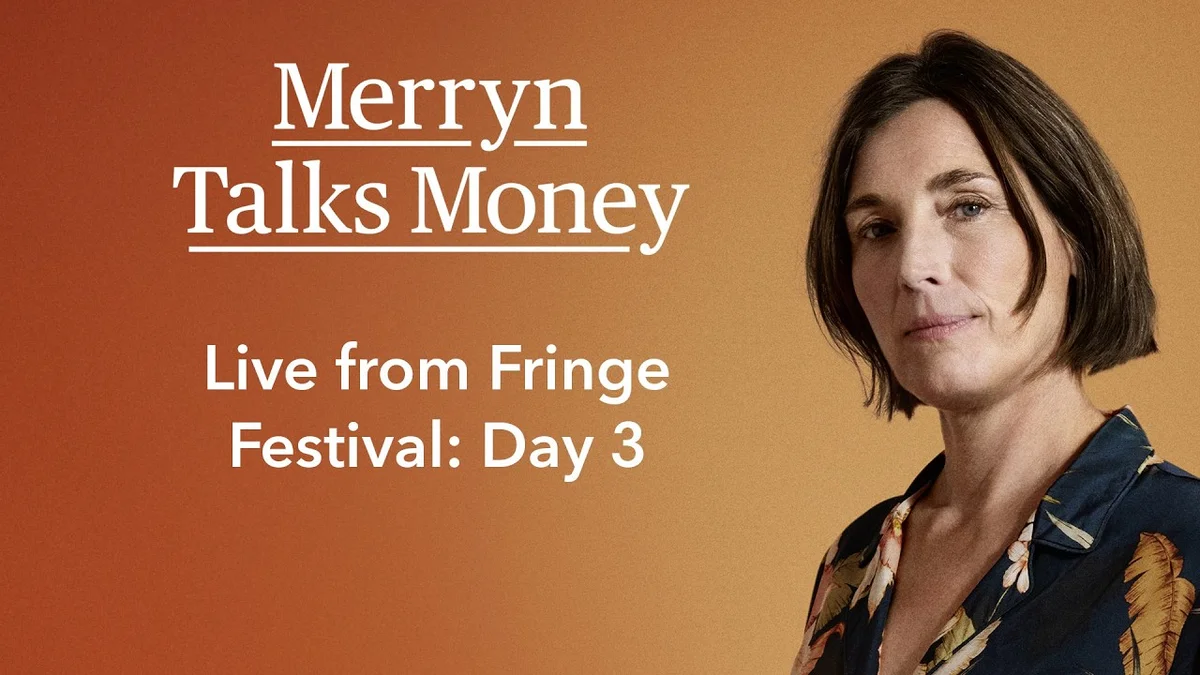
AI debt Big Tech new economic order debated

Merryn Talks Money panel says US debt, Big Tech monopolies and consumable AI chips are dismantling the postwar economic order.

S
StartupHub.ai Staff
3 min read
Panel discussion on AI, debt and Big Tech forming a new economic order on stage
Merryn Talks Money live panel debates debt, Big Tech monopolies and AI infrastructure durability.· Bloomberg Podcast
Visual TL;DR
US Debt CrisisDriver
US debt now exceeds defense spending, with 6-8% yields flagged as unsustainable
From the article 3 mentionsAI debt Big Tech new economic order is already here, argued a Bloomberg Podcast panel of Merryn Talks Money live with Orbis chairman Alec Cutler, Bloomberg columnist Adrian Wooldridge and former ambassador Nick Hopton.
Big Tech MonopoliesCore
Big Tech compared to East India Company, wielding immense economic and political power
From the articleAI debt Big Tech new economic order is already here, argued a Bloomberg Podcast panel of Merryn Talks Money live with Orbis chairman Alec Cutler, Bloomberg columnist Adrian Wooldridge and former ambassador Nick Hopton.
Financial RepressionEffect
debasement and money printing favor debtors, crushing creditors like Japan and S. Korea
From the articleThe next step he warned is classic financial repression, forcing domestic banks and citizens to hold government bonds at suppressed yields.
New Economic OrderOutcome
postwar economic order dismantled by debt, Big Tech, and AI's rapid development
From the article 3 mentionsAI debt Big Tech new economic order is already here, argued a Bloomberg Podcast panel of Merryn Talks Money live with Orbis chairman Alec Cutler, Bloomberg columnist Adrian Wooldridge and former ambassador Nick Hopton.
AI Infrastructure DebtDriver
concerns about AI infrastructure surviving a bust, especially with consumable AI chips
From the article 3 mentionsMoral Sentiments for AI and humanity, Wealth of Nations for debt, monopoly and the state.
Adam Smith FrameworkContext
panel used Smith's Moral Sentiments and Wealth of Nations to frame the debate
US Debt CrisisDriver
US debt now exceeds defense spending, with 6-8% yields flagged as unsustainable
From the article 3 mentionsAI debt Big Tech new economic order is already here, argued a Bloomberg Podcast panel of Merryn Talks Money live with Orbis chairman Alec Cutler, Bloomberg columnist Adrian Wooldridge and former ambassador Nick Hopton.
Big Tech MonopoliesCore
Big Tech compared to East India Company, wielding immense economic and political power
From the articleAI debt Big Tech new economic order is already here, argued a Bloomberg Podcast panel of Merryn Talks Money live with Orbis chairman Alec Cutler, Bloomberg columnist Adrian Wooldridge and former ambassador Nick Hopton.
Financial RepressionEffect
debasement and money printing favor debtors, crushing creditors like Japan and S. Korea
From the articleThe next step he warned is classic financial repression, forcing domestic banks and citizens to hold government bonds at suppressed yields.
Security Ties LinkEffect
From the articleThe US, he said, now leans on trade and security ties to keep Japan and South Korea buying Treasuries, while the mention of North Korea underscores how security pressure and bond demand are being linked.
New Economic OrderOutcome
postwar economic order dismantled by debt, Big Tech, and AI's rapid development
From the article 3 mentionsAI debt Big Tech new economic order is already here, argued a Bloomberg Podcast panel of Merryn Talks Money live with Orbis chairman Alec Cutler, Bloomberg columnist Adrian Wooldridge and former ambassador Nick Hopton.
Money HidingContext
discussion on where money is hiding instead of traditional investments
From the article 2 mentionsCutler cited Smith on debasement favoring debtors and crushing creditors, updated as devaluation and money printing.
Contents(4)

AI debt Big Tech new economic order is already here, argued a Bloomberg Podcast panel of Merryn Talks Money live with Orbis chairman Alec Cutler, Bloomberg columnist Adrian Wooldridge and former ambassador Nick Hopton.

The frame was Adam Smith. Moral Sentiments for AI and humanity, Wealth of Nations for debt, monopoly and the state.

Is US debt forcing financial repression?

Cutler cited Smith on debasement favoring debtors and crushing creditors, updated as devaluation and money printing.

The full discussion can be found on Bloomberg Podcast's YouTube channel.

Are AI, Debt and Big Tech Creating a New Economic Order? | Merryn Talks Money - Bloomberg Podcast
Are AI, Debt and Big Tech Creating a New Economic Order? | Merryn Talks Money, from Bloomberg Podcast

The US, he said, now leans on trade and security ties to keep Japan and South Korea buying Treasuries, while the mention of North Korea underscores how security pressure and bond demand are being linked.

Yields keep climbing, with 6% to 8% flagged as unsustainable, and annual interest now exceeds defense spending.

With $3 trillion in new issuance needed yearly, demand is thinning as UK defined benefit buyers fade and DC pensions do not replace them.

The next step he warned is classic financial repression, forcing domestic banks and citizens to hold government bonds at suppressed yields.

Smith warned public debt enfeebles every state that adopts it and is rarely repaid, leaving sovereignty fragile.

Are Big Tech the new East India Company?

Wooldridge argued Smith hated the East India Company because it held an exclusive state license, not a market charter.

The mid-19th century breakthrough was wholesale limited liability, companies became little republics restrained by boards and shareholders.

That restraint is now eroding. State ownership is spreading, the US is taking equity stakes, and EU regulation and the Draghi report explicitly encourage oligopoly for scale.

Founder control completes the reversal. Meta was cited as 13% economic ownership delivering 52% of voting power, making the CEO effectively unconstrained.

With privileged government relationships in defense and space, these firms look less like market companies and more like chartered monopolies.

Will AI infrastructure survive a bust?

The panel likened the AI buildout to the 19th century railroad boom that seeded bank panics from 1873 to 1893.

Fiber optics was the better parallel, names like Global Crossing and MCI failed but the cables still carry traffic 70 years later while rails have lasted 200 years.

Cutler said AI is different. About 85% of AI spend is nvidia chipsets that are consumable and obsolete in five years, only the shells, power lines and generators are durable.

When the cycle turns, the country keeps warehouses and power connections, not lasting digital rails.

Where is money hiding instead?

As a trader you can buy Treasuries for a bounce, as a fiduciary Cutler said he cannot.

His book: hold gold at 8.5% today, down from 13% and up from 6% over ten years versus zero before the era of unchecked spending, plus Norwegian bonds with a $2 trillion net cash surplus and similar yield to Treasuries.

Other picks named were Icelandic, Brazilian and Australian bonds, TIPS, and North Sea pure plays Ithaca, Serica, Harbor Energy and Hunting if UK policy reverses.

The new order, Hopton argued, is not Bretton Woods 2.0 but a return to 19th century great power politics, with a handful of leaders able to reorder markets by fiat.

© 2026 StartupHub.ai. All rights reserved. You may not republish this article in full without a license. Search engines and AI research tools may crawl and summarize for reference. Bulk reproduction or model training requires a license. See our terms.
S

Written by

StartupHub.ai Staff

Editorial team

The staff writers of StartupHub.ai, ranging from investment analysts to avid AI tool users, early adopters and critical enthusiasts. Backgrounds span engineering, business and the arts. We hold every piece to rigorous standards of research and review.