

Nvidia's Huang: AI Job Fears Are 'Nonsense'

Nvidia CEO Jensen Huang dismisses AI job loss fears as 'nonsense,' arguing AI actually drives demand for more software engineers.

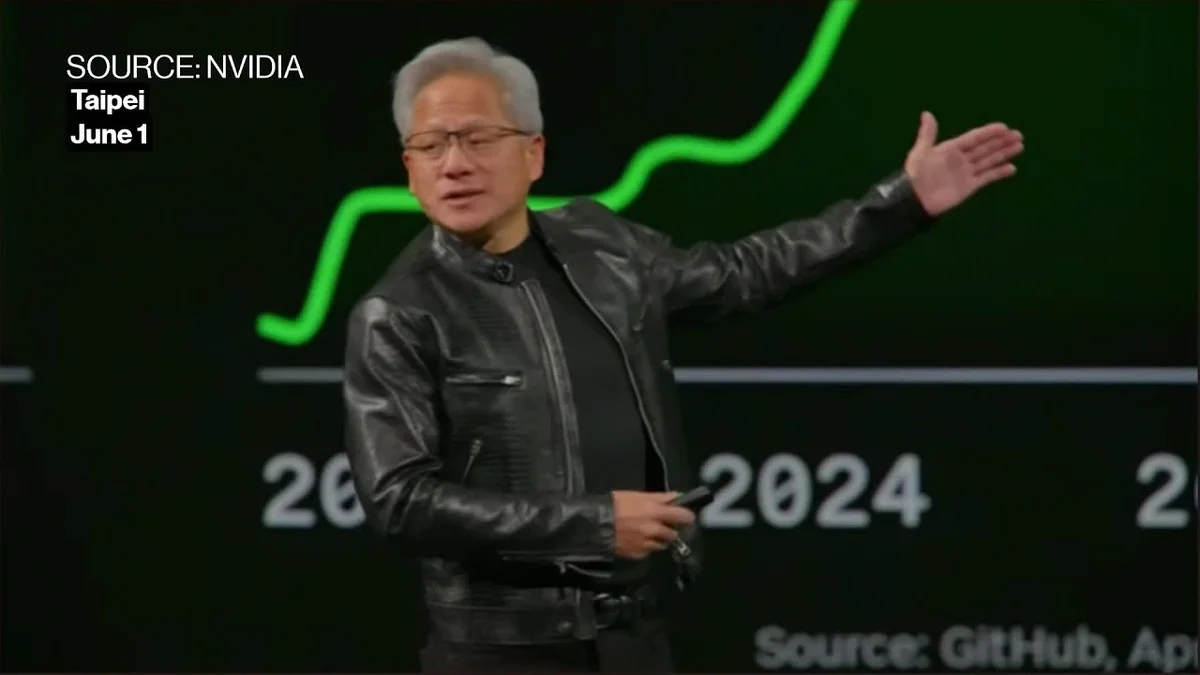
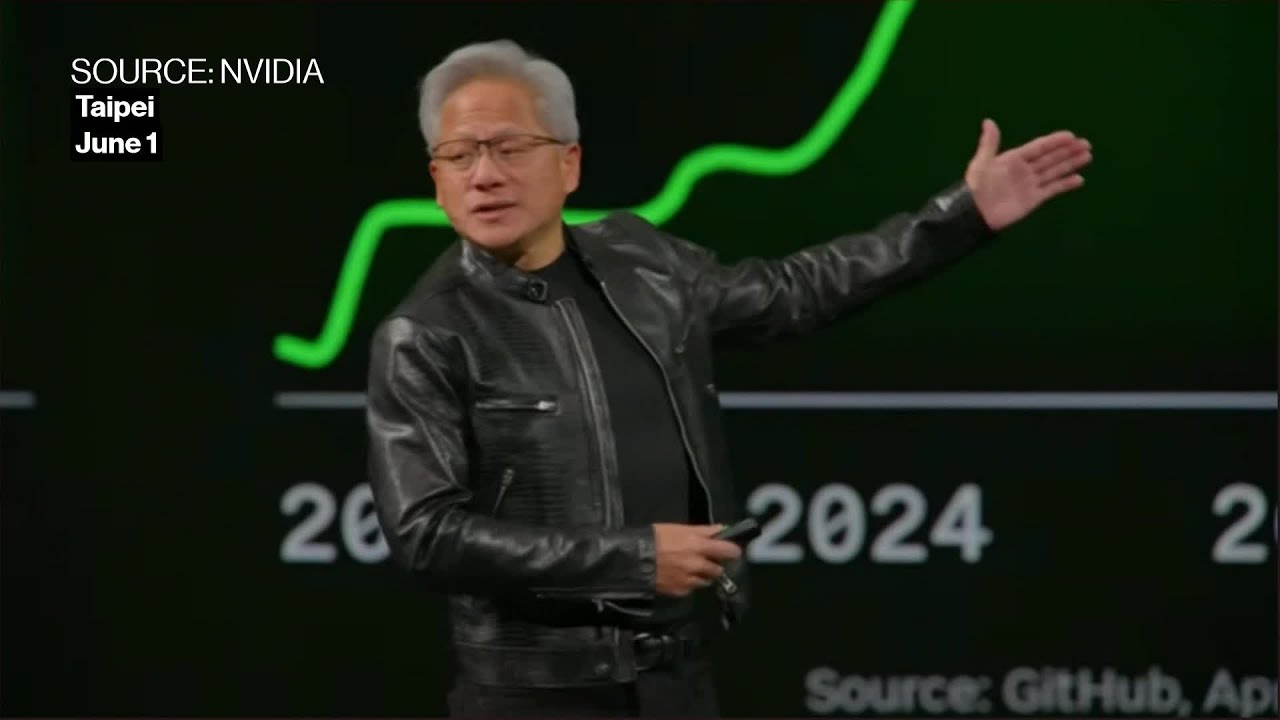
Nvidia CEO Jensen Huang on stage presenting a graph showing upward trends.
Bloomberg Technology
Visual TL;DR
AI Job FearsDriver
widespread job displacement concerns about artificial intelligence impact
From the articleNvidia CEO Jensen Huang has strongly refuted claims that artificial intelligence will result in widespread job displacement.
Huang's StanceCore
Nvidia CEO dismisses job loss fears as 'nonsense'
From the article 7 mentionsSpeaking at an event in Taipei, Huang characterized these concerns as 'nonsense,' asserting instead that AI is a catalyst for creating more demand for software engineers.
AI Drives DemandEffect
AI actually drives demand for more software engineers
From the article 4 mentionsThe core of Huang's argument is that AI's ability to drive immense productivity gains translates directly into economic growth and new opportunities.
Job CreatorEffect
AI as a catalyst for creating more jobs
From the articleNvidia CEO Jensen Huang has strongly refuted claims that artificial intelligence will result in widespread job displacement.
Productivity ParadoxContext
AI output necessitates more human oversight and input
From the article 3 mentionsHe suggested that if AI were reducing productivity or the need for engineers, these metrics would stagnate or decline.
Increased HiringOutcome
From the articleHe argued that the output generated by AI is so significant that it necessitates more human oversight and input, leading to increased hiring in the software engineering sector.
Contents(3)

Nvidia CEO Jensen Huang has strongly refuted claims that artificial intelligence will result in widespread job displacement. Speaking at an event in Taipei, Huang characterized these concerns as 'nonsense,' asserting instead that AI is a catalyst for creating more demand for software engineers.

Huang's Stance on AI and Employment

The semiconductor industry leader presented a counter-narrative to the prevailing anxieties surrounding AI's impact on the workforce. Huang's perspective is that the advancement and application of AI technologies are not leading to fewer jobs, but rather to a greater need for individuals skilled in developing and implementing these systems. He argued that the output generated by AI is so significant that it necessitates more human oversight and input, leading to increased hiring in the software engineering sector.

The full discussion can be found on Bloomberg Technology's YouTube channel.

Nvidia's Huang Calls AI Jobs Concerns 'Nonsense' - Bloomberg Technology
Nvidia's Huang Calls AI Jobs Concerns 'Nonsense', from Bloomberg Technology

The Productivity Paradox and AI

Huang illustrated his point by referencing data showing a substantial increase in software development activity, including merged pull requests, commits, and new repositories. He suggested that if AI were reducing productivity or the need for engineers, these metrics would stagnate or decline. Instead, the observed acceleration in these areas indicates that AI is augmenting human capabilities, leading to more output and, consequently, a higher demand for the engineers who build and manage these tools. 'If you can generate $9 trillion worth of productive work with AI, why wouldn't you want to hire more software engineers?' Huang rhetorically asked, highlighting the economic incentive to embrace AI-driven productivity.

AI as a Job Creator

The core of Huang's argument is that AI's ability to drive immense productivity gains translates directly into economic growth and new opportunities. He believes that the complexity and sophistication of AI systems require a larger, more skilled workforce to develop, deploy, and maintain them. This perspective challenges the zero-sum view of automation where new technologies inevitably lead to fewer jobs. Instead, Huang posits that AI acts as a force multiplier, expanding the scope of what is possible and thereby increasing the demand for human ingenuity and technical expertise.

© 2026 StartupHub.ai. All rights reserved. You may not republish this article in full without a license. Search engines and AI research tools may crawl and summarize for reference. Bulk reproduction or model training requires a license. See our terms.
Daniel Singer

Written by

Daniel Singer

Editor, StartupHub.ai

Daniel Singer is the editor of StartupHub.ai, a technology expert and thought leader on AI and its applications across sectors, from fintech and healthcare to developer tooling and consumer software. He writes and tests the tools covered here thoroughly and regularly, and built StartupHub.ai to give founders, operators and buyers a clearer read on what they are actually being sold.

More from Daniel Singer