

AI Agents: From "Slop" to "Sufficiently Detailed Specs"

Mario Zechner critiques the current state of AI coding agents, highlighting limitations and advocating for a more focused, extensible, and human-guided approach to development.

4 min read
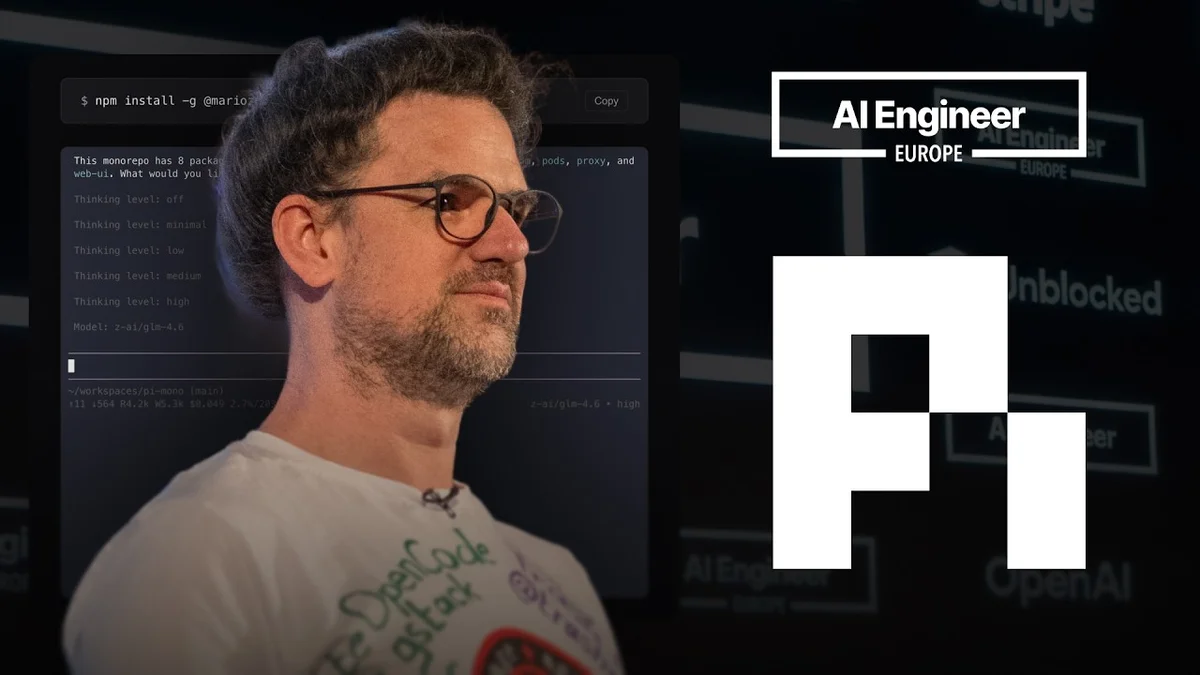
Mario Zechner on stage presenting 'Building Pi in a World of Slop'
Image credit: AI Engineer Europe· AI Engineer

Mario Zechner, a creator known for his work on Pi.dev, delivered a candid and insightful talk at AI Engineer Europe titled "Building Pi in a World of Slop." Zechner's presentation offered a sharp critique of the current state of AI coding agents, highlighting their limitations and proposing a more disciplined approach to their development and use.
AI Agents: From "Slop" to "Sufficiently Detailed Specs" - AI Engineer
AI Agents: From "Slop" to "Sufficiently Detailed Specs" — from AI Engineer

The "Slop" of Current AI Agents

Zechner began by contrasting the early days of AI coding, where tools like ChatGPT and GitHub Copilot provided simple, predictable assistance, with the current reality. He described the current phase as a "fuck around and find out" stage for coding agents, where the proliferation of features and complex architectures has led to a system that feels broken and unmanageable.

He pointed to several issues: zero observability, zero model choice, and almost zero extensibility. This means developers are often left in the dark about how their agents are functioning, unable to choose the best models for their tasks, and unable to customize or extend the agents to fit their specific needs. Zechner illustrated this with examples of how agents can insert irrelevant information or reminders into code, leading to confusion and errors.

Related startups

Zechner also highlighted the problem of "clankers" in open-source software development, referring to poorly implemented or overly complex AI agents that can disrupt workflows and introduce bugs. He showed how projects are struggling to manage the influx of pull requests from these agents, often leading to the rejection of valid contributions.

The "Pi" Approach: Minimalism and Extensibility

In contrast to the prevailing "slop," Zechner presented his project, Pi.dev, as a more focused and extensible solution. Pi.dev is built around a minimalist core with four key packages: Pi-AI (for LLM API integration), Pi-Agent-Core (for agent execution), Pi-TUI (for a terminal UI framework), and Pi-Coding-Agent (for CLI functionality). This modular approach allows for greater flexibility and customization.

Zechner emphasized the importance of a well-defined system prompt that guides the agent's behavior. He stressed that agents should be trained on good architecture decisions and best practices, not on the vast, often messy, data found on the internet. This means focusing on quality over quantity, and ensuring that agents understand their role and limitations.

The Human Element in AI Development

A recurring theme in Zechner's talk was the indispensable role of humans in the AI development process. He argued against the idea of fully autonomous agents that operate without human oversight, citing examples where such systems have failed disastrously. Instead, he advocated for a collaborative approach where humans work alongside agents, guiding their development and ensuring the quality of their output.

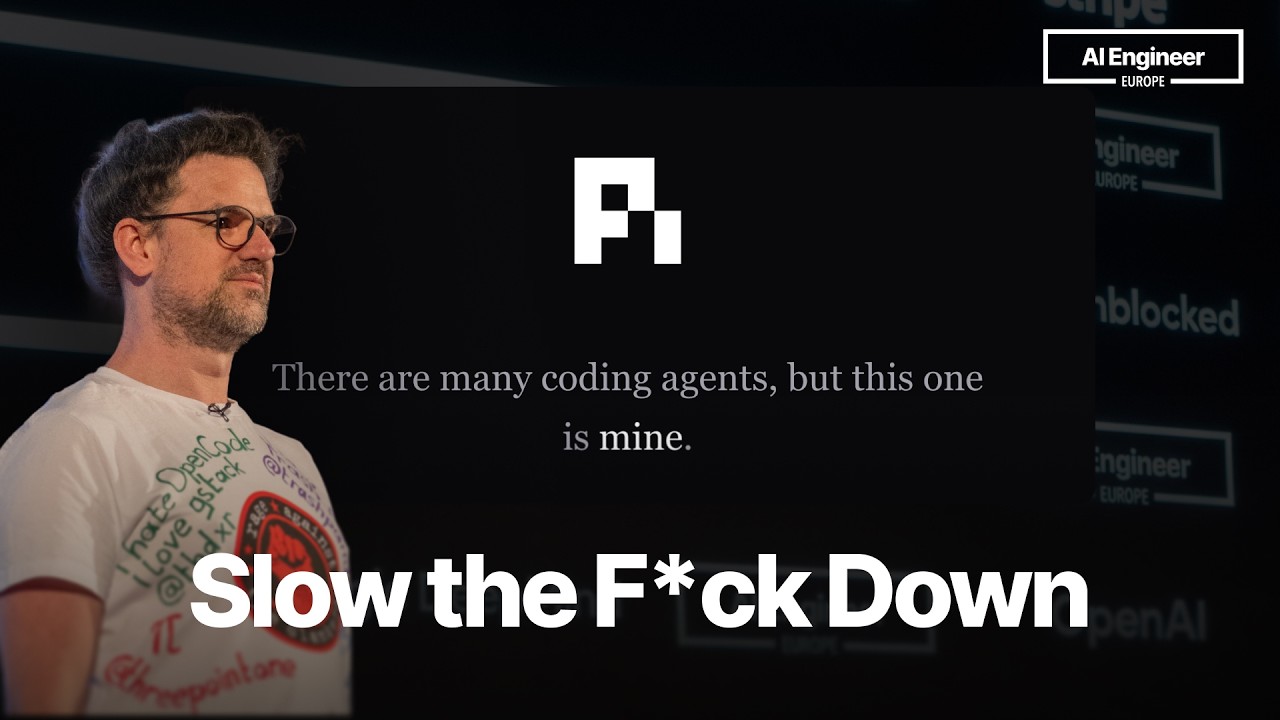
Zechner's theses centered on the idea that we are still in the early stages of developing effective AI agents. He proposed that the focus should shift from simply generating more code to building more intelligent, self-aware agents that can learn and adapt. He also emphasized the need for developers to "slow the fuck down" and think critically about what they are building and why, rather than blindly adopting new technologies.

Key Takeaways for the AI Community

Zechner's talk served as a timely reminder that while AI agents hold immense promise, their development and deployment require a thoughtful and disciplined approach. His emphasis on minimalism, extensibility, and human oversight offers a valuable framework for building more reliable and effective AI tools. The current state of AI agents, while impressive in its rapid advancement, still has a long way to go before it can truly replace human expertise and judgment.

Ultimately, Zechner's message was clear: the future of AI agents lies not in outsourcing our thinking to machines, but in augmenting our own capabilities through collaboration and a deep understanding of the tools we create.

© 2026 StartupHub.ai. All rights reserved. Do not enter, scrape, copy, reproduce, or republish this article in whole or in part. Use as input to AI training, fine-tuning, retrieval-augmented generation, or any machine-learning system is prohibited without written license. Substantially-similar derivative works will be pursued to the fullest extent of applicable copyright, database, and computer-misuse laws. See our terms.