

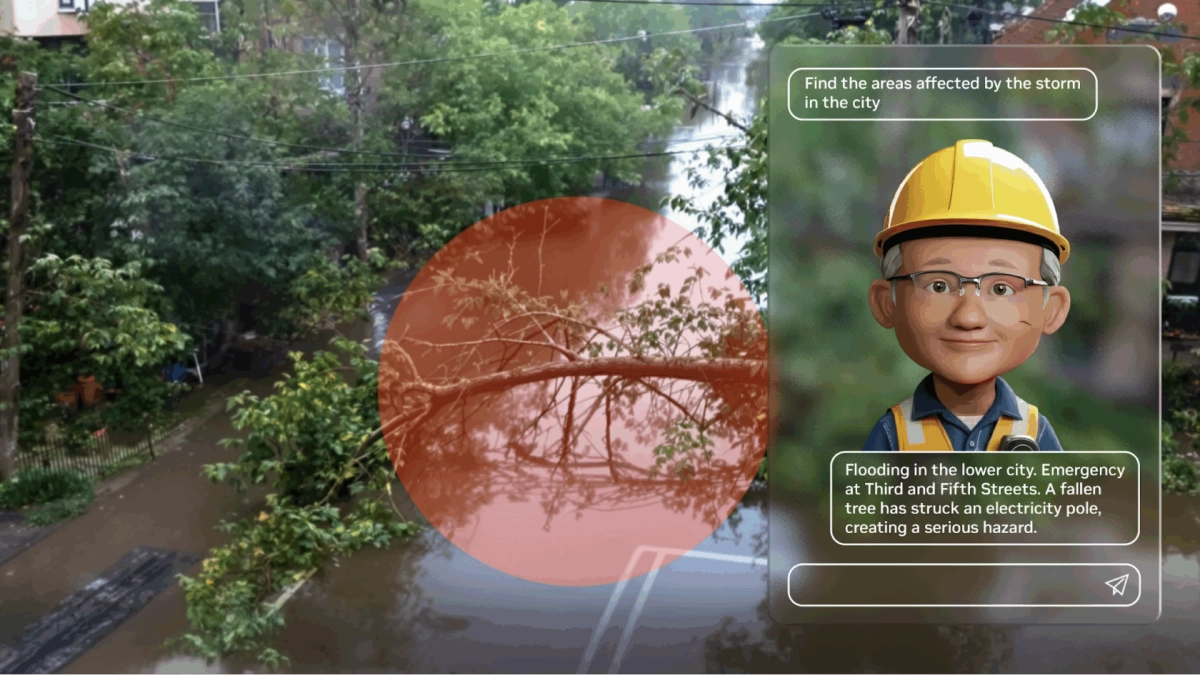
Today's computer vision systems, while adept at identifying objects and events, often fall short in providing deeper contextual understanding or predictive reasoning. This limitation has historically constrained their utility, leaving a gap between raw visual data and actionable insights. A significant shift is underway, however, as agentic intelligence, powered by vision language models (VLMs), begins to bridge this critical divide. This evolution is transforming how organizations extract value from their vast visual datasets, moving beyond simple detection to comprehensive understanding and proactive decision-making. According to the announcement, agentic AI computer vision is enabling systems to explain *why* something matters and reason about future possibilities, fundamentally reshaping industries from manufacturing to media.
The integration of VLMs into existing computer vision pipelines unlocks capabilities previously unattainable with traditional convolutional neural networks (CNNs). One immediate impact is the ability to generate dense captions for visual content, converting unstructured images and videos into rich, searchable metadata. This moves beyond the limitations of basic tags or filenames, allowing for highly granular queries and discovery within massive visual archives. For instance, companies like UVeye, processing hundreds of millions of high-resolution vehicle images monthly, leverage VLMs to create structured condition reports, detecting subtle defects with exceptional accuracy. Similarly, Relo Metrics applies this technology to sports marketing, moving past simple logo detection to contextualize brand appearances during high-impact moments, providing real-time monetary valuation for sponsors.
Augmenting Alerts and Automating Complex Analysis
Beyond making visual content searchable, agentic AI computer vision significantly enhances the utility of system alerts. Traditional CNN-based systems often produce binary alerts, a simple yes or no, which can lead to false positives or missed nuances. By layering VLMs onto these systems, alerts gain contextual understanding, explaining the "where, how, and why" of an incident. Linker Vision exemplifies this by using VLMs to verify critical smart city alerts, such as traffic accidents or falling infrastructure, reducing false positives and adding vital context for faster, more coordinated municipal responses across departments.
The most profound impact of agentic AI computer vision lies in its capacity for automatic analysis of complex scenarios and answering intricate queries across diverse data streams. This involves combining VLMs with reasoning models, large language models (LLMs), and retrieval-augmented generation (RAG) to process lengthy, multichannel video archives. This architecture enables deeper, more accurate insights than basic VLM integrations, which are limited by visual token processing. Levatas, for example, develops AI agents that review inspection footage from mobile robots, automatically drafting detailed reports for critical infrastructure assets like electric utility substations. This dramatically accelerates a traditionally manual process, allowing for swift issue detection and resolution, as seen with American Electric Power. Even in consumer applications, like Eklipse's gaming highlight tools, VLM-powered agents enrich livestreams with captions and metadata, enabling rapid summarization and creation of polished highlight reels, improving content consumption experiences tenfold.
This paradigm shift, from mere detection to intelligent reasoning and contextual understanding, is being accelerated by platforms like NVIDIA Metropolis and multimodal VLMs such as NVCLIP, NVIDIA Cosmos Reason, and Nemotron Nano V2. These tools empower developers to build sophisticated AI agents that can access VLMs directly or integrate them with LLMs and RAG, scaling video analytics and process compliance to meet evolving organizational needs. The future of computer vision is not just about seeing, but about understanding, reasoning, and acting with unprecedented intelligence.