

NVIDIA NVLink Fusion Accelerates Custom AI Chip Integration
3 min read

NVIDIA is pushing its NVLink interconnect technology beyond its own GPUs, introducingNVLink Fusion. This initiative aims to accelerate the integration of custom silicon, or XPUs, into large-scale AI factory infrastructure. The move targets hyperscalers and AI-native companies that are developing specialized processors but face significant hurdles in bringing them to market.
Building an AI factory requires more than just accelerators. It demands a complete ecosystem of networking, rack-scale architecture, software, and a reliable supply chain. NVLink Fusion simplifies this by allowing custom XPUs to connect to NVIDIA’s established AI infrastructure, promising increased performance, reduced time-to-market, and mitigated risk.
For AI workloads like trillion-parameter models, efficient scale-up networking is critical. NVIDIA highlights its sixth-generation NVLink, capable of connecting up to 72 XPUs with significantly lower latency and higher packet rates compared to Ethernet. The NVIDIA GB300 NVL72 systems, for instance, are designed to offer superior throughput and interactivity. NVLink Fusion also incorporates NVLink-C2C, enabling high-efficiency connections between XPUs and CPUs, such as NVIDIA's Vera CPUs, potentially offering up to 6x the energy efficiency of PCIe.
Companies developing custom XPUs often underestimate the complexity of data center deployment, which includes integrating high-speed interfaces, sourcing network solutions, designing rack architecture, and managing suppliers. NVLink Fusion, supported by an ecosystem of ASIC design, CPU, IP, and optical interconnect partners, aims to offload much of this integration burden.
Intel, a key player in the custom silicon space, sees value in this approach. Tim Wilson, vice president and general manager of data center silicon engineering at Intel, stated that NVLink Fusion allows customers to choose CPU architectures and performance levels that best suit their workloads. This aligns with Intel's own efforts in developing specialized accelerators.
The NVLink Fusion program also offers adopters access to NVIDIA's MGX rack-scale architecture and its associated supply chain. This allows for shared infrastructure components like racks, cooling, and power delivery, enabling a unified architecture where XPU- and GPU-based systems can coexist. This standardization helps manage risk and allows data center buildouts to proceed even before the final silicon mix is determined, providing flexibility to adapt to changing workload demands and supply availability.
StartupHub.ai data indicates that the demand for specialized AI accelerators is growing, with many custom silicon startups raising significant capital. For example, Cerebras Systems, which develops wafer-scale AI chips, has raised over $700 million. By enabling easier integration of these custom solutions into mature infrastructure, NVLink Fusion could accelerate the deployment of such technologies, potentially increasing the competitive pressure on established GPU vendors in specific AI workloads.
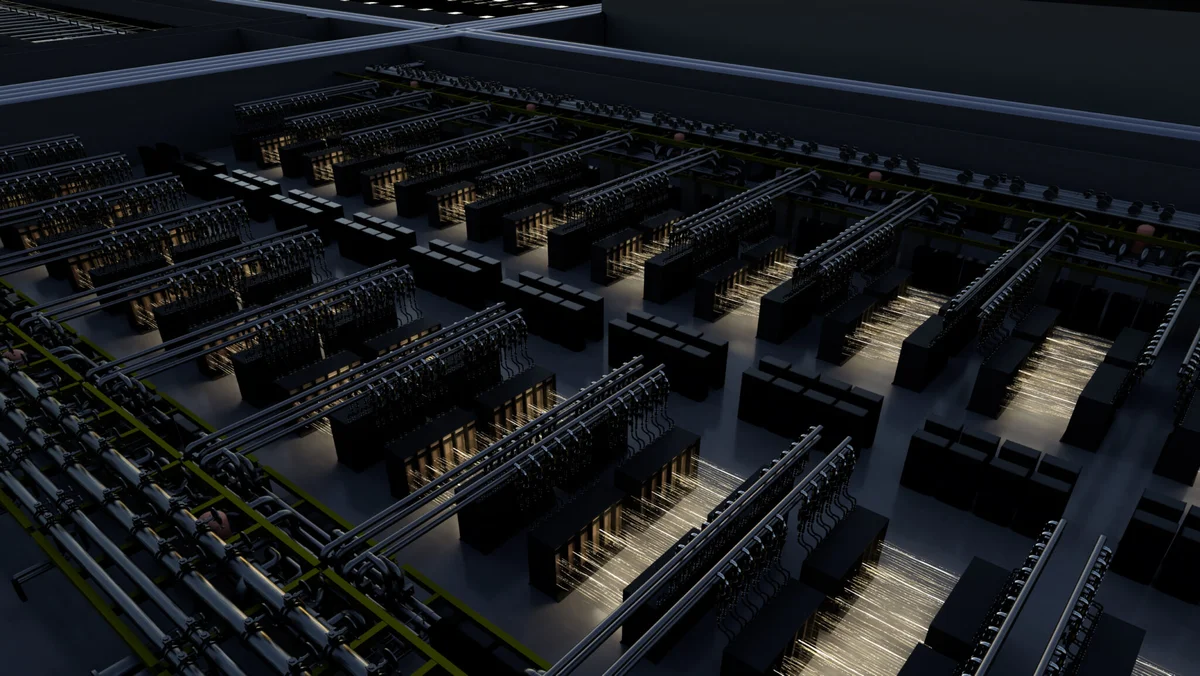
NVIDIA emphasizes that NVLink Fusion aligns with its DSX reference architecture for AI factories, which involves co-designing buildings, power, cooling, compute, and networking. The NVIDIA Omniverse DSX AI Factory Blueprint offers a digital twin for modeling these facilities. The reference compute trays utilize 100% liquid cooling and allow for hot-swapping components, enhancing serviceability and uptime. Software components like NCCL, Dynamo, NIXL, and Mission Control further support the operation of mixed AI infrastructure as a coordinated system.
With NVLink Fusion, custom XPUs can now integrate with NVIDIA’s AI platform, facilitating the creation of semi-custom AI factories that combine specialized silicon with proven infrastructure at scale.
© 2026 StartupHub.ai. All rights reserved. Do not enter, scrape, copy, reproduce, or republish this article in whole or in part. Use as input to AI training, fine-tuning, retrieval-augmented generation, or any machine-learning system is prohibited without written license. Substantially-similar derivative works will be pursued to the fullest extent of applicable copyright, database, and computer-misuse laws. See our terms.

