


Microsoft is doubling down on its AI ambitions, announcing a suite of new solutions at NVIDIA's GTC event designed to streamline the creation and deployment of sophisticated AI systems. The company is integrating its Microsoft Foundry platform with NVIDIA's latest hardware and models, aiming to accelerate the path from AI prototyping to production-ready deployments.
Central to these updates is an expansion of Microsoft Foundry's capabilities. The Foundry Agent Service and Control Plane are now generally available, allowing enterprises to build and manage AI agents that can reason, plan, and act across various tools and data sources. This move aims to boost developer productivity and build crucial enterprise trust in AI operations.
Microsoft is also simplifying the creation of voice-driven AI experiences through a public preview of Voice Live API integration with Foundry Agent Service. Coupled with expanded integrations for security tools like Palo Alto Networks’ Prisma AIRS, the platform seeks to offer a more robust and secure agent lifecycle.
Foundry Embraces NVIDIA's Nemotron
Further bolstering its model ecosystem, Microsoft Foundry now offers NVIDIA's Nemotron models. This integration, alongside recent additions like Fireworks AI, provides customers access to a wide array of frontier and open models, facilitating fine-tuning for low-latency edge deployments.
Next-Gen AI Infrastructure on Azure
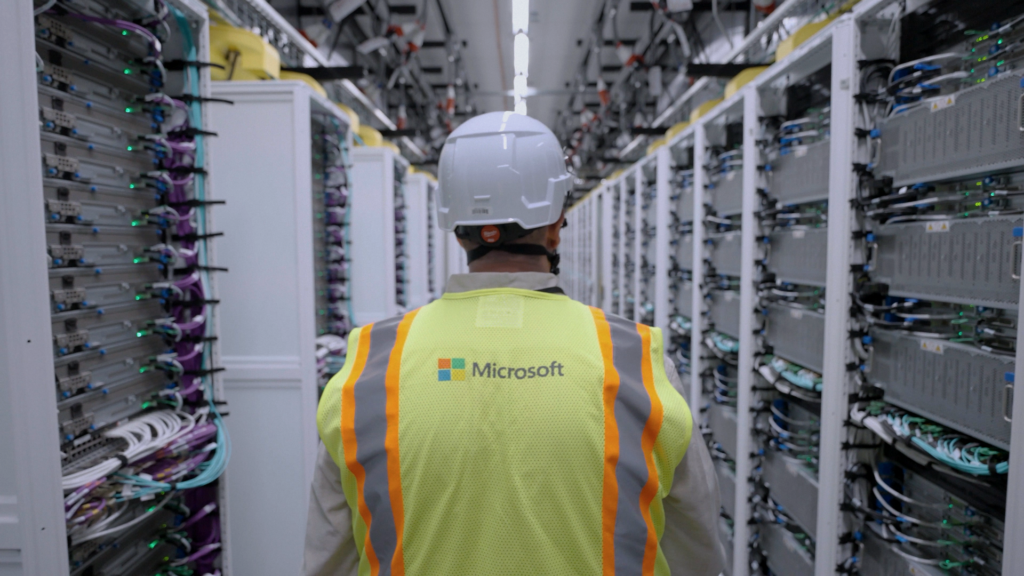
Microsoft is also upgrading its Azure AI infrastructure to meet the demanding requirements of inference-heavy AI workloads. The company highlighted its rapid deployment of liquid-cooled Grace Blackwell GPUs and announced it will be the first hyperscale cloud to power NVIDIA's new Vera Rubin NVL72 systems.