
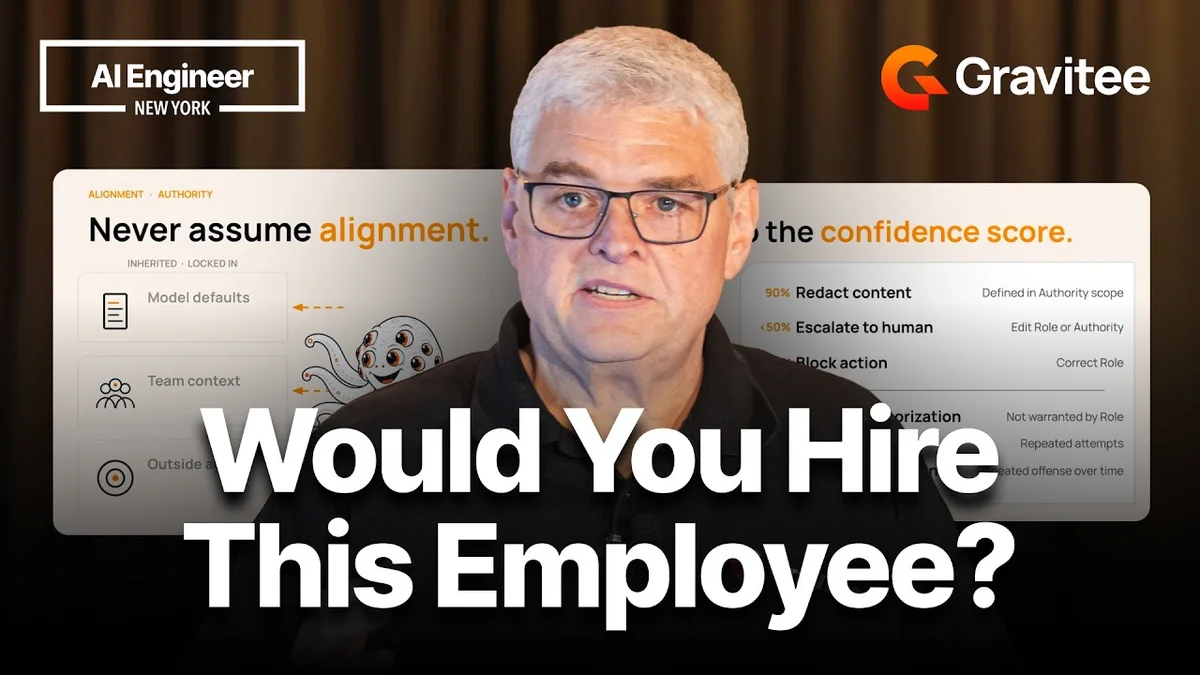
Tim Tyler told AI Engineer that enterprises already staff agents that work 247 with shared passwords and no accountable owner, a setup no hiring manager would approve for a person, per the outlet.
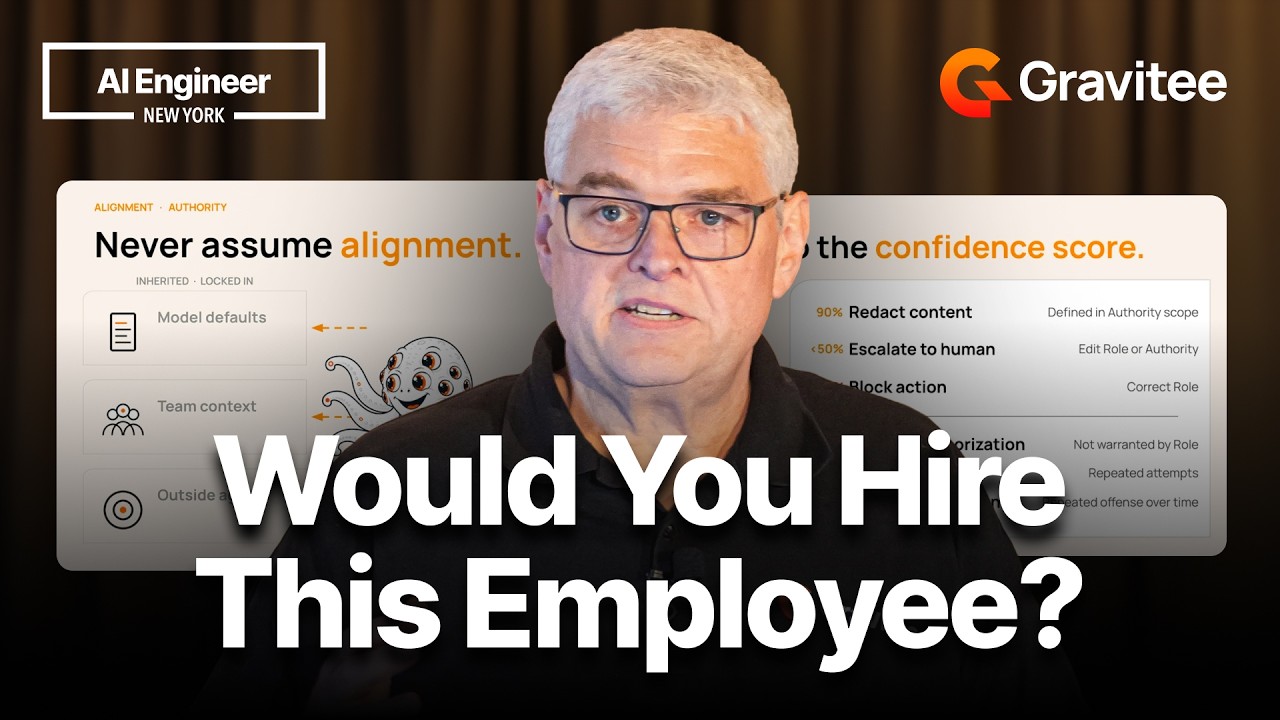
He proposed agent accountability in three stages, starting with assignment where every agent gets one unique ID in a single registry and a named human sponsor who answers for cost and failure, according to Tyler.
Alignment then bounds what the agent may do, with a sponsor-defined role and deterministic authority that never expands beyond that grant, so agent 409 with access to D, E and F can only return D to sponsor Sven when called by agent 203, Tyler said.
Administration enforces both, measuring behaving against authority and succeeding against role with a scorecard where a $40,000 invoice limit is a hard rule while intent judgments use confidence bands at 90 percent for redaction, 50 percent for human escalation and 20 percent for blocking, Tyler said.
The framing tracks outside guidance that every agent needs a defined role, a named owner, appropriate data access and clear boundaries plus governance to manage digital colleagues responsibly, according to Nimble Approach.
Tyler gave no deployment data, audit results or patch status for shared-credential sprawl, so the cost of sponsorship and guardrail enforcement remains unmeasured.
The read would change if Gravitee published measured failure rates or time to containment before and after the framework and whether sponsor accountability reduced out-of-scope access.
Will teams accept micromanagers for agents that run at machine speed when human reviews come 400,000 decisions too late, as Tyler warned?


