

Legora CEO on $550M Raise and US Expansion

Legora CEO Max Junestrand discusses the legal AI startup's $550M Series D funding, US expansion, and the future of AI in law.

Mar 10 at 6:32 PM5 min read
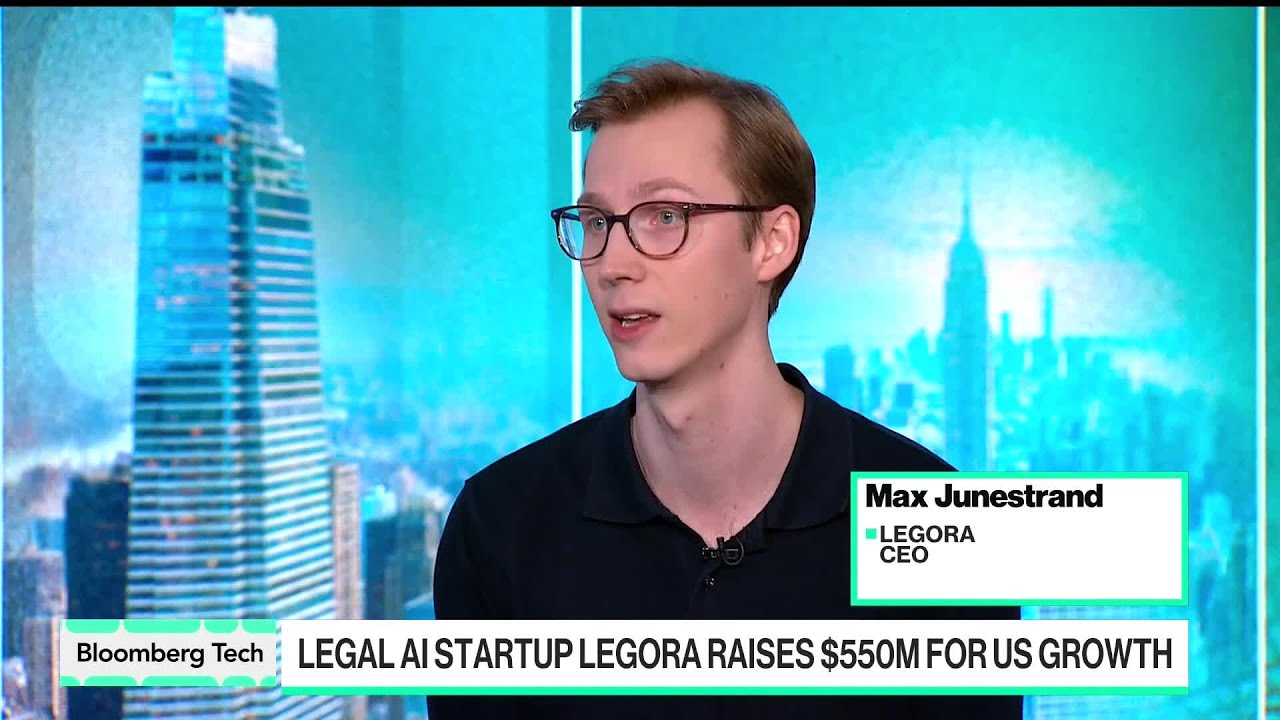
Max Junestrand, CEO of Legora, speaking on Bloomberg Tech.

Max Junestrand, CEO of Legora, appeared on Bloomberg Tech to discuss the company's significant $550 million Series D funding round and its ambitious plans for US expansion. This substantial capital infusion signals strong investor confidence in Legora's mission to revolutionize the legal industry through artificial intelligence.

The full discussion can be found on Bloomberg Technology's YouTube channel.
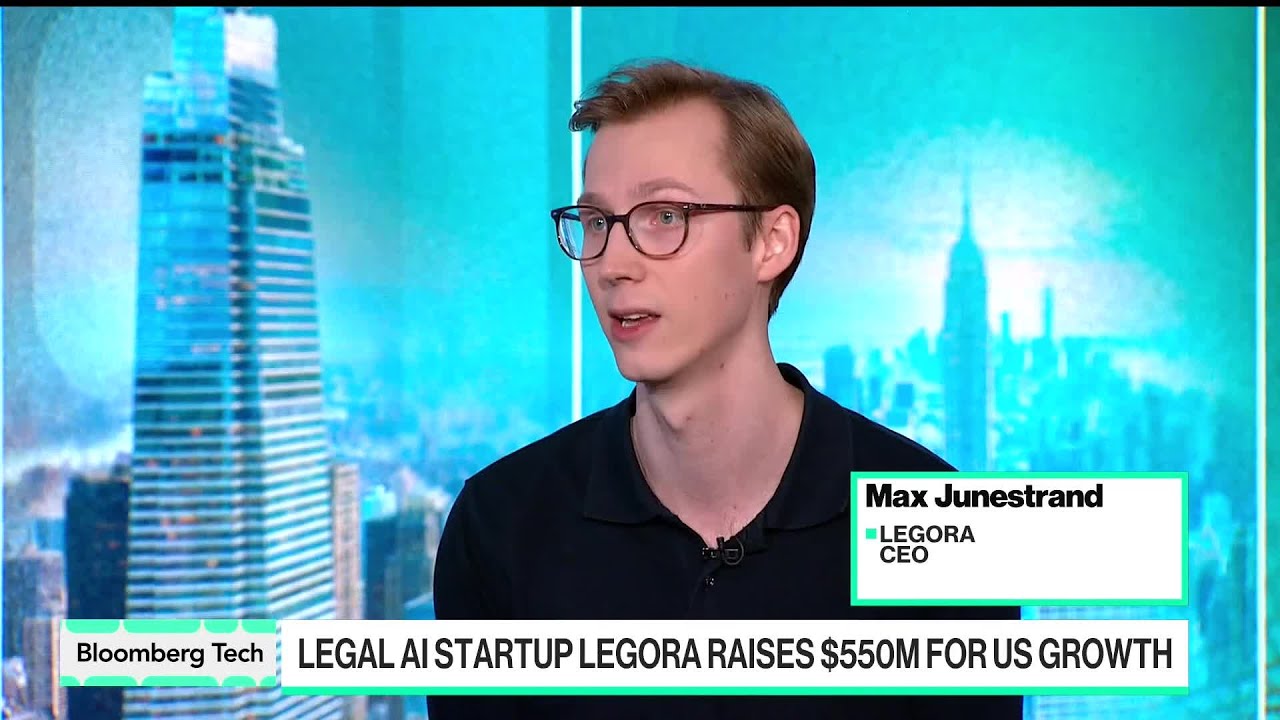
Legal AI Startup Legora Raises $550 Million for US Expansion — from Bloomberg Technology

Meet the CEO: Max Junestrand

Max Junestrand is the CEO and co-founder of Legora, a legal technology company leveraging AI to transform how law firms operate. Junestrand's background, combined with his personal connection to the legal profession as the son of two lawyers, provides him with a unique perspective on the challenges and opportunities within the industry. His insights into the practical application of AI in law are central to Legora's strategy.

Legora's $550 Million Funding and US Expansion

Legora has secured a substantial $550 million in its latest funding round, a significant achievement that underscores the growing demand for AI-powered solutions in the legal sector. The company, founded in Stockholm, Sweden, in 2023, has already established a strong presence, serving over 800 law firms across more than 50 markets. This new capital will be primarily directed towards accelerating Legora's growth and market penetration in the United States.

Junestrand detailed the strategic allocation of these funds, emphasizing investment in the platform's core technology, infrastructure, and customer support teams. The company's expansion into key US cities like New York, Denver, Chicago, and Houston reflects a targeted approach to capturing a significant share of the American legal market. Junestrand noted that the US legal market is vastly larger and more complex than the Nordic markets where Legora initially operated, presenting both a challenge and a significant opportunity.

Disrupting the Legal Industry with AI

The conversation highlighted the transformative potential of AI in the legal field. Junestrand explained that while early legal tech solutions often acted as simple AI copilot tools, Legora's platform is designed to handle entire end-to-end legal workflows. This comprehensive approach allows law firms to offload complex tasks and move away from traditional billable hour models towards more outcome-based or fixed-fee structures.

Junestrand stated, "We are investing in the product and infrastructure to support the astronomical demand that we're seeing from the US." He elaborated on the market's evolution, noting that the legal industry has historically been slow to adopt new technologies, often remaining entrenched in pre-digital era practices. However, the advent of advanced large language models (LLMs) has created a "renaissance" for the industry, with numerous companies now exploring AI automation.

The Competitive Landscape and Legora's Differentiator

When questioned about the competitive landscape, particularly in relation to companies like Harvey AI, Junestrand articulated Legora's distinct approach. He emphasized that while many legal AI tools function as assistants, Legora's platform is built to be an integrated solution that can perform entire legal processes. This is made possible by the advancements in LLMs, which have matured significantly since Legora's inception.

"The legal tech has for a long time been sort of stuck in the pre-digital era," Junestrand commented, highlighting the opportunity for disruption. He further explained the critical need to adapt AI models to the nuances of different legal jurisdictions. "We have to build systems and agents that perform end-to-end work, and the combination of the two within a platform like Legora becomes incredibly valuable."

Data and Pricing Models

A key aspect of Legora's strategy, as explained by Junestrand, involves leveraging both the general legal knowledge from LLMs and the specific proprietary data of law firms. "We're using the funding to expand in US, and you're talking about American law, Nordic law, European law – they're completely different." This necessitates a flexible AI architecture capable of adapting to diverse legal frameworks and data sets.

Junestrand also touched upon the shift in pricing models. He believes that AI will fundamentally alter how law firms bill clients. "We'll have to move from a billable hour model to more of a fixed-fee or outcome-based system," he predicted. This transition is facilitated by AI's ability to increase efficiency and predictability in legal work, allowing firms to offer more value to their clients.

The Future of Legal AI

Junestrand expressed optimism about the future, stating, "We are on the journey of one to ten, and ten to 100. There's so much left to build." He highlighted the iterative nature of AI development, where capabilities evolve rapidly, requiring continuous adaptation of the platform. "We can't plan for a year ahead, because in three months, six months, the capabilities might have changed, so our product has to change."

The company's valuation reaching $5.55 billion after this funding round is a testament to its rapid growth and the perceived value of its AI-driven solutions. Legora's approach of integrating AI deeply into legal workflows, coupled with its adaptability to different legal systems and its focus on outcome-based pricing, positions it as a significant player in the evolving legal technology landscape.