

D-Matrix Claims 10x AI Speed Advantage Over GPUs

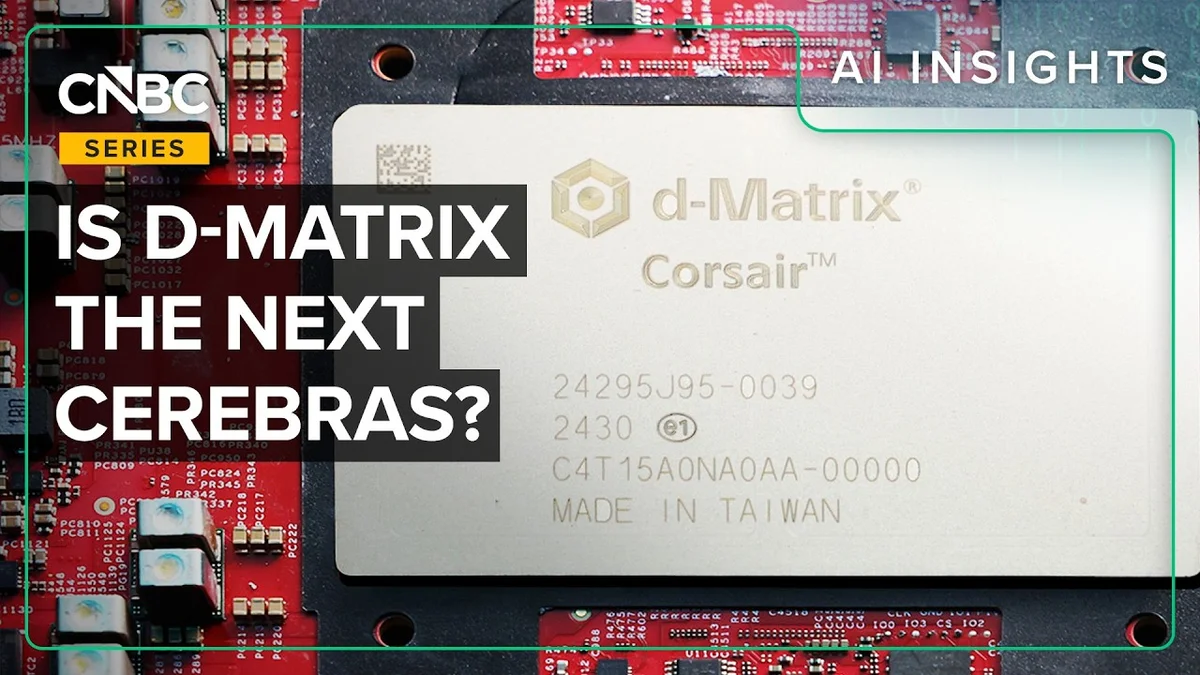
D-Matrix unveils its new 'Corsair' AI chip, claiming a 10x speed advantage over GPUs for AI inference by integrating SRAM directly onto the chip.

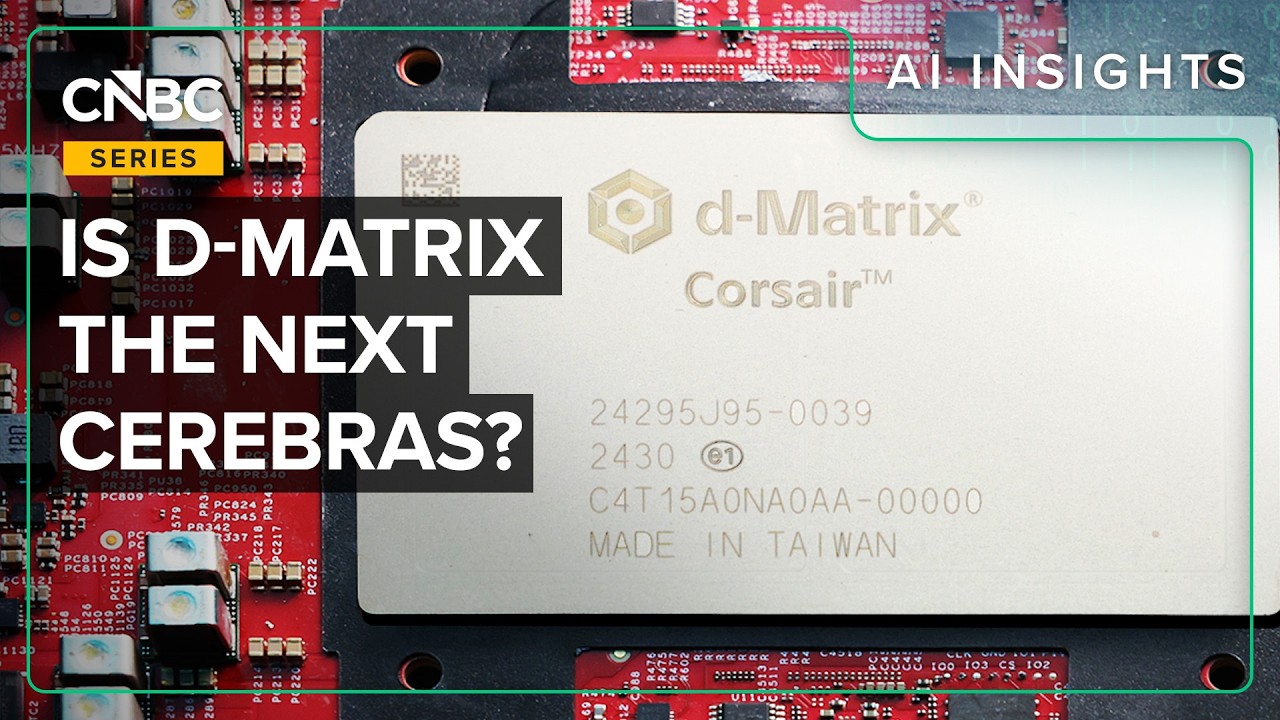
Close-up of the D-Matrix Corsair AI chip on a circuit board.
CNBC
Visual TL;DR
AI Memory BottleneckDriver
external high-bandwidth memory limits GPU performance
From the article 4 mentionsThis advancement is particularly noteworthy given the current high demand and supply constraints for AI memory, a bottleneck that D-Matrix aims to overcome with its innovative architecture.
D-Matrix Corsair ChipCore
new AI chip designed for inference tasks
From the article 6 mentionsIn a significant development for the AI hardware sector, D-Matrix has unveiled its new 'Corsair' AI chip, boasting a performance leap that could dramatically reshape the landscape of artificial intelligence computation.
Integrated SRAMCore
From the article 3 mentionsUnlike conventional GPUs, which often rely on external high-bandwidth memory (HBM) that can become a performance bottleneck, D-Matrix has integrated Static Random-Access Memory (SRAM) directly onto its chip.
AI InferenceContext
critical for chatbots, generative AI, video generation
From the article 4 mentionsThe company claims its chip is a remarkable 10 times faster than traditional Graphics Processing Units (GPUs) for AI inference tasks.
10x Speed AdvantageEffect
claims 10x faster than GPUs for AI inference
From the articleThis on-chip integration allows for much faster data access and processing, leading to the purported 10x speed improvement.
Market TractionOutcome
potential to reshape AI hardware landscape
From the article 4 mentionsD-Matrix has also secured significant commitments from a range of major players in the AI space, including hyperscalers, Neocloud providers, and leading AI laboratories, signaling strong market confidence in its technology.
Contents(3)

In a significant development for the AI hardware sector, D-Matrix has unveiled its new 'Corsair' AI chip, boasting a performance leap that could dramatically reshape the landscape of artificial intelligence computation. The company claims its chip is a remarkable 10 times faster than traditional Graphics Processing Units (GPUs) for AI inference tasks. This advancement is particularly noteworthy given the current high demand and supply constraints for AI memory, a bottleneck that D-Matrix aims to overcome with its innovative architecture.

D-Matrix Claims 10x AI Speed Advantage Over GPUs - CNBC
D-Matrix Claims 10x AI Speed Advantage Over GPUs, CNBC

Introducing the D-Matrix Corsair Chip

The D-Matrix Corsair chip is designed to tackle the intensive demands of AI inference, a critical component in applications ranging from chatbots and video generation to complex generative AI models. Unlike conventional GPUs, which often rely on external high-bandwidth memory (HBM) that can become a performance bottleneck, D-Matrix has integrated Static Random-Access Memory (SRAM) directly onto its chip. This on-chip integration allows for much faster data access and processing, leading to the purported 10x speed improvement.

The company, founded in 2019 and based in Santa Clara, California, announced that the Corsair chip is manufactured by TSMC (Taiwan Semiconductor Manufacturing Company) on a 6-nanometer node. Production is already underway, with shipments slated to begin this month. D-Matrix has also secured significant commitments from a range of major players in the AI space, including hyperscalers, Neocloud providers, and leading AI laboratories, signaling strong market confidence in its technology.

Addressing the AI Memory Bottleneck

Sid Sheth, Co-Founder and CEO of D-Matrix, explained the core advantage of their approach. "Our solution solves the problem that GPUs cannot, that TPUs cannot, that other AI accelerators cannot," Sheth stated. He elaborated that their chip doesn't rely on the high-bandwidth memory that is currently in short supply from manufacturers like SK hynix, Samsung, and Micron. This strategic decoupling from the constrained HBM market positions D-Matrix favorably in a rapidly growing, but supply-limited, sector.

The Corsair chip's architecture, featuring four AI inference compute dies, offers 315 PFLOPS of performance and 128 GB of SRAM capacity. With a memory bandwidth of 40 PB/s and a scale-up density of 256 chips, the system promises substantial gains in processing power. Sheth highlighted that this design allows for significantly reduced energy consumption, claiming the chips are up to five times more energy-efficient for inference workloads compared to traditional GPUs.

Competitive Edge and Market Traction

D-Matrix's strategy to integrate SRAM directly into the chip is a key differentiator. This approach not only boosts speed but also enhances energy efficiency, crucial factors for large-scale AI data centers. The company's recent Series C funding round of $275 million, which valued the company at $2 billion, further underscores the investor interest in its disruptive technology. Microsoft, through its M12 venture fund, was among the investors, signaling potential synergy with Microsoft's own AI chip development initiatives.

The video also touches upon broader trends in the AI hardware market, including Nvidia's own advancements and acquisitions, such as its reported $20 billion deal for Groq's assets. Nvidia itself is pushing boundaries with its new line of language processing units (LPUs) and collaborations with companies like Arista, Broadcom, and Super Micro Computer to build comprehensive AI data center solutions. While Nvidia focuses on integrating its technologies, D-Matrix is carving out its niche by offering a fundamentally different architectural approach.

The company's ability to deliver a solution that is both faster and more power-efficient positions it as a formidable challenger in the AI chip market, potentially disrupting the dominance of established players like Nvidia. The ongoing development of specialized AI hardware, such as Microsoft's Maia AI accelerator, further indicates a broad industry shift towards custom silicon designed to optimize AI workloads.

© 2026 StartupHub.ai. All rights reserved. You may not republish this article in full without a license. Search engines and AI research tools may crawl and summarize for reference. Bulk reproduction or model training requires a license. See our terms.
Daniel Singer

Written by

Daniel Singer

Editor, StartupHub.ai

Daniel Singer is the editor of StartupHub.ai, a technology expert and thought leader on AI and its applications across sectors, from fintech and healthcare to developer tooling and consumer software. He writes and tests the tools covered here thoroughly and regularly, and built StartupHub.ai to give founders, operators and buyers a clearer read on what they are actually being sold.

More from Daniel Singer