

Nvidia's AI Demand Fuels Earnings Blowout

Nvidia reported a blowout quarter driven by surging AI demand, with revenue reaching $85.5 billion. CEO Jensen Huang sees AI as a computing paradigm shift.

4 min read
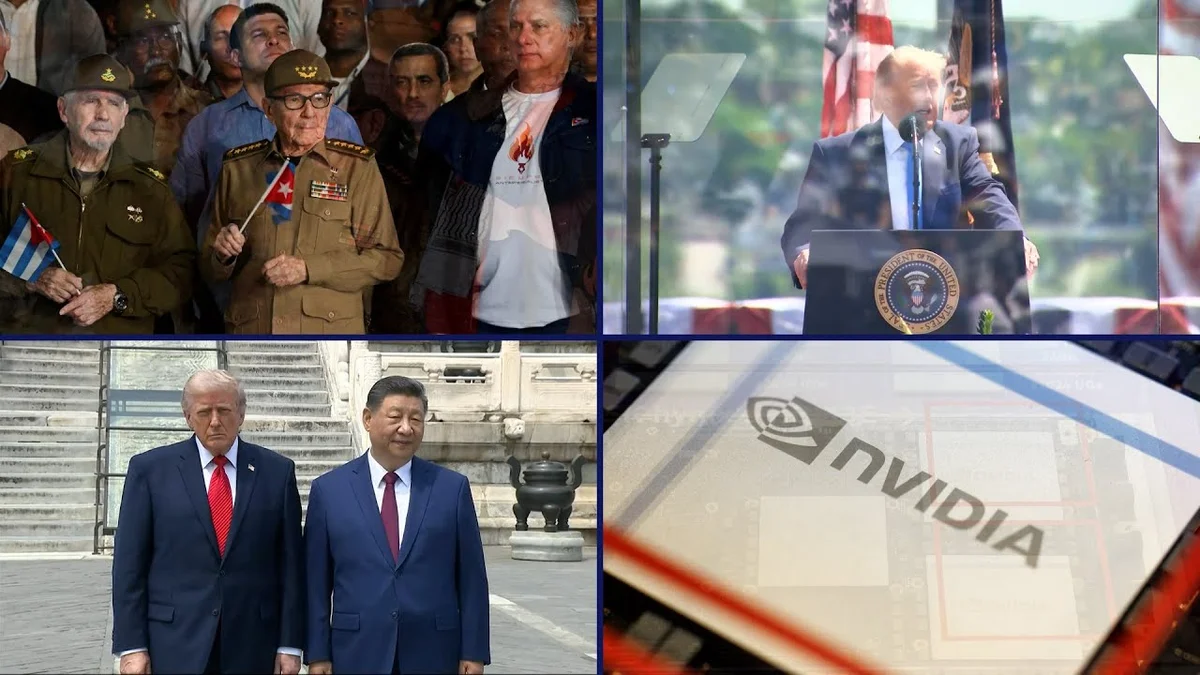
Close-up of a white Nvidia GPU with the Nvidia logo.
Bloomberg Podcast
Visual TL;DR
Jensen HuangCore
From the article 2 mentionsNvidia CEO Jensen Huang articulated the profound impact of artificial intelligence, describing it as a fundamental 'paradigm shift' in computing.
Surging AI DemandDriver
From the article 4 mentionsIn a testament to the explosive growth of artificial intelligence, Nvidia (NASDAQ:NVDA) has reported a significant earnings blowout, largely fueled by unprecedented demand for its AI-centric computing hardware.
Nvidia HardwareCore
AI accelerators critical for training and deploying AI models
From the article 7 mentionsIn a testament to the explosive growth of artificial intelligence, Nvidia (NASDAQ:NVDA) has reported a significant earnings blowout, largely fueled by unprecedented demand for its AI-centric computing hardware.
Revenue BlowoutOutcome
last fiscal year revenue soared to $85.5 billion
From the article 4 mentionsThe company's latest financial results showcase a dramatic surge in revenue, underscoring its pivotal role in the ongoing AI revolution.

Optimistic OutlookOutcome
From the article 2 mentionsLooking ahead, Nvidia is projecting even stronger performance, with an optimistic forecast of $28 billion in revenue for the current quarter.
AI RevolutionContext
From the articleThe company's latest financial results showcase a dramatic surge in revenue, underscoring its pivotal role in the ongoing AI revolution.

In a testament to the explosive growth of artificial intelligence, Nvidia (NASDAQ:NVDA) has reported a significant earnings blowout, largely fueled by unprecedented demand for its AI-centric computing hardware. The company's latest financial results showcase a dramatic surge in revenue, underscoring its pivotal role in the ongoing AI revolution.

The company announced that its revenue for the last fiscal year soared to an impressive $85.5 billion. Looking ahead, Nvidia is projecting even stronger performance, with an optimistic forecast of $28 billion in revenue for the current quarter. This outlook signals robust and sustained demand for Nvidia's AI accelerators, which are critical components for training and deploying advanced AI models.

Huang: AI is a Computing Paradigm Shift

Nvidia CEO Jensen Huang articulated the profound impact of artificial intelligence, describing it as a fundamental 'paradigm shift' in computing. He emphasized that the demand for AI computing power is rapidly expanding beyond the traditional confines of data centers. Huang anticipates that this demand will soon permeate various other industries as businesses seek to integrate AI capabilities into their operations.

The full discussion can be found on Bloomberg Podcast's YouTube channel.

Bloomberg News Now: Nvidia Blowout Fueled by Surging AI Demand - Bloomberg Podcast
Bloomberg News Now: Nvidia Blowout Fueled by Surging AI Demand, from Bloomberg Podcast

Shareholder Returns and Future Outlook

In addition to its strong financial performance, Nvidia also announced measures to reward its shareholders. The company revealed a substantial Nvidia stock buyback program valued at $10 billion. Furthermore, it declared a significant 150% increase in its quarterly dividend, signaling confidence in its sustained profitability and commitment to returning value to its investors.

The company's success is intrinsically linked to the widespread adoption of AI technologies across sectors such as cloud computing, automotive, healthcare, and manufacturing. As AI continues to evolve and integrate into more aspects of daily life and business, Nvidia's position as a key enabler of this transformation appears to be firmly established.

© 2026 StartupHub.ai. All rights reserved. Do not enter, scrape, copy, reproduce, or republish this article in whole or in part. Use as input to AI training, fine-tuning, retrieval-augmented generation, or any machine-learning system is prohibited without written license. Substantially-similar derivative works will be pursued to the fullest extent of applicable copyright, database, and computer-misuse laws. See our terms.