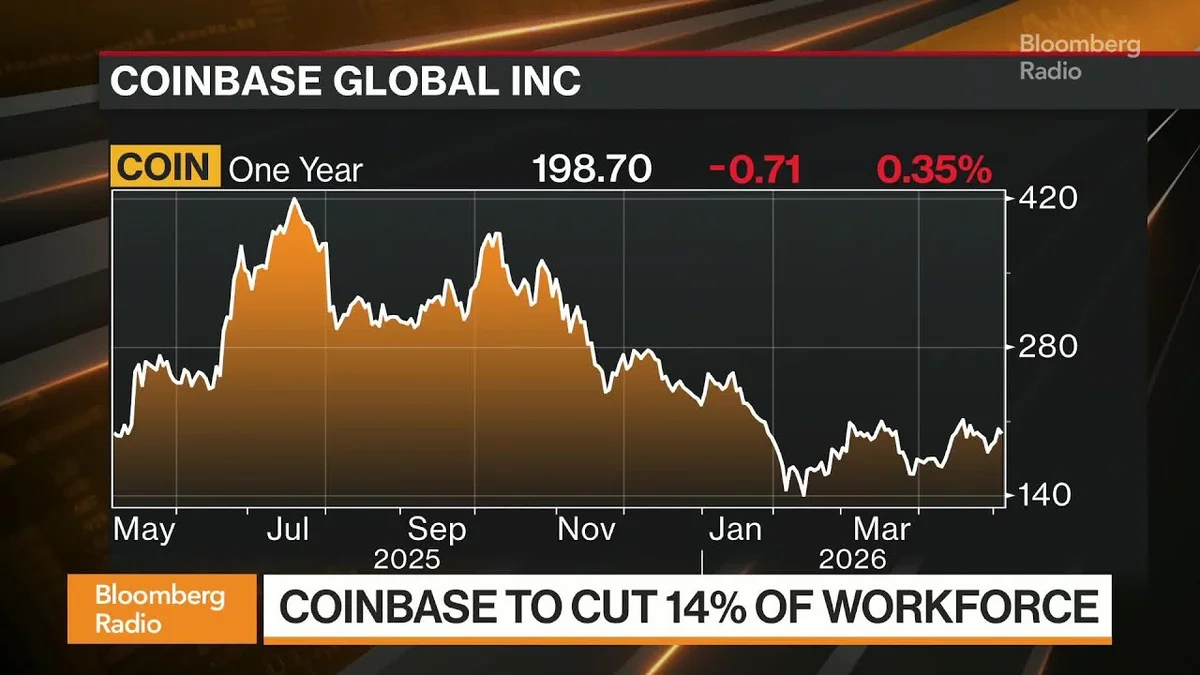
Coinbase, a prominent cryptocurrency exchange, has announced a significant workforce reduction, cutting 14% of its staff. This move, affecting approximately 700 employees, comes amidst a backdrop of volatile markets and a growing influence of artificial intelligence on the financial technology sector. The company's decision reflects a broader trend of economic recalibration within the tech industry, particularly for companies operating in nascent and fluctuating markets like cryptocurrency.
Paul Gulberg on Coinbase's Strategy
Paul Gulberg, Senior Equity Analyst at Bloomberg Intelligence, provided insights into the layoffs. He noted that while Coinbase had previously guided for relatively flat expenses in the first quarter, the company's actual spending was higher. This suggests a need for immediate cost-cutting measures to align expenditures with current market realities. Gulberg also referenced Coinbase's previous layoffs in February, indicating that this latest reduction is part of an ongoing effort to streamline operations and manage costs effectively.
The analyst highlighted that the cryptocurrency market has experienced significant volatility, with Bitcoin's price dropping from a high of $125,000 to around $65,000. This sharp decline, he suggested, has created uncertainty across the entire crypto ecosystem. Coinbase's decision to cut staff appears to be a direct response to these challenging market conditions, aiming to ensure the company's financial stability and operational efficiency.
The full discussion can be found on Bloomberg Podcast's YouTube channel.
The Role of AI and Market Volatility
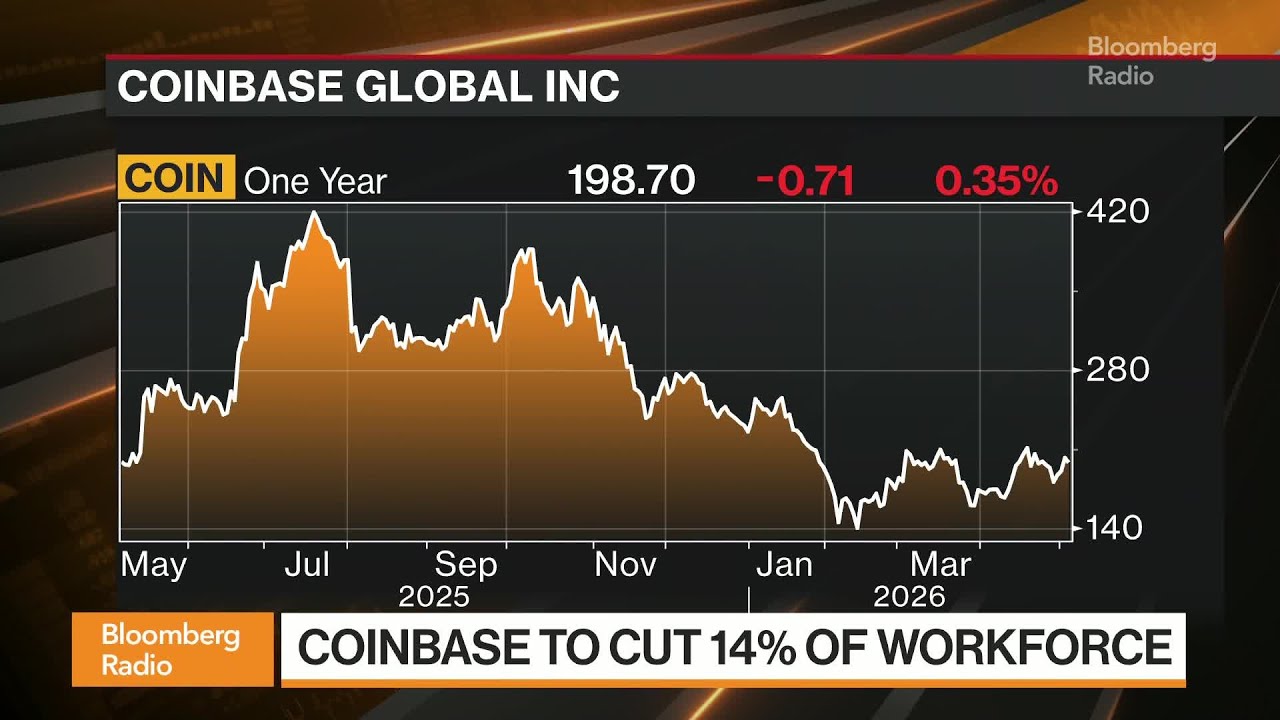
The official announcement from Coinbase explicitly cites both volatile markets and AI as reasons for the job cuts. This dual reasoning suggests a strategic re-evaluation of the company's priorities and resource allocation. While market volatility is a well-understood factor in the cryptocurrency space, the mention of AI indicates its increasing importance in shaping business strategies. Gulberg posited that AI could be playing a role in optimizing business operations, potentially leading to a reduced need for certain human roles, or in identifying areas where cost efficiencies can be achieved.
The company's strategy appears to be adapting to the rapid evolution of the crypto landscape. Gulberg pointed out that businesses within the blockchain and tokenization sectors are continuously shifting their focus. This includes moving towards more traditional markets like equities, as well as adapting to new technologies and market structures. The ability of companies like Coinbase to navigate these changes, including the rapid development of AI and the inherent cyclicality of the crypto market, is crucial for their long-term survival and growth.
Cyclicality in the Crypto Market
Gulberg elaborated on the cyclical nature of the cryptocurrency market, explaining that the short cycles in this sector necessitate continuous adaptation. He noted that the technology underpinning blockchain and cryptocurrency evolves at a rapid pace, requiring companies to regularly adjust their strategies and workforce. This dynamic environment means that businesses must be prepared to scale up or down their operations to align with market demands and technological advancements. The ongoing layoffs at Coinbase can be seen as a part of this cyclical adjustment process.
The analyst suggested that while AI is a contributing factor, the primary driver for these adjustments is the cyclicality of the market. The rapid development of blockchain technology, tokenization, and new financial instruments demands constant innovation and adaptation. Companies in this space must be agile, re-evaluating their business models and operational structures to capitalize on emerging opportunities and mitigate risks. This includes not only adapting to new technologies like AI but also understanding and responding to the broader market trends and economic cycles.