
Big Tech Earnings: AI Spend, China, and Chip Stocks in Focus

Nathan Hager and Bailey Lipshultz discuss upcoming Big Tech earnings from Alphabet, IBM, Intel, and Tesla, focusing on AI spending, US-China competition, and market trends.

9 min read
Nathan Hager and Bailey Lipshultz discuss Big Tech earnings on Bloomberg This Weekend.
Bloomberg Podcast

Visual TL;DR. Big Tech Earnings reveal AI Spending Anxiety. AI Spending Anxiety drives Hyperscaler Investments. AI Spending Anxiety leads to Monetization Challenges. US-China AI Divide impacts Semiconductor Volatility. Hyperscaler Investments inform Market Trends Focus. Monetization Challenges influence Market Trends Focus. Semiconductor Volatility affect Market Trends Focus. US-China AI Divide shapes Market Trends Focus.

  1. Big Tech Earnings: Alphabet, IBM, Intel, Tesla earnings reports are key focus this week
  2. AI Spending Anxiety: significant anxiety around massive AI CapEx projections, up to $725 billion
  3. Hyperscaler Investments: four major hyperscalers' investment narrative will be closely watched
  4. US-China AI Divide: competition and geopolitical tensions impacting AI development and market access
  5. Monetization Challenges: struggles to monetize AI investments and open-source models effectively
  6. Semiconductor Volatility: chip stocks face market fluctuations due to AI demand and supply chains
  7. Market Trends Focus: investors scrutinizing AI spending, competition, and broader market shifts

Visual TL;DR
Visual TL;DR, startuphub.ai Big Tech Earnings reveal AI Spending Anxiety. US-China AI Divide shapes Market Trends Focus reveal shapes Big Tech Earnings AI Spending Anxiety US-China AI Divide Market Trends Focus From startuphub.ai · The publishers behind this format
Visual TL;DR, startuphub.ai Big Tech Earnings reveal AI Spending Anxiety. US-China AI Divide shapes Market Trends Focus reveal shapes Big Tech Earnings AI SpendingAnxiety US-China AIDivide Market TrendsFocus From startuphub.ai · The publishers behind this format
Visual TL;DR, startuphub.ai Big Tech Earnings reveal AI Spending Anxiety. US-China AI Divide shapes Market Trends Focus reveal shapes Big Tech Earnings Alphabet, IBM, Intel, Tesla earningsreports are key focus this week AI Spending Anxiety significant anxiety around massive AICapEx projections, up to $725 billion US-China AI Divide competition and geopolitical tensionsimpacting AI development and market access Market Trends Focus investors scrutinizing AI spending,competition, and broader market shifts From startuphub.ai · The publishers behind this format

Visual TL;DR, startuphub.ai Big Tech Earnings reveal AI Spending Anxiety. US-China AI Divide shapes Market Trends Focus reveal shapes Big Tech Earnings Alphabet, IBM,Intel, Teslaearnings reports… AI SpendingAnxiety significant anxietyaround massive AICapEx projections,… US-China AIDivide competition andgeopoliticaltensions impacting… Market TrendsFocus investorsscrutinizing AIspending,… From startuphub.ai · The publishers behind this format
Visual TL;DR, startuphub.ai Big Tech Earnings reveal AI Spending Anxiety. AI Spending Anxiety drives Hyperscaler Investments. AI Spending Anxiety leads to Monetization Challenges. US-China AI Divide impacts Semiconductor Volatility. Hyperscaler Investments inform Market Trends Focus. Monetization Challenges influence Market Trends Focus. Semiconductor Volatility affect Market Trends Focus. US-China AI Divide shapes Market Trends Focus reveal drives leads to impacts inform influence affect shapes Big Tech Earnings Alphabet, IBM, Intel, Tesla earningsreports are key focus this week AI Spending Anxiety significant anxiety around massive AICapEx projections, up to $725 billion Hyperscaler Investments four major hyperscalers' investmentnarrative will be closely watched US-China AI Divide competition and geopolitical tensionsimpacting AI development and market access Monetization Challenges struggles to monetize AI investments andopen-source models effectively Semiconductor Volatility chip stocks face market fluctuations dueto AI demand and supply chains Market Trends Focus investors scrutinizing AI spending,competition, and broader market shifts From startuphub.ai · The publishers behind this format

Visual TL;DR, startuphub.ai Big Tech Earnings reveal AI Spending Anxiety. AI Spending Anxiety drives Hyperscaler Investments. AI Spending Anxiety leads to Monetization Challenges. US-China AI Divide impacts Semiconductor Volatility. Hyperscaler Investments inform Market Trends Focus. Monetization Challenges influence Market Trends Focus. Semiconductor Volatility affect Market Trends Focus. US-China AI Divide shapes Market Trends Focus reveal drives leads to impacts inform influence affect shapes Big Tech Earnings Alphabet, IBM,Intel, Teslaearnings reports… AI SpendingAnxiety significant anxietyaround massive AICapEx projections,… HyperscalerInvestments four majorhyperscalers'investment… US-China AIDivide competition andgeopoliticaltensions impacting… MonetizationChallenges struggles tomonetize AIinvestments and… SemiconductorVolatility chip stocks facemarket fluctuationsdue to AI demand… Market TrendsFocus investorsscrutinizing AIspending,… From startuphub.ai · The publishers behind this format

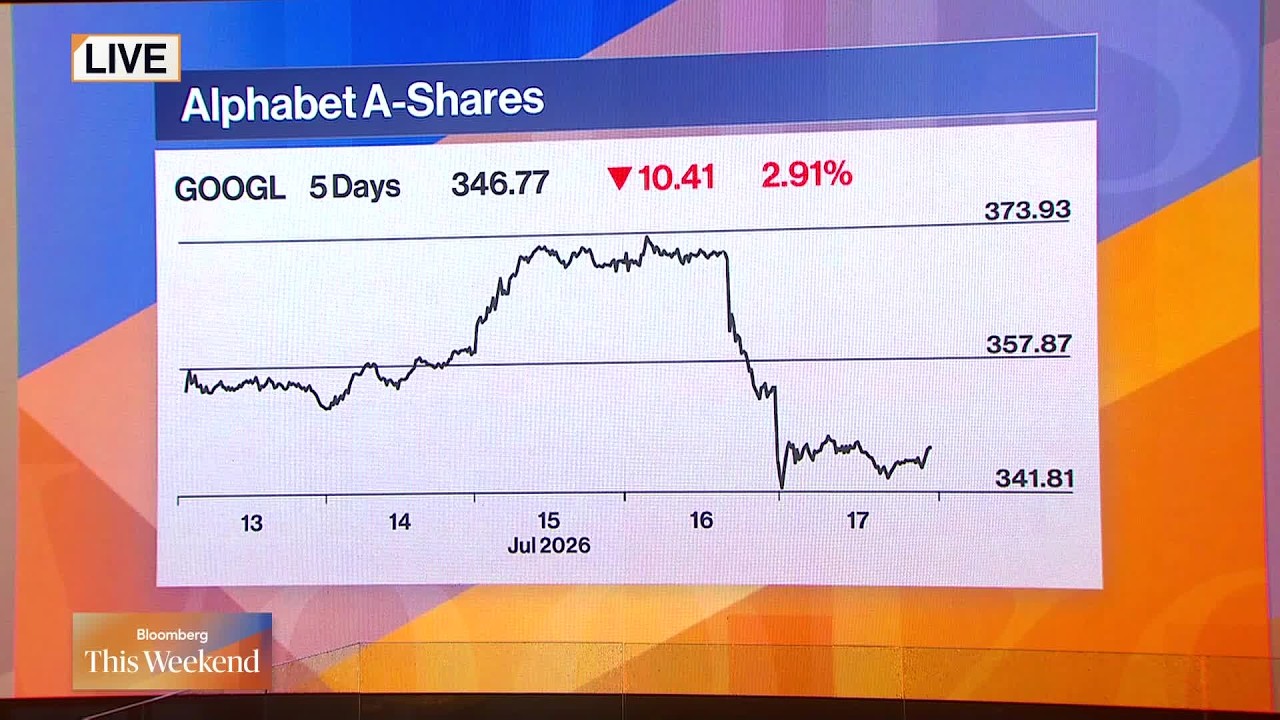
This week is set to be a pivotal one for the tech industry as major players like Alphabet, IBM, Intel, and Tesla prepare to release their second-quarter earnings reports. The market is abuzz with anticipation, particularly concerning the significant investments being made in artificial intelligence (AI). Nathan Hager, co-host of Bloomberg Daybreak, and Bailey Lipshultz, a Bloomberg senior equities reporter, joined "Bloomberg This Weekend" to break down what investors should be looking for.

AI Spending and Hyperscaler Investments

Hager set the stage by noting the considerable anxiety surrounding AI spending. "I think one of the first things we're going to learn in terms of the CapEx is... we've seen so much projection into how much of these companies, these four major hyperscalers, are going to be spending over the next year, projecting something like, what, $725 billion," he said. The focus will be on how Alphabet, reporting on Wednesday, frames the investment narrative for the following week's reports from Meta, Microsoft, and Amazon.

The China-US AI Divide

The conversation then shifted to the international AI landscape, specifically the dynamic between the US and China. Lipshultz shared a compelling observation: "With China, you've got a closed state that has a very open approach to to AI. And here, it's the opposite. You've got an open society, and yet these kind of closed-off companies that are doing all the pioneering work on AI." This contrast raises fundamental questions about the future of AI development, including the cost of tokens and the efficiency of different models.

The full discussion can be found on Bloomberg Podcast's YouTube channel.

Investors Eye Upcoming Earnings for AI Payoff Clues - Bloomberg Podcast
Investors Eye Upcoming Earnings for AI Payoff Clues, from Bloomberg Podcast

The debate centers on whether a "race to the bottom" is occurring, particularly regarding the cost-effectiveness of Chinese AI models compared to those from US-based companies like Anthropic and OpenAI. "The argument, David, when you look even at just at the cost of tokens or the cost of performing kind of menial tasks, it's so cheap," Lipshultz noted. However, she also pointed out the ongoing uncertainty surrounding the specific chips powering these products.

Monetization and Open Source Challenges

A key question for the industry is the monetization of AI products, especially when competing with open-source alternatives. Hager highlighted this challenge: "But, Nathan, this goes to the other issue, which is can you really monetize these products? And if you're competing with an open source format, this is, like, the big thing that people are whispering." The massive capital expenditures by hyperscalers are seen as a hedge against falling behind, with companies like Meta and Google reportedly preferring to overspend than underspend in the AI race.

The long-term vision is to see if current AI investments will lay the groundwork for future profitability, much like Cisco's role in building the internet. The question remains what companies like OpenAI and Anthropic will ultimately look like in this evolving market.

Semiconductor Sector Volatility

The conversation also touched upon the recent turbulence in the semiconductor sector. Lipshultz described a sentiment of "relentless optimism" from chip companies, despite a sell-off at the end of the previous week. "It pays to be optimistic. The big question comes back to when does this chip bottleneck no longer exist?" she questioned. The performance of Taiwan Semi, which beat earnings expectations but saw its stock fall, illustrates an environment where expectations are already high, leading to a "price to perfection" scenario.

Intel's significant year-to-date gains were also discussed, with questions about whether the company can capture a portion of the shifting AI spending. If Intel fails to meet the high bar set by its stock performance, profit-taking could ensue.

SpaceX Stock Performance

In a notable pivot, the discussion turned to SpaceX's recent stock performance. Lipshultz noted a sharp downturn since its debut, likening its chart to that of a previous IPO with significant initial excitement followed by a decline. "A dose of realism on investors' part that, you know, what they were sold at the beginning might not be coming to pass, or it's unlikely that it would be guaranteed to to come to pass," she stated. The uncertainty surrounding future earnings reports and share unlocks adds another layer of complexity to the company's valuation.

Energy and AI's Future

Looking ahead, the significant capital expenditures for AI also raise questions about energy consumption. Hager pondered, "How big is the price of energy gonna start factoring into where people think they're gonna pick winners and losers here?" Lipshultz confirmed that this is already a consideration, with the market analyzing what the energy landscape will look like by 2030 and exploring options like nuclear and geothermal energy to address potential bottlenecks. She contrasted China's diversified energy approach with that of the US.

Looking Ahead

As the earnings season kicks off, the market will be closely watching for any indication of how these tech giants are navigating the AI boom, the competitive pressures from China, and the broader economic factors influencing their growth and investment strategies.

© 2026 StartupHub.ai. All rights reserved. Do not enter, scrape, copy, reproduce, or republish this article in whole or in part. Use as input to AI training, fine-tuning, retrieval-augmented generation, or any machine-learning system is prohibited without written license. Substantially-similar derivative works will be pursued to the fullest extent of applicable copyright, database, and computer-misuse laws. See our terms.