

AI Buildout Enters Riskier Phase, Says Parnassus CIO

Parnassus Investments CIO Todd Ahlsten discusses the AI buildout's risks, highlighting bottlenecks, GPU economic life, and software sector vulnerabilities.

8 min read
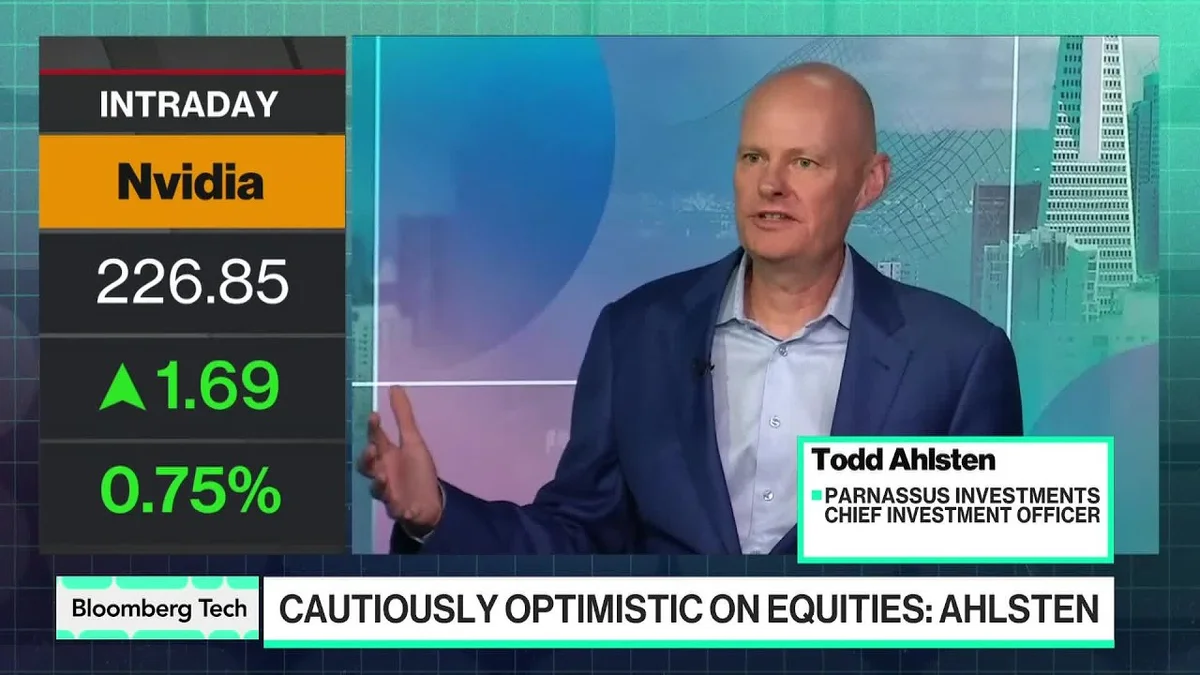
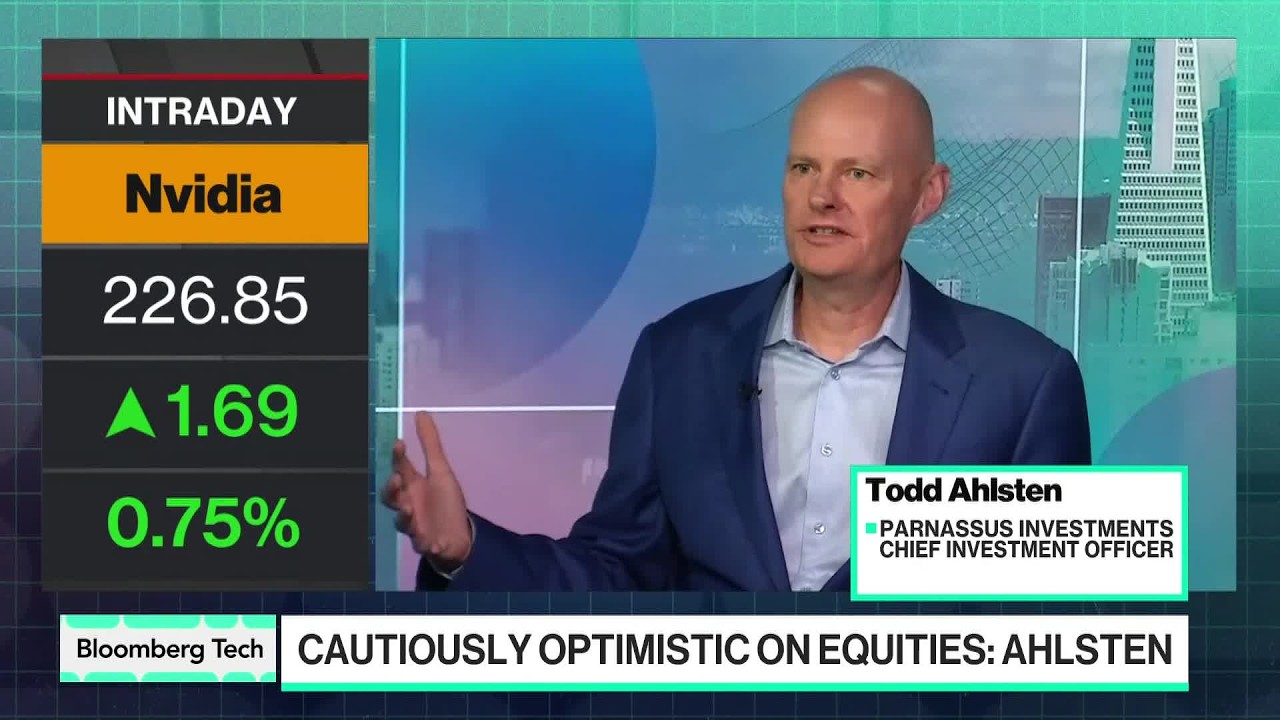
Todd Ahlsten, Chief Investment Officer at Parnassus Investments, speaking on a Bloomberg TV set.
Bloomberg Technology

Visual TL;DR. AI Buildout Risks driven by Unprecedented AI Capex. Unprecedented AI Capex causes Bottlenecks Emerge. AI Buildout Risks includes GPU Economic Life. AI Buildout Risks includes Software Sector Vulnerable. Bottlenecks Emerge requires Discerning Investment. GPU Economic Life requires Discerning Investment. Software Sector Vulnerable requires Discerning Investment. Discerning Investment leads to Identify Long-Term Winners.

  1. AI Buildout Risks: Parnassus CIO Todd Ahlsten highlights increasing risks in the AI infrastructure buildout phase
  2. Unprecedented AI Capex: massive capital expenditure in AI compute leading to industry-wide bottlenecks
  3. Bottlenecks Emerge: physical world struggling to keep pace with digital demand, creating supply chain issues
  4. GPU Economic Life: concerns about the actual economic life and rapid obsolescence of GPUs
  5. Software Sector Vulnerable: vulnerabilities in the software sector due to rapid changes and intense competition
  6. Discerning Investment: investors need a balanced approach, looking beyond immediate hype for long-term value
  7. Identify Long-Term Winners: focus on companies with sustainable advantages and real revenue, not just excitement
Visual TL;DR
Visual TL;DR, startuphub.ai Bottlenecks Emerge requires Discerning Investment. Discerning Investment leads to Identify Long-Term Winners requires leads to AI Buildout Risks Bottlenecks Emerge Discerning Investment Identify Long-Term Winners From startuphub.ai · The publishers behind this format
Visual TL;DR, startuphub.ai Bottlenecks Emerge requires Discerning Investment. Discerning Investment leads to Identify Long-Term Winners requires leads to AI Buildout Risks BottlenecksEmerge DiscerningInvestment IdentifyLong-Term Winners From startuphub.ai · The publishers behind this format
Visual TL;DR, startuphub.ai Bottlenecks Emerge requires Discerning Investment. Discerning Investment leads to Identify Long-Term Winners requires leads to AI Buildout Risks Parnassus CIO Todd Ahlsten highlightsincreasing risks in the AI infrastructurebuildout phase Bottlenecks Emerge physical world struggling to keep pacewith digital demand, creating supply chainissues Discerning Investment investors need a balanced approach,looking beyond immediate hype forlong-term value Identify Long-Term Winners focus on companies with sustainableadvantages and real revenue, not justexcitement From startuphub.ai · The publishers behind this format
Visual TL;DR, startuphub.ai Bottlenecks Emerge requires Discerning Investment. Discerning Investment leads to Identify Long-Term Winners requires leads to AI Buildout Risks Parnassus CIO ToddAhlsten highlightsincreasing risks in… BottlenecksEmerge physical worldstruggling to keeppace with digital… DiscerningInvestment investors need abalanced approach,looking beyond… IdentifyLong-Term Winners focus on companieswith sustainableadvantages and real… From startuphub.ai · The publishers behind this format
Visual TL;DR, startuphub.ai AI Buildout Risks driven by Unprecedented AI Capex. Unprecedented AI Capex causes Bottlenecks Emerge. AI Buildout Risks includes GPU Economic Life. AI Buildout Risks includes Software Sector Vulnerable. Bottlenecks Emerge requires Discerning Investment. GPU Economic Life requires Discerning Investment. Software Sector Vulnerable requires Discerning Investment. Discerning Investment leads to Identify Long-Term Winners driven by causes includes includes requires requires requires leads to AI Buildout Risks Parnassus CIO Todd Ahlsten highlightsincreasing risks in the AI infrastructurebuildout phase Unprecedented AI Capex massive capital expenditure in AI computeleading to industry-wide bottlenecks Bottlenecks Emerge physical world struggling to keep pacewith digital demand, creating supply chainissues GPU Economic Life concerns about the actual economic lifeand rapid obsolescence of GPUs Software Sector Vulnerable vulnerabilities in the software sector dueto rapid changes and intense competition Discerning Investment investors need a balanced approach,looking beyond immediate hype forlong-term value Identify Long-Term Winners focus on companies with sustainableadvantages and real revenue, not justexcitement From startuphub.ai · The publishers behind this format
Visual TL;DR, startuphub.ai AI Buildout Risks driven by Unprecedented AI Capex. Unprecedented AI Capex causes Bottlenecks Emerge. AI Buildout Risks includes GPU Economic Life. AI Buildout Risks includes Software Sector Vulnerable. Bottlenecks Emerge requires Discerning Investment. GPU Economic Life requires Discerning Investment. Software Sector Vulnerable requires Discerning Investment. Discerning Investment leads to Identify Long-Term Winners driven by causes includes includes requires requires requires leads to AI Buildout Risks Parnassus CIO ToddAhlsten highlightsincreasing risks in… Unprecedented AICapex massive capitalexpenditure in AIcompute leading to… BottlenecksEmerge physical worldstruggling to keeppace with digital… GPU Economic Life concerns about theactual economiclife and rapid… Software SectorVulnerable vulnerabilities inthe software sectordue to rapid… DiscerningInvestment investors need abalanced approach,looking beyond… IdentifyLong-Term Winners focus on companieswith sustainableadvantages and real… From startuphub.ai · The publishers behind this format

The current wave of investment into AI infrastructure is creating significant bottlenecks, with the physical world struggling to keep pace with digital demand, according to Todd Ahlsten, Chief Investment Officer and Portfolio Manager at Parnassus Investments. Speaking on Bloomberg TV, Ahlsten cautioned that while recent announcements from major players like Nvidia (NASDAQ:NVDA), Anthropic, and SpaceX are generating excitement, investors need to be discerning and look beyond the immediate hype.

The AI Infrastructure Boom and Its Bottlenecks

Ahlsten highlighted that the unprecedented capital expenditure in AI compute is leading to bottlenecks across the industry. He noted that companies like Anthropic are reporting real revenue and updated ARR figures, which are moving the market for chipmakers and software providers alike. However, he stressed the importance of a balanced investment approach, urging investors to avoid getting "swept up" and instead focus on identifying long-term beneficiaries.

The full discussion can be found on Bloomberg Technology's YouTube channel.

AI Buildout Entering a Riskier Phase, Says Parnassus CIO - Bloomberg Technology
AI Buildout Entering a Riskier Phase, Says Parnassus CIO, from Bloomberg Technology

A significant point of discussion was Nvidia's recent announcement of a $500 billion initiative involving six Wall Street firms to channel third-party capital. Ahlsten questioned the modeling of a GPU's economic life in such financing deals, pointing out the difference between depreciation and actual utility. He believes that GPUs are evolving into an asset class of their own, but raised concerns about the durability of these assets given the rapid pace of innovation and the potential for new architectures and memory solutions that could render current hardware obsolete.

Assessing Risk and Return in AI Investments

Ahlsten suggested that while the next two to three years for AI infrastructure investments might be predictable, the five to ten-year horizon presents significant uncertainty. He advised investors to carefully consider the risk-adjusted returns needed to participate in this dynamic market.

The conversation also touched upon the broader market impact, with Alphabet Inc. (NASDAQ:GOOGL) seeking capital through equity and bond markets. Ahlsten viewed this as a sign that the market is entering a riskier phase of the cycle. He drew a parallel to the national deficit and the need to fund housing, suggesting that increased borrowing for infrastructure could lead to crowding out and increased risk.

Regarding the concern of circular financing, particularly with companies like Nvidia investing its own capital into projects where customers lease compute, Ahlsten emphasized the need for investors to identify opportunities that mitigate leverage and risk. He pointed to companies like Vulcan Materials, which supply concrete for data center construction, and Linde, which provides industrial gases with long-term take-or-pay agreements, as examples of second and third-order winners.
Identifying Winners and Those at Risk

Ahlsten expressed confidence in companies like Nvidia and AMD (NASDAQ:AMD), praising their technological advancements and market positioning. He noted that AMD's Helios 450 ramp appears promising, and its diverse compute offerings (FPGAs, CPUs, GPUs) make it a strong contender. He also highlighted that AMD is less involved in the direct customer financing that could raise circular financing concerns.

Conversely, Ahlsten identified software companies like Salesforce, Workday, and ServiceNow as potentially vulnerable. He argued that their traditional seat-license models are under increasing pressure. The rise of token-based AI usage, as seen with Google's (NASDAQ:GOOGL) Gemini and other AI models, could disrupt these established software giants. Ahlsten believes the pricing and usage dynamics of AI services will challenge the long-term bankability of the seat-license model, even for well-established companies.

© 2026 StartupHub.ai. All rights reserved. Do not enter, scrape, copy, reproduce, or republish this article in whole or in part. Use as input to AI training, fine-tuning, retrieval-augmented generation, or any machine-learning system is prohibited without written license. Substantially-similar derivative works will be pursued to the fullest extent of applicable copyright, database, and computer-misuse laws. See our terms.