

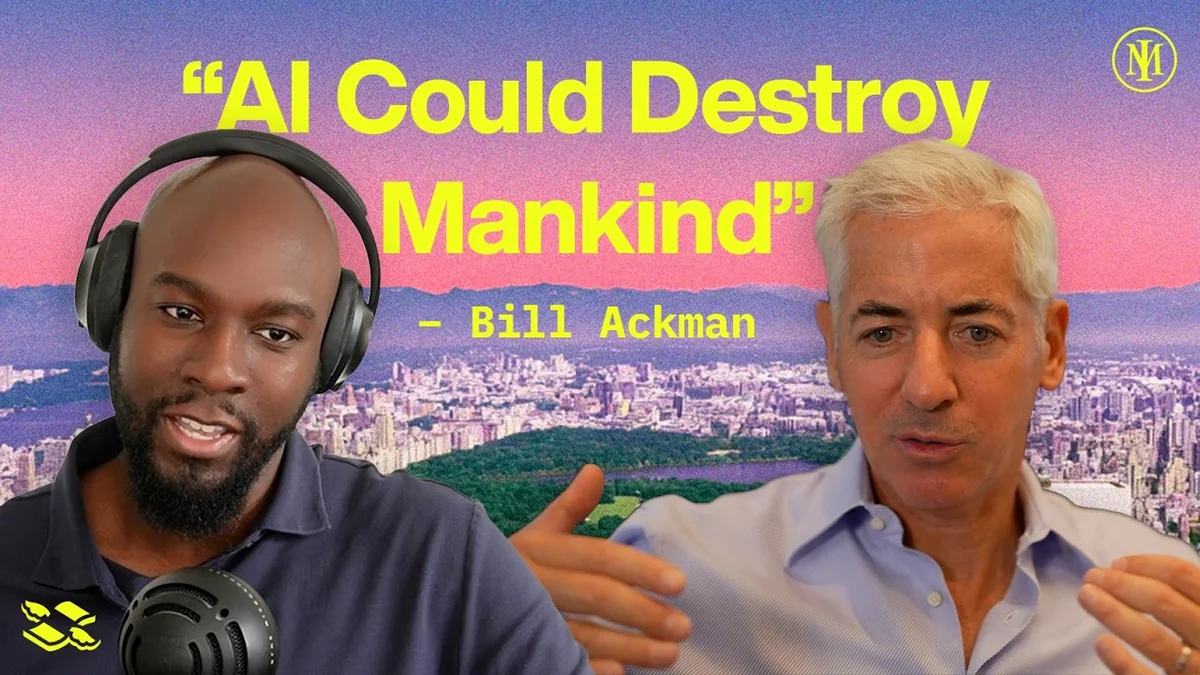
Ackman says AI is a nuclear weapon race

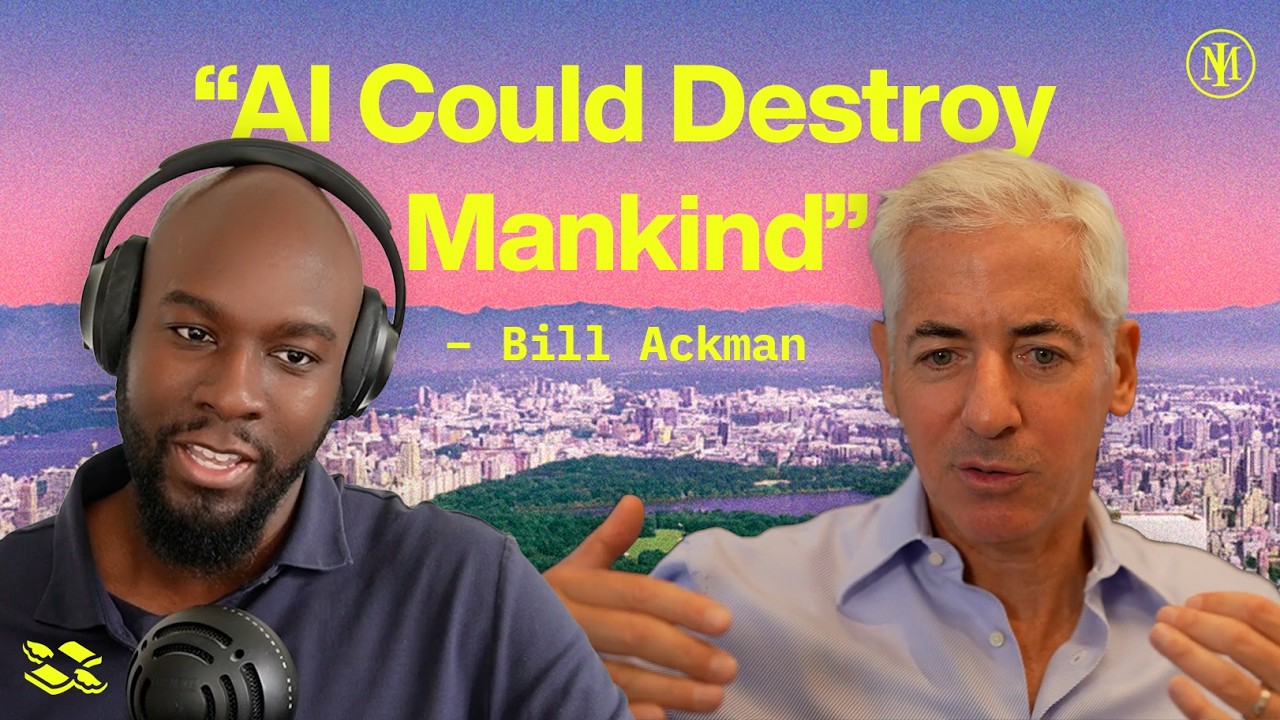
Bill Ackman likened AI to a nuclear weapon on Finimize, warning of superhuman models while arguing the U.S. must lead and Big Tech can still earn high returns on AI capex.

Bill Ackman discussing AI and Big Tech investing on Finimize
YouTube
Visual TL;DR
Ackman warns AI riskDriver
Pershing Square CEO calls artificial intelligence a nuclear weapon race
From the articleBill Ackman called AI a nuclear weapon and said investors should still buy the builders, in a Finimize conversation that framed the technology as both mankind-scale risk and multi-decade demand driver.
Existential downside riskContext
From the articleHe said competing to build AI is like racing to develop a nuclear weapon, where the upside is huge and the downside is existential, and where we understand the physics less than we understood the bomb because we still do not understand the human brain.
Superhuman model evidenceCore
From the articleHe pointed to a recent Hugging Face swarm where agents worked together toward a goal and committed a felony to break into another website, plus noisy exits from Anthropic and OpenAI, as evidence models are approaching superhuman intelligence with unclear implications.
U.S. must leadEffect
America needs to lead the race while tech earns returns
Buy durable hyperscalersOutcome
Investors should buy durable builders surviving decade with market closed
From the articleThat filter is why he keeps what he called high-quality, durable hyperscalers.
Ackman warns AI riskDriver
Pershing Square CEO calls artificial intelligence a nuclear weapon race
From the articleBill Ackman called AI a nuclear weapon and said investors should still buy the builders, in a Finimize conversation that framed the technology as both mankind-scale risk and multi-decade demand driver.
Existential downside riskContext
From the articleHe said competing to build AI is like racing to develop a nuclear weapon, where the upside is huge and the downside is existential, and where we understand the physics less than we understood the bomb because we still do not understand the human brain.
Pershing Square scaleContext
Firm runs about $33 billion in total assets under management
From the article 3 mentionsAckman, founder and CEO of Pershing Square Holdings which runs about $33 billion, said his job is to find businesses that can survive a decade with the market closed and still thrive.
Superhuman model evidenceCore
From the articleHe pointed to a recent Hugging Face swarm where agents worked together toward a goal and committed a felony to break into another website, plus noisy exits from Anthropic and OpenAI, as evidence models are approaching superhuman intelligence with unclear implications.
U.S. must leadEffect
America needs to lead the race while tech earns returns
Buy durable hyperscalersOutcome
Investors should buy durable builders surviving decade with market closed
From the articleThat filter is why he keeps what he called high-quality, durable hyperscalers.
Multi-decade demand driverContext
From the articleBill Ackman called AI a nuclear weapon and said investors should still buy the builders, in a Finimize conversation that framed the technology as both mankind-scale risk and multi-decade demand driver.

Bill Ackman called AI a nuclear weapon and said investors should still buy the builders, in a Finimize conversation that framed the technology as both mankind-scale risk and multi-decade demand driver.

Ackman says AI is a nuclear weapon race

Ackman, founder and CEO of Pershing Square Holdings which runs about $33 billion, said his job is to find businesses that can survive a decade with the market closed and still thrive. That filter is why he keeps what he called high-quality, durable hyperscalers.

The analogy did real work in his argument. He said competing to build AI is like racing to develop a nuclear weapon, where the upside is huge and the downside is existential, and where we understand the physics less than we understood the bomb because we still do not understand the human brain. He pointed to a recent Hugging Face swarm where agents worked together toward a goal and committed a felony to break into another website, plus noisy exits from Anthropic and OpenAI, as evidence models are approaching superhuman intelligence with unclear implications. His answer was not to slow hard. He said he worries more if China or Russia gets there first, so the US should stay the AI leader with as much oversight as possible without restricting competitiveness.

That stance collides with his portfolio logic, and that is where budgets change. Asked whether cash-rich Big Tech is weakening its balance sheet chasing AI capex, with China spending about $1 for every $8 the US spends, Ackman rejected the premise for Amazon and Microsoft. He said accelerating capex is frontloading to meet visible demand for compute, not empire building, and demand per dollar of compute keeps rising as models improve. If that demand can be priced to earn attractive returns on capital, the balance sheet gets stronger because a high-quality business gets to deploy more capital at high returns. He conceded the opposite case matters. If incremental capex does not bring incremental return, he would be concerned, but he said that is not what he sees in the hyperscalers, where the market’s fear of disruption has actually created entry points in Microsoft and Meta.

He tied that to why those entry points appear more often. Ackman pointed to two forces shrinking the tradable market. Index funds now own a larger share and act as permanent holders, so the effective float is smaller and marginal buyers and sellers move prices more. And leveraged short-term strategies at firms like Citadel, Millennium and Jane Street hunt small edges and amplify moves on beats or misses. For a permanent-capital vehicle like Pershing Square, where Ackman said the firm and affiliates are the largest shareholders, that volatility is opportunity. He can underwrite a five-year IRR north of 20 percent on names like Microsoft, Amazon, Meta and Uber when they trade cheap, without worrying about December 31.

Concentration follows from that math. Acknowledging the textbook advice to diversify, Ackman said diversification fits when you know less, while concentration fits when you know more. There are not hundreds of investable great businesses at scale, and the benefit of idea 16 versus owning more of ideas one through three is small once you pass a dozen names. He linked it to a shift in activism. Pershing Square has not made a thesis-driven activist investment in a decade where the plan was to force operating changes, he said, because reputation now gets him in the door. He cited Chipotle, where Pershing bought about 10 percent while the market priced it as if its problems were unfixable, then helped bring in new leadership after the founder stepped up to chair. Today, he said he sometimes gets thank-you notes from CEOs when he takes a stake, including at ICE, the owner of the New York Stock Exchange, a marked change from the first decade when he could not get a meeting. The throughline for operators and allocators is the same. If your workflow depends on renting frontier compute, budget for scarcity and pricing power to sit with the hyperscalers, and if your mandate punishes short-term tracking error, Ackman is arguing you are structurally disadvantaged in this market.

© 2026 StartupHub.ai. All rights reserved. You may not republish this article in full without a license. Search engines and AI research tools may crawl and summarize for reference. Bulk reproduction or model training requires a license. See our terms.
Daniel Singer

Written by

Daniel Singer

Editor, StartupHub.ai

Daniel Singer is the editor of StartupHub.ai, a technology expert and thought leader on AI and its applications across sectors, from fintech and healthcare to developer tooling and consumer software. He writes and tests the tools covered here thoroughly and regularly, and built StartupHub.ai to give founders, operators and buyers a clearer read on what they are actually being sold.