

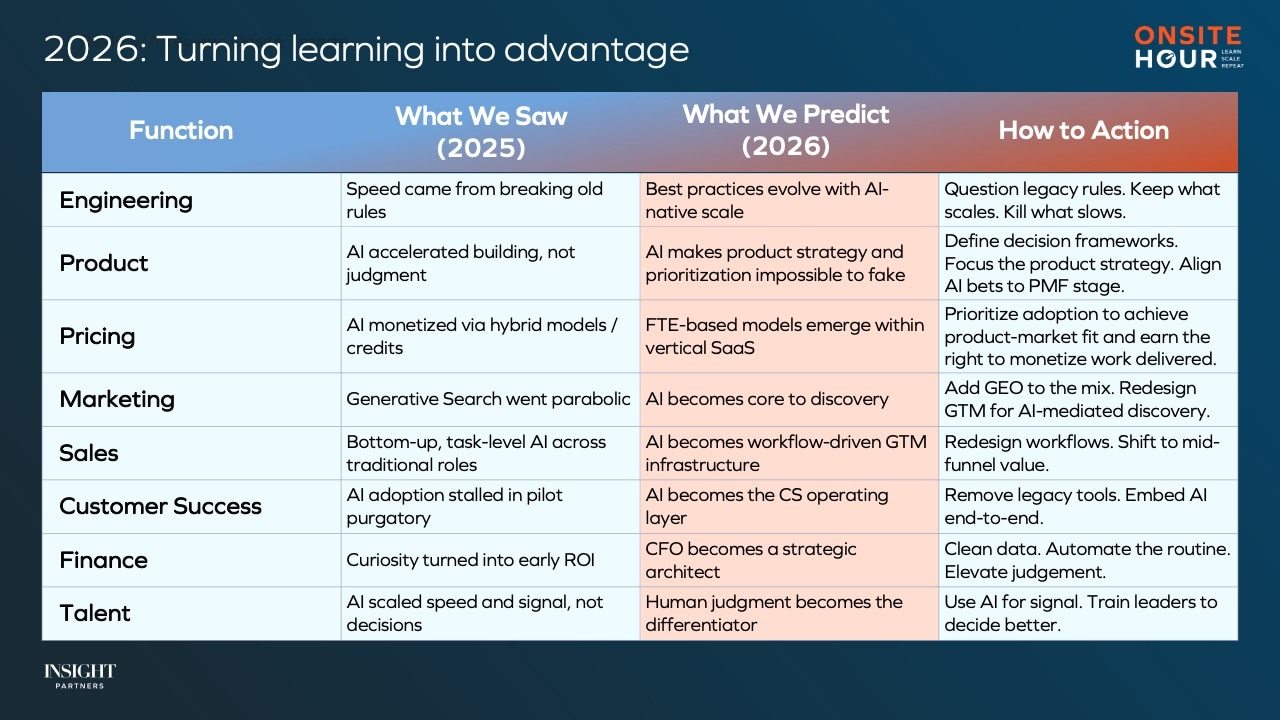
The experimental phase of enterprise AI is over. By 2026, the focus shifts from quick wins via fragile AI integrations to AI as foundational infrastructure. Execution alone is no longer a differentiator; strategy, data integrity, and decision-making now determine growth or dysfunction.
Rethinking AI Architecture
Cloud-native assumptions are challenged. Some organizations are returning to on-premise for data privacy, while human-in-the-loop workflows re-emerge to manage AI-generated code volume. This reflects a pragmatic recalibration, akin to the industry's move from waterfall.
Senior engineers now orchestrate and review AI Agents, treating code generation as a starting point. Agility focuses on removing friction, and small, isolated innovation teams break cleanly from legacy constraints.
Product Strategy: The New Bottleneck
As engineering velocity increases, the cost of building the wrong thing becomes prohibitive. The advantage lies with those possessing the clearest strategy and decision-making systems.
Product teams measure judgment over output, prioritizing high-conviction decisions. Discovery and delivery collapse into a continuous loop, with AI surfacing patterns in usage data and call transcripts.
Static roadmaps yield to dynamic portfolios. The value of a Product Manager is now measured by strategic intent, not documentation volume, with product bets treated as live experiments.
Product-Market Fit Unlocks Pricing
Monetization is inseparable from product design. Usage-based credit models are reaching limits; buyers demand predictability. Agentic AI solutions with strong product-market fit are exploring fractional FTE pricing.
This model aligns pricing with buyer ROI perception. With declining inference costs, the margin risk of predictable pricing falls, making it a competitive advantage.
Generative Engine Optimization: Beyond SEO
Generative AI and conversational search are now primary research channels. Brand visibility within AI-generated answers is a board-level concern.
Marketing teams must supply structured, credible data for LLMs. This necessitates Generative AI strategy, leading to Generative Engine Optimization (GEO). AI visibility is a core go-to-market component.
Measurement shifts to favorable appearance in generative outputs, not just search rankings. Content and data strategies now mirror customer engagement with conversational tools.
Moving Beyond Pilot Purgatory
Tactical AI applications in 2025 yielded only micro-efficiencies. True impact requires end-to-end system redesign, with AI as an operating layer surfacing risk and opportunity.
Customer-facing professionals become strategic advisors, supported by automation for onboarding and data hygiene. Sales and customer success reorient around integrated workflows.
Finance: From Scorekeeper to Value Architect
Finance teams, early AI adopters, see the CFO mandate expand from cost control to value creation. AI improves forecast accuracy and compresses cycle times.
Roles shift to validating AI outputs, governing automated decisions, and partnering cross-functionally. Data quality is non-negotiable, and talent is upskilled to validate AI models.
Prioritizing Judgment Over Pedigree
As AI excels at pattern recognition, human judgment becomes more valuable. Hiring decisions shift from resume signals to deeper indicators of thinking and operating.
AI synthesizes interview data to surface strengths and inconsistencies, allowing humans to focus on context and nuance. This combination yields better hiring outcomes.
Clarity is the Advantage
The defining advantage in 2026 is not AI access, but intentional deployment. Strategy and data discipline determine outcomes as software creation commoditizes.
Winning companies challenge legacy assumptions. The question is not *if* to adopt AI, but which old ways to abandon for future growth.


