

Chai Discovery: AI Designing Proteins Like Software

Chai Discovery's co-founders discuss how their AI platform is revolutionizing protein design and drug discovery, making biology feel more like software development.

9 min read
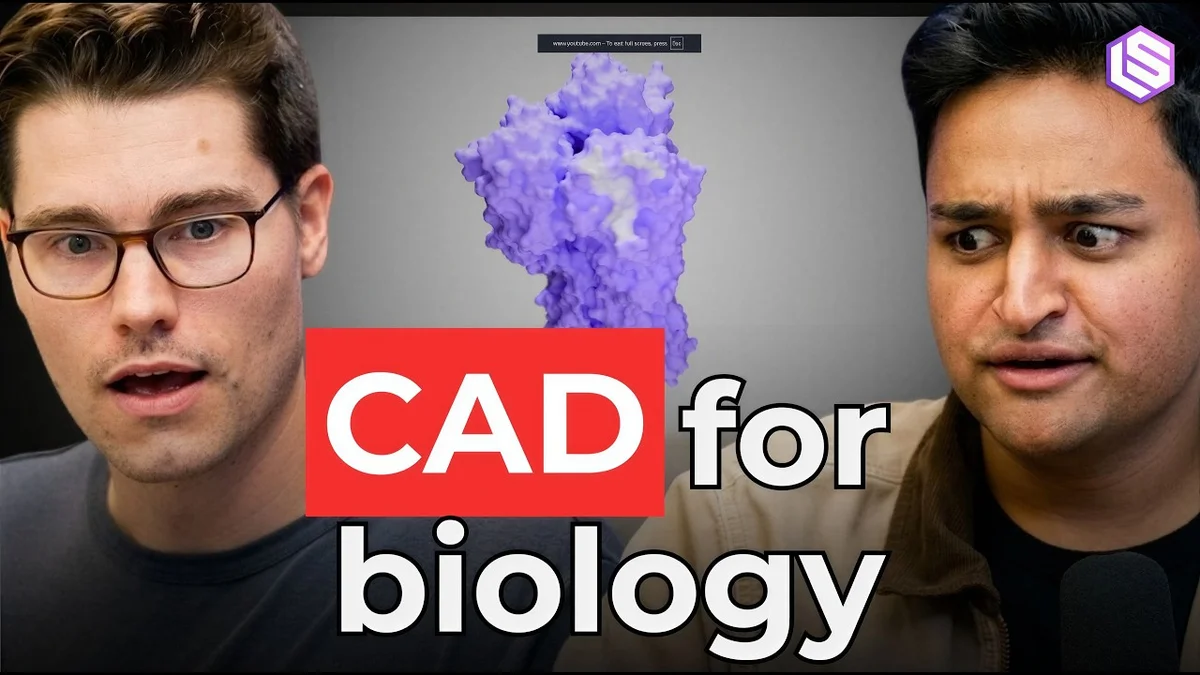
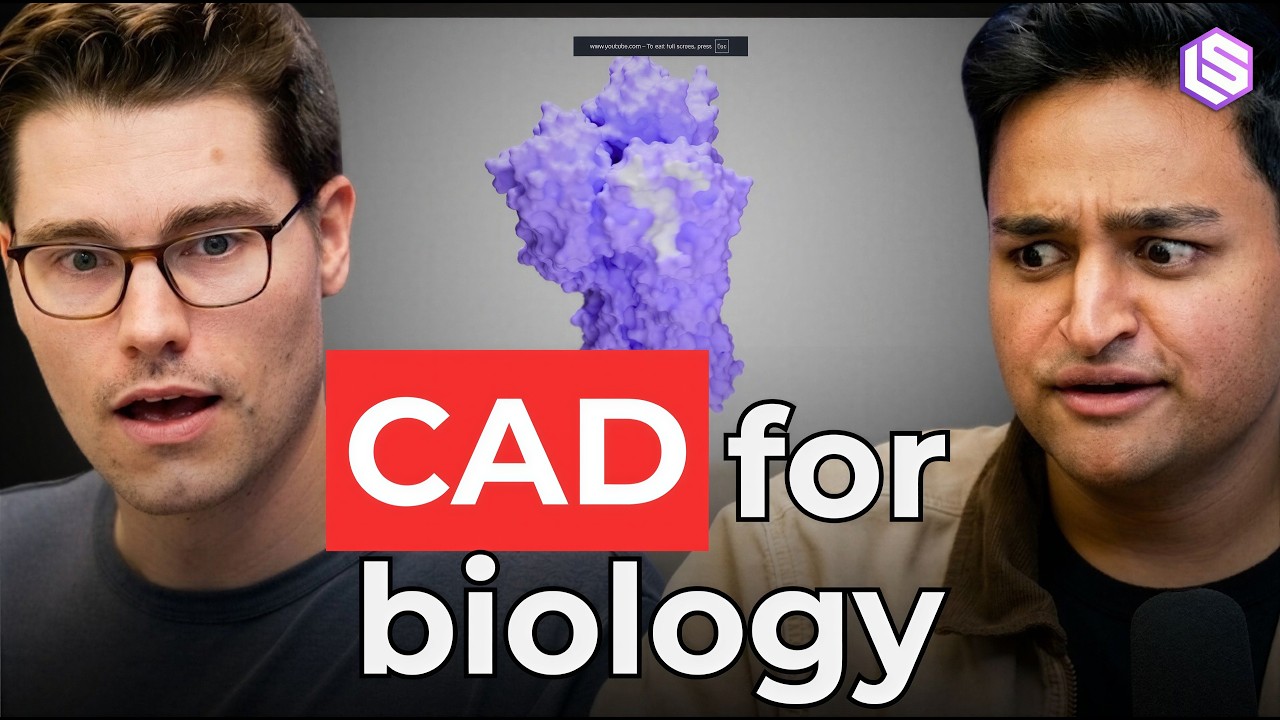
Matt McPartland and Neil Patil of Chai Discovery discussing AI in protein design on the Latent Space podcast.
Latent Space

Visual TL;DR. Biology is complex drives need AI Protein Design. AI Protein Design enables Software-like Biology. Software-like Biology manifests as Photoshop for Molecules. Photoshop for Molecules leads to Revolutionize Drug Discovery. Revolutionize Drug Discovery results in Faster Drug Development. Faster Drug Development delivers New Medicines.

  1. Biology is complex: traditional drug discovery is slow, expensive, and often fails to find new medicines
  2. AI Protein Design: Chai Discovery applies AI to design proteins, making biology feel like software development
  3. Software-like Biology: transforming biology into an agile, iterative, and more predictable software-like process
  4. Photoshop for Molecules: a 'Photoshop-esque' design suite for creating and manipulating new protein structures
  5. Revolutionize Drug Discovery: fundamentally changing how new medicines are conceived and developed with AI
  6. Faster Drug Development: accelerating the creation of novel antibodies and other therapeutic proteins
  7. New Medicines: enabling the discovery and development of previously unattainable therapeutic solutions
Visual TL;DR
Visual TL;DR, startuphub.ai Photoshop for Molecules leads to Revolutionize Drug Discovery leads to AI Protein Design Photoshop for Molecules Revolutionize Drug Discovery New Medicines From startuphub.ai · The publishers behind this format
Visual TL;DR, startuphub.ai Photoshop for Molecules leads to Revolutionize Drug Discovery leads to AI Protein Design Photoshop forMolecules RevolutionizeDrug Discovery New Medicines From startuphub.ai · The publishers behind this format
Visual TL;DR, startuphub.ai Photoshop for Molecules leads to Revolutionize Drug Discovery leads to AI Protein Design Chai Discovery applies AI to designproteins, making biology feel likesoftware development Photoshop for Molecules a 'Photoshop-esque' design suite forcreating and manipulating new proteinstructures Revolutionize Drug Discovery fundamentally changing how new medicinesare conceived and developed with AI New Medicines enabling the discovery and development ofpreviously unattainable therapeuticsolutions From startuphub.ai · The publishers behind this format
Visual TL;DR, startuphub.ai Photoshop for Molecules leads to Revolutionize Drug Discovery leads to AI Protein Design Chai Discoveryapplies AI todesign proteins,… Photoshop forMolecules a 'Photoshop-esque'design suite forcreating and… RevolutionizeDrug Discovery fundamentallychanging how newmedicines are… New Medicines enabling thediscovery anddevelopment of… From startuphub.ai · The publishers behind this format
Visual TL;DR, startuphub.ai Biology is complex drives need AI Protein Design. AI Protein Design enables Software-like Biology. Software-like Biology manifests as Photoshop for Molecules. Photoshop for Molecules leads to Revolutionize Drug Discovery. Revolutionize Drug Discovery results in Faster Drug Development. Faster Drug Development delivers New Medicines drives need enables manifests as leads to results in delivers Biology is complex traditional drug discovery is slow,expensive, and often fails to find newmedicines AI Protein Design Chai Discovery applies AI to designproteins, making biology feel likesoftware development Software-like Biology transforming biology into an agile,iterative, and more predictablesoftware-like process Photoshop for Molecules a 'Photoshop-esque' design suite forcreating and manipulating new proteinstructures Revolutionize Drug Discovery fundamentally changing how new medicinesare conceived and developed with AI Faster Drug Development accelerating the creation of novelantibodies and other therapeutic proteins New Medicines enabling the discovery and development ofpreviously unattainable therapeuticsolutions From startuphub.ai · The publishers behind this format
Visual TL;DR, startuphub.ai Biology is complex drives need AI Protein Design. AI Protein Design enables Software-like Biology. Software-like Biology manifests as Photoshop for Molecules. Photoshop for Molecules leads to Revolutionize Drug Discovery. Revolutionize Drug Discovery results in Faster Drug Development. Faster Drug Development delivers New Medicines drives need enables manifests as leads to results in delivers Biology iscomplex traditional drugdiscovery is slow,expensive, and… AI Protein Design Chai Discoveryapplies AI todesign proteins,… Software-likeBiology transformingbiology into anagile, iterative,… Photoshop forMolecules a 'Photoshop-esque'design suite forcreating and… RevolutionizeDrug Discovery fundamentallychanging how newmedicines are… Faster DrugDevelopment accelerating thecreation of novelantibodies and… New Medicines enabling thediscovery anddevelopment of… From startuphub.ai · The publishers behind this format

In the rapidly evolving landscape of AI for science, Chai Discovery is making significant waves. The protein design startup, just two and a half years old, is fundamentally changing how new medicines are conceived and developed. Co-founders Matt McPartland and Neil Patil recently joined the Latent Space podcast to discuss their ambitious mission, detailing how their AI models are transforming biology into a more agile, software-like process.

Chai Discovery: AI Designing Proteins Like Software - Latent Space
Chai Discovery: AI Designing Proteins Like Software — from Latent Space

From Computer Science to Biology

Matt McPartland, co-founder at Chai Discovery, brings a background rooted in theoretical computer science, which he transitioned to AI biology during his PhD. He witnessed firsthand the transformative power of AI in protein structure prediction, starting from the early days of AlphaFold. "I was in the field during AlphaFold 2 and like got to see a lot of the interesting developments at that time," McPartland shared. He saw the potential to apply these advancements in the real world, a vision that led to the founding of Chai.

Neil Patil, who leads platform and product at Chai, has a more varied background, spanning app development, robotics, and SaaS before finding his way to Chai. "I kind of got into programming like 15 years ago, making apps in the app store. Got really addicted to the dopamine hits you get from that," Patil explained. He later transitioned to robotics and self-driving cars, eventually finding his way to Chai about a year ago to help scale its platform and commercialization efforts.

Revolutionizing Drug Discovery with AI

Chai's core thesis is to act as the software and modeling layer for drug discovery, a strategy that was once controversial but is now proving its value. "Drug discovery is a very lengthy process, right? And a lot of these pharma companies are spending lots of time, you know, years and years and billions of dollars trying to find initial therapeutic candidates," Patil noted. Chai's AI models are designed to accelerate this by identifying initial binders and beyond.

Unlike companies focused on developing their own drugs, Chai positions itself as a "neutral software factory for making medicines." This approach allows them to partner with and support various pharmaceutical companies in their drug discovery journeys. The company has already announced significant partnerships with major players like Eli Lilly, Pfizer, Novartis, and Genentech, demonstrating the compelling nature of their offering to investors and customers alike.

A 'Photoshop-esque' Design Suite for Molecules

McPartland described Chai's platform as looking "a lot less like a chat GPT and a lot more like uh Autodesk or or Solid Works or or Figma." Users can load up their molecules and utilize tools analogous to Photoshop's, such as a "paint tool to kind of paint your epitope" and a "content-aware fill tool to kind of get your uh your binders generated from Chai." This intuitive, visual interface is crucial for researchers navigating the complex world of protein design.

From Waterfall to Agile Science

Traditionally, drug discovery has followed a "waterfall model" with distinct phases like target discovery, hit discovery, and optimization, each taking months to years. This process is costly and slow, making early-stage experimentation expensive. However, Patil highlighted how AI is changing this: "If you start to get in a regime where you can have models give you really promising candidates, you can start to make that look a lot more like a loop." He likened this shift to becoming "more agile in software development," enabling faster iteration and discovery.

The Power of Antibodies and AI's Future

Chai's focus on antibodies is strategic. Antibodies, with their Y-shaped structure and specific binding tips (CDR loops), offer flexibility in design. While predicting their binding is complex, the ability to design them allows for greater control. "You can be a lot more selective about the types of designs you want to make and the types of structures you actually want to focus on," McPartland explained. This precision allows for targeted therapies, such as Antibody-Drug Conjugates (ADCs), where a toxic molecule is delivered directly to cancer cells.

The company is also pushing the boundaries into more complex therapeutic modalities like bispecifics and ADCs, and exploring agonist behavior, which involves precisely "pressing a switch" on cellular targets. "I think like one of the things that's really exciting about where we're getting to with some of these models is we can start to get that precise, right? We can really target a very specific epitope," McPartland added.

The Evolution of Chai's Models

The journey began with Chai 1, a structure prediction model that essentially mapped amino acid sequences to their folded 3D shapes. This was followed by Chai 2, an all-atom diffusion model capable of designing new molecules that bind to target structures. This marked a significant leap, enabling generative design for therapeutics. The company is now working on Chai 3, continually improving model accuracy and expanding capabilities.

The progress in protein structure prediction, from AlphaFold 2 to multi-chain predictions and inverse folding, has been rapid. "We didn't have a multi-chain structure prediction model until like 2021. That was 5 years ago when we could like start with deep learning to like actually predict the shape of two proteins at once," McPartland recalled.

Ultimately, Chai's vision is to harness AI's power to accelerate scientific discovery. By building robust models and user-friendly platforms, they aim to unlock new frontiers in medicine and beyond, making complex biological challenges more tractable and driving the future of AI for science.
© 2026 StartupHub.ai. All rights reserved. Do not enter, scrape, copy, reproduce, or republish this article in whole or in part. Use as input to AI training, fine-tuning, retrieval-augmented generation, or any machine-learning system is prohibited without written license. Substantially-similar derivative works will be pursued to the fullest extent of applicable copyright, database, and computer-misuse laws. See our terms.