

UCLA Professor: AI Models Aren't Safe Yet

UCLA Professor Safiya Umoja Noble warns that current AI models are unsafe due to inherent biases, arguing for the critical need for human expertise and ethical considerations in AI development.

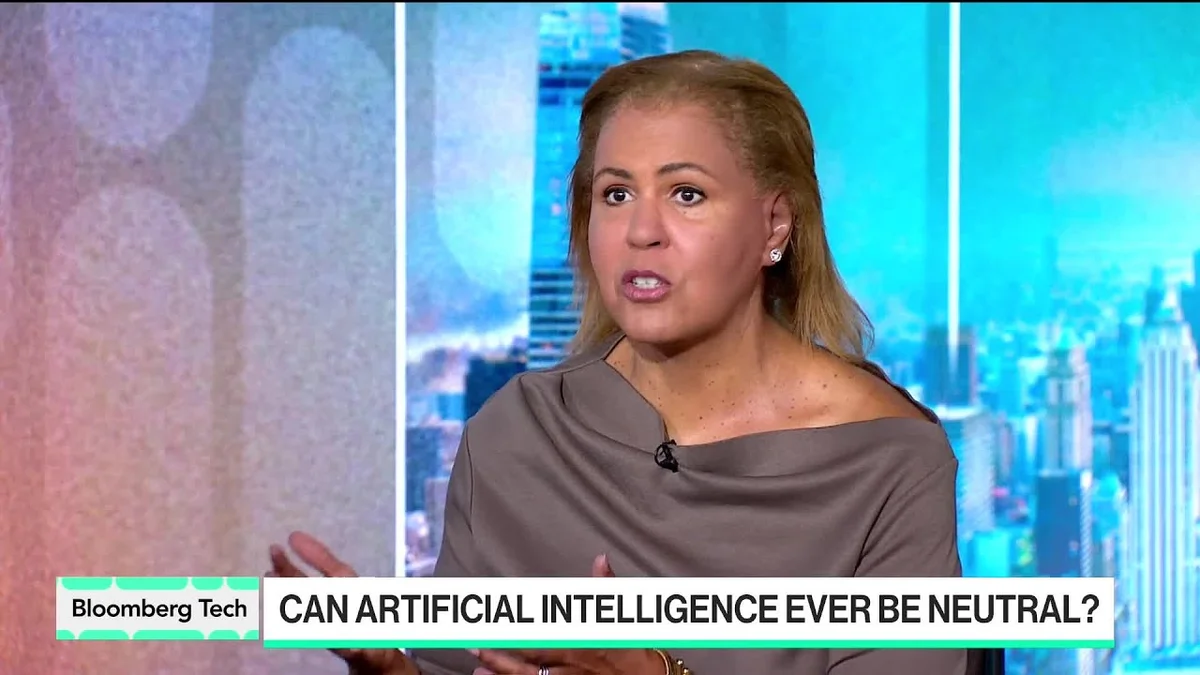
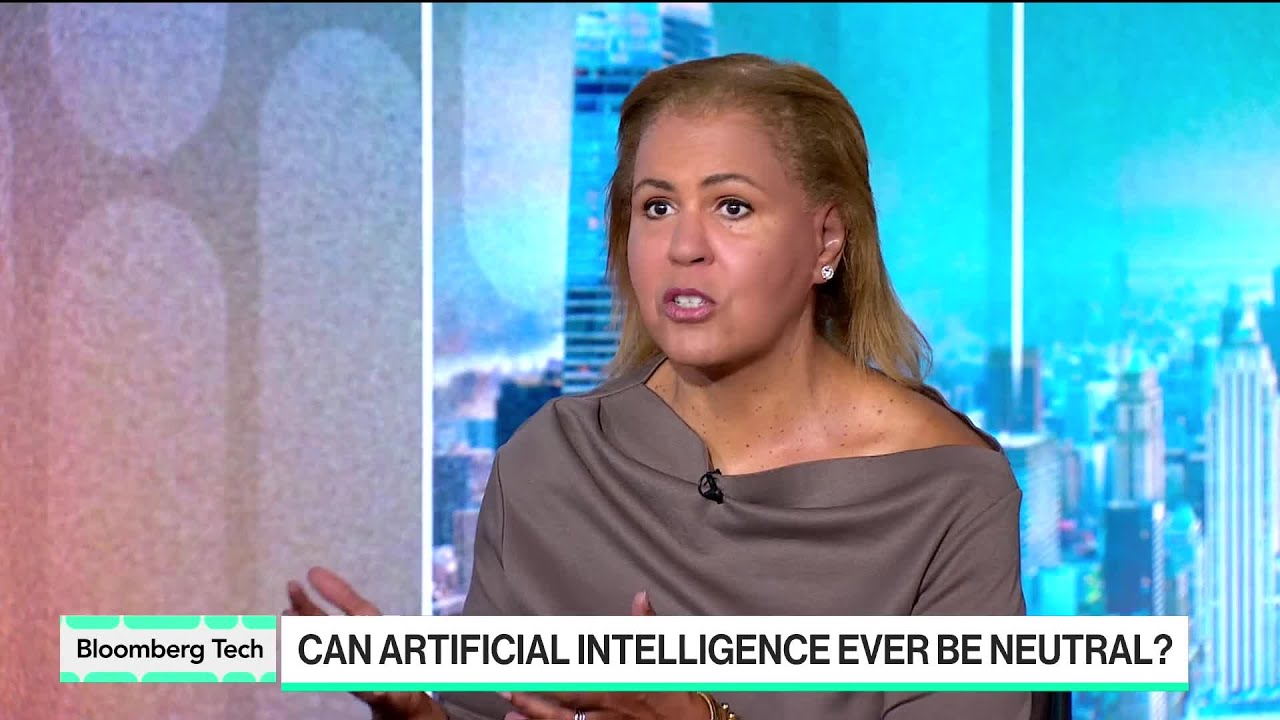
Safiya Umoja Noble, UCLA Professor, speaking on Bloomberg Tech about AI safety.
Safiya Umoja Noble, UCLA Professor and author, discusses AI safety and bias.· Bloomberg Technology
Visual TL;DR
AI Models UnsafeOutcome
From the article 5 mentionsUCLA Professor Safiya Umoja Noble warns that current artificial intelligence models are not safe, citing the inherent biases embedded within them.
Mathematical FormulationsContext
Human-made math drives automated decisions
From the article 2 mentionsNoble explained that the challenge lies in understanding how mathematical formulations drive automated decisions.
Large Language ModelsCore
From the articleIn a discussion on Bloomberg Tech, Noble, author of "Algorithms of Oppression," highlighted how AI systems, particularly large language models, are trained on data that reflects existing societal inequalities, leading to the perpetuation of discrimination.
Inherent BiasesDriver
AI trained on data reflecting societal inequalities
From the article 2 mentionsUCLA Professor Safiya Umoja Noble warns that current artificial intelligence models are not safe, citing the inherent biases embedded within them.
Perpetuates DiscriminationOutcome
From the articleIn a discussion on Bloomberg Tech, Noble, author of "Algorithms of Oppression," highlighted how AI systems, particularly large language models, are trained on data that reflects existing societal inequalities, leading to the perpetuation of discrimination.
Need for EthicsContext
Ethical considerations are critical for AI
From the article"We need to be investing in the kinds of technologies that are going to help us move forward," she urged, advocating for a focus on AI that is "pro-rights, pro-knowledge, and respects technology."
Lack of ExpertiseDriver
Insufficient human oversight in AI development
From the article 3 mentionsA significant concern raised by Noble is the lack of interdisciplinary expertise among those developing AI.
Invest in ExpertiseContext
The path forward requires human knowledge
From the article 3 mentions"We don't want to give up what it means to have human expertise, human journalists, fact-checkers, teachers, thinkers," she asserted.
Contents(3)

UCLA Professor Safiya Umoja Noble warns that current artificial intelligence models are not safe, citing the inherent biases embedded within them. In a discussion on Bloomberg Tech, Noble, author of "Algorithms of Oppression," highlighted how AI systems, particularly large language models, are trained on data that reflects existing societal inequalities, leading to the perpetuation of discrimination.

The Problem with AI Bias

Noble explained that the challenge lies in understanding how mathematical formulations drive automated decisions. "Part of the challenge of understanding algorithmic oppression is to understand that mathematical formulations to drive automated decisions are made by human beings," she stated. This means that biases, whether racial, gender, or geographic, present in the data used to train AI models are inevitably learned and scaled by the technology.

The full discussion can be found on Bloomberg Technology's YouTube channel.

AI Is Not Safe Yet, Says UCLA Professor - Bloomberg Technology
AI Is Not Safe Yet, Says UCLA Professor, from Bloomberg Technology

She elaborated on how this translates into real-world harm: "We've been seeing studies where companies are finding that it's more expensive for them to use these chatbots because human beings have to check the efficacy and reliability of these systems." Noble pointed out that these AI systems are not neutral; they are built within the context of corporate America's goals, often to reduce labor costs, and are not necessarily designed for equitable outcomes.

Lack of Expertise and Oversight

A significant concern raised by Noble is the lack of interdisciplinary expertise among those developing AI. "These are software engineers who don't even think about, they don't even ask the kinds of questions that a sociologist like I would ask," she commented. This absence of social science perspectives means that developers may not fully grasp the historical, economic, and social processes that create bias, leading them to inadvertently package and reproduce discriminatory patterns within AI models.

Noble emphasized that this is not a new problem, citing her own research from over a decade ago that identified how search engines reinforced racism. What is different now, she noted, is the scale and pervasiveness of these technologies. "What's different now is that these models are being pushed now to the public as if they are neutral and reliable," she warned. The danger, according to Noble, is that these AI systems can obscure and even legitimize existing inequalities, making them appear objective when they are, in fact, deeply flawed.

The Path Forward: Investing in Expertise

When asked about solutions, Noble stressed the importance of not just identifying the problem but actively working to solve it. "We don't want to give up what it means to have human expertise, human journalists, fact-checkers, teachers, thinkers," she asserted. She believes that investing in human expertise and interdisciplinary collaboration is crucial for building more equitable AI. "We need to be investing in the kinds of technologies that are going to help us move forward," she urged, advocating for a focus on AI that is "pro-rights, pro-knowledge, and respects technology."

Noble concluded by highlighting the growing recognition of these issues, pointing to increased litigation against tech companies for biased AI products. "We're seeing more and more litigation against these companies... they knew that their products were harmful, especially to girls and to women, and to people of color," she stated. This growing awareness, she hopes, will lead to a greater emphasis on ethical AI development and robust oversight.

© 2026 StartupHub.ai. All rights reserved. You may not republish this article in full without a license. Search engines and AI research tools may crawl and summarize for reference. Bulk reproduction or model training requires a license. See our terms.
Daniel Singer

Written by

Daniel Singer

Editor, StartupHub.ai

Daniel Singer is the editor of StartupHub.ai, a technology expert and thought leader on AI and its applications across sectors, from fintech and healthcare to developer tooling and consumer software. He writes and tests the tools covered here thoroughly and regularly, and built StartupHub.ai to give founders, operators and buyers a clearer read on what they are actually being sold.