


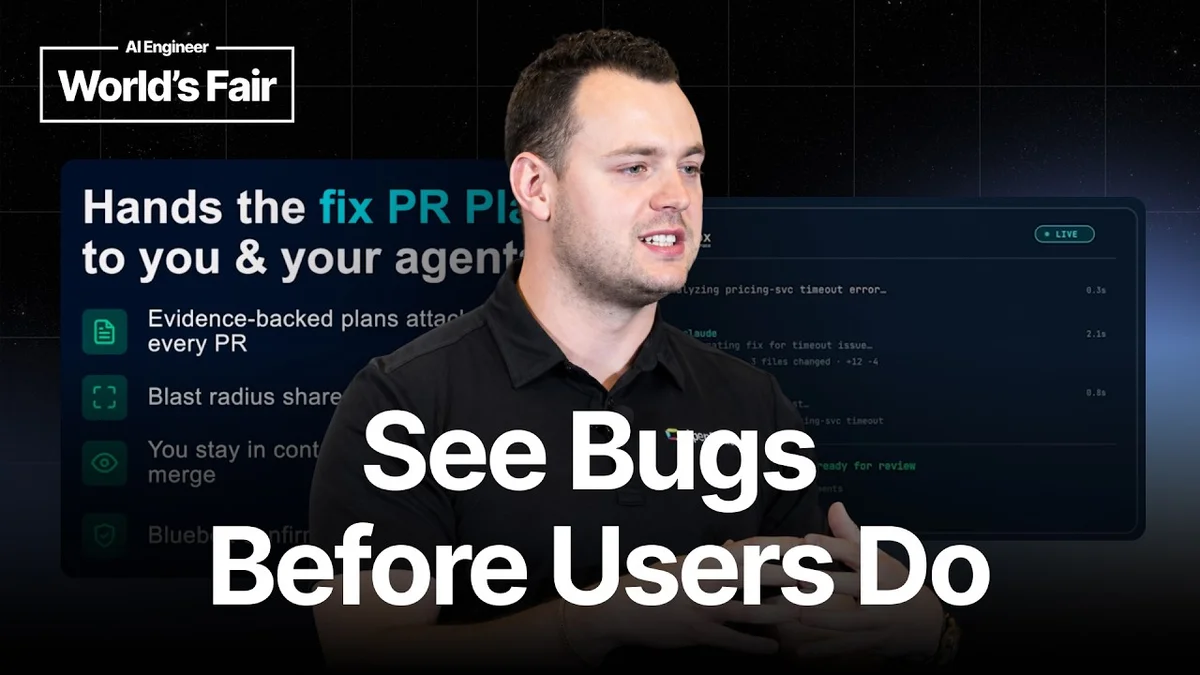
Matt Gibiec took the stage at AI Engineer and told the crowd their AI agent lacks a nervous system. He leads AI-native solutions engineering at Dynatrace, and said agents are quick but blind. He pitched BlueBox, Dynatrace’s offering, as the wiring that could give them sight.
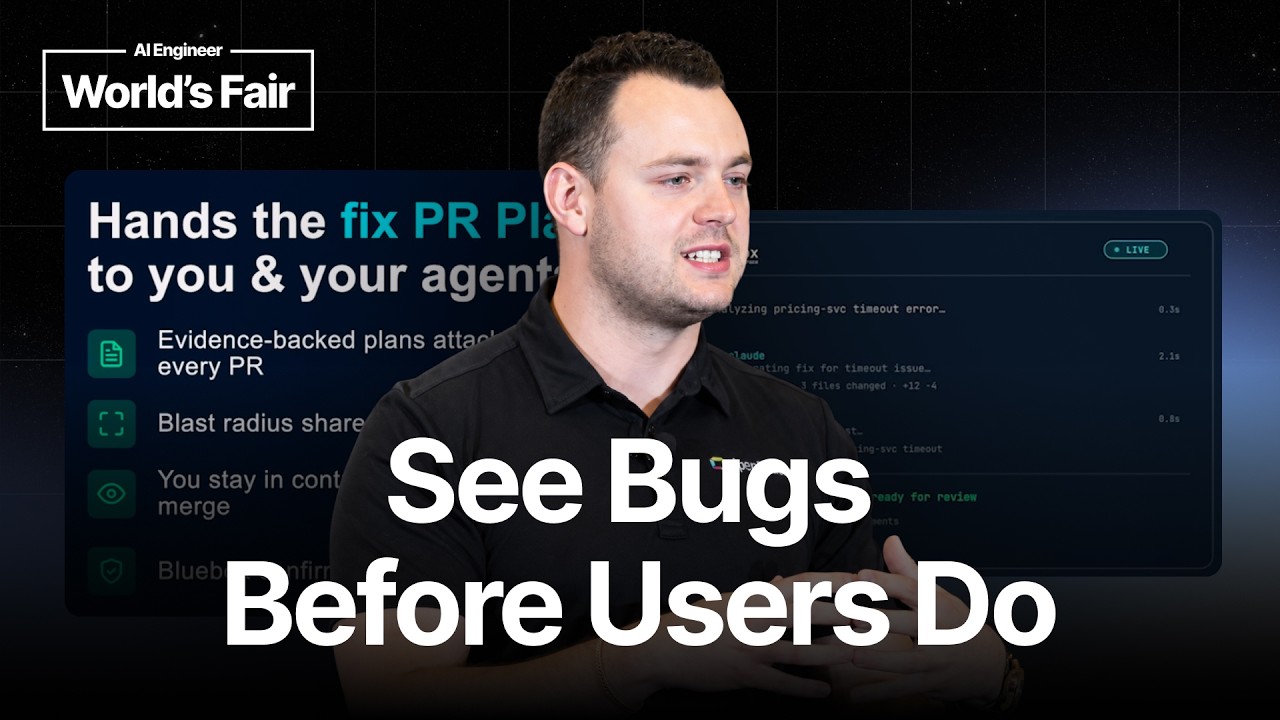
Context is king, he said.
Gibiec said the core issue is missing production truth. Agents only act on the data they can see, and when permissions, service maps or user behavior are missing, they start hallucinating and automating the wrong thing. He asked for a show of hands on familiar pains: loops where Claude burns tokens re-trying the same failed step, features that pass locally then break three services after a merge, and security worries that got every hand up. He noted that when humans hit a dead end they change tactics; agents just keep pushing forward.
BlueBox is his answer, and the demo was more plumbing than a fresh model. BlueBox is pitched to feed dependency mapping and historical baselines into agents to catch regressions before production impact. Gibiec described it as an agent that sits in the middle of the software development lifecycle and feeds production context into any coding agent, Claude or a proprietary one. In one scenario, it pulls service and dependency maps along with historical load data into local testing, letting a developer see in the IDE whether a change will ripple beyond their service. In another, it learns what normal looks like from historical data, flags a service that suddenly slows or starts error-prone, then overlays repository context to tie the glitch to a specific merge or change. When it suggests a fix, it checks that fix against the same dependency map so a single line doesn’t trigger the next incident.
The pitch lands amid a crowded observability arena. Datadog and New Relic have both rolled out AI assistants that summarize production telemetry for developers, while a wave of coding agents promises autonomy inside the IDE. Gibiec argued those tools still leave a gap: an agent that’s fast in the editor but blind to how the application actually runs. BlueBox, by contrast, aims to make production context a prerequisite for planning a feature, not an afterthought for debugging. He summed it up as “plan before you prompt,” and stressed that a human should stay in the loop-observe, get a contextual suggestion, then decide whether to ship.