


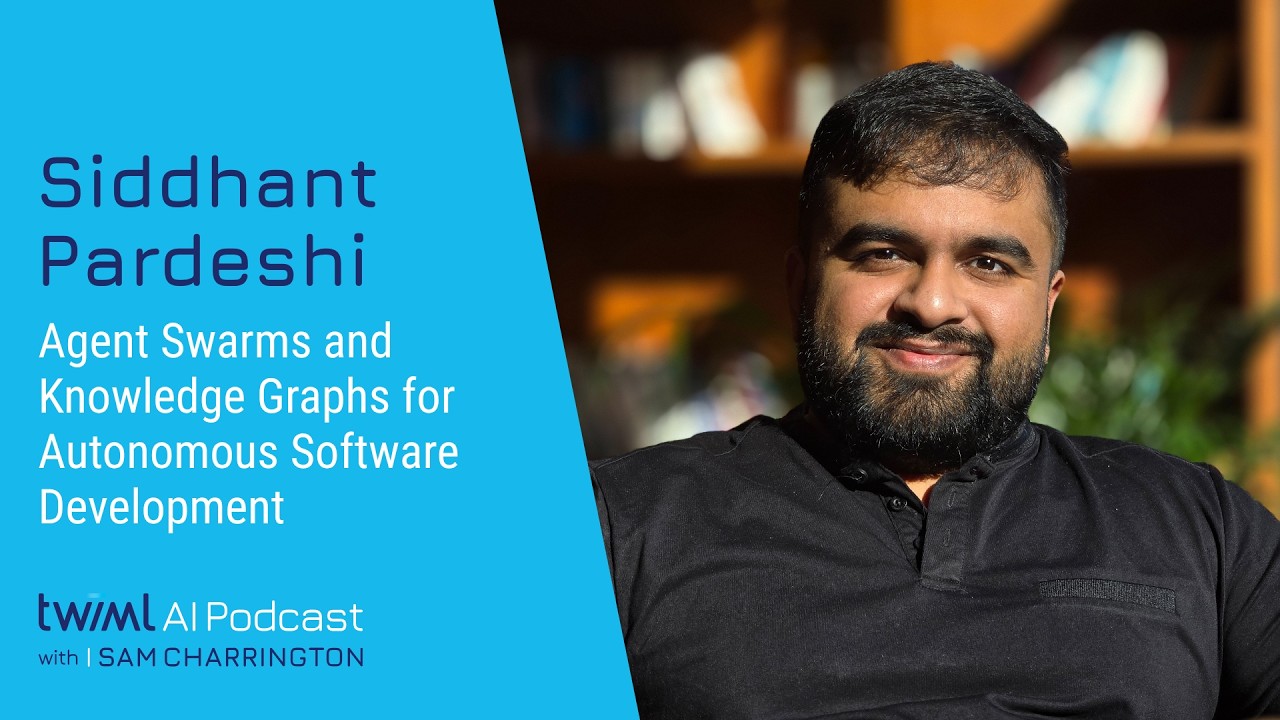
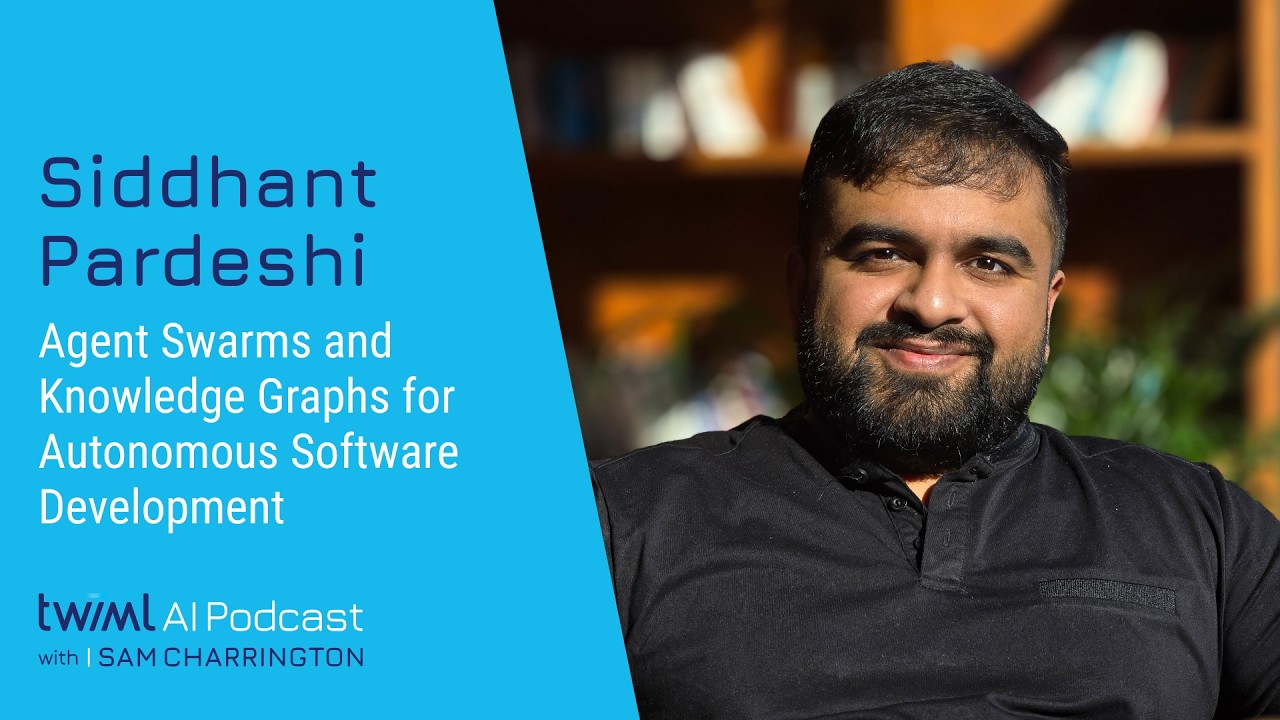
In a recent TWIML AI Podcast episode, Sid Pardeshi, Co-Founder & CTO of Blitzy, shared insights into the evolving landscape of AI-powered code generation and the challenges of creating effective AI agents.
Guest Context: Sid Pardeshi
Sid Pardeshi is the Co-Founder and CTO of Blitzy, a company focused on leveraging AI for autonomous software development. Prior to Blitzy, Pardeshi spent significant time at NVIDIA, contributing to the company's advancements in generative AI and related fields. His experience at NVIDIA, a leader in AI hardware and software, provided him with a deep understanding of the practical applications and potential of AI technologies. Pardeshi's background includes working with generative adversarial networks (GANs) and various other machine learning models, giving him a unique perspective on the current state and future trajectory of AI in software engineering.
The full discussion can be found on TWIML's YouTube channel.
The Promise of AI in Code Generation
Pardeshi elaborated on how AI is revolutionizing software development by automating complex tasks. He highlighted that AI models can generate code that is often more efficient and accurate than human-written code, especially for repetitive or well-defined problems. This capability stems from the AI's ability to process vast amounts of code data, identify patterns, and learn best practices. The concept of using AI agents to orchestrate the development process, by breaking down large projects into smaller, manageable tasks for individual agents, was a key theme discussed.
Challenges in AI Agent Orchestration
A significant portion of the conversation focused on the inherent challenges in building and managing these AI agents. Pardeshi pointed out that while AI can generate code, ensuring its correctness, security, and adherence to specific project requirements remains a significant hurdle. The complexity arises from the need for AI agents to understand not just the syntax but also the semantic meaning and the broader context of the code they are generating. He emphasized that many current AI models struggle with tasks that require deep reasoning or understanding of nuanced constraints, leading to potential errors or suboptimal solutions.