

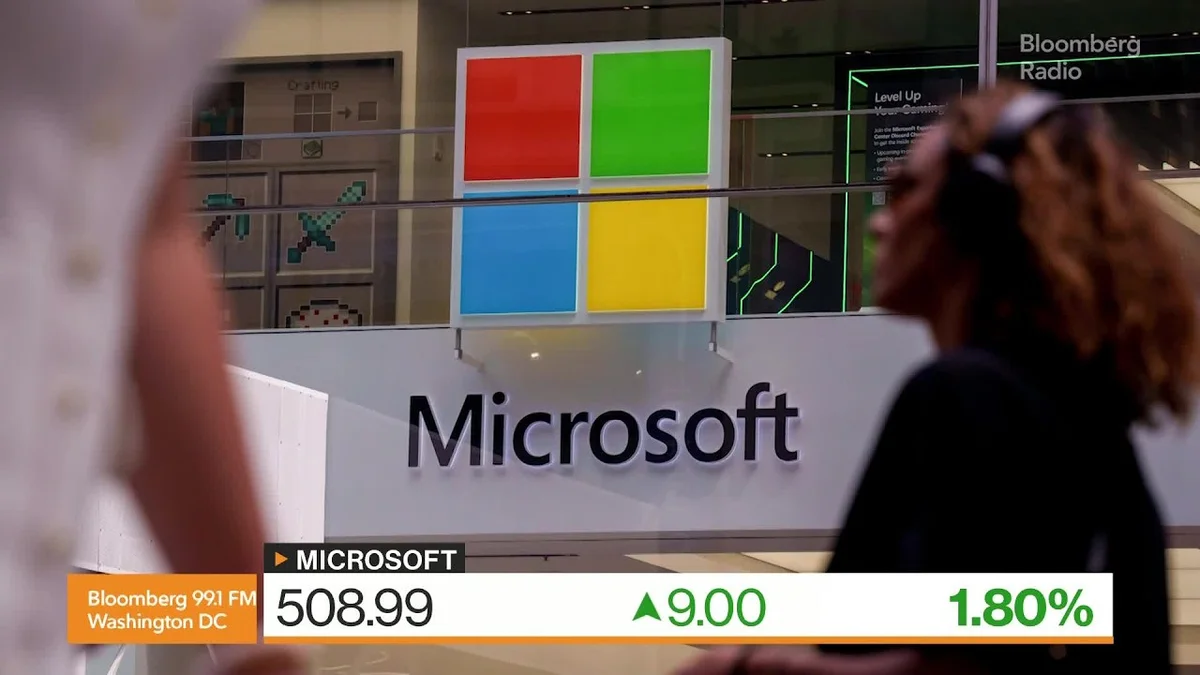
Microsoft Boosts AI Chips, Apple Faces Hardware Hurdles

Anurag Rana of Bloomberg Intelligence discusses Microsoft's AI chip production boost and contrasts it with Apple's hardware challenges, including potential foldable phone developments.

Anurag Rana, Senior Technology Analyst at Bloomberg Intelligence, speaking on a video call.
Bloomberg Podcast
Visual TL;DR
Analyst RanaContext
From the article 9 mentionsAnurag Rana, Senior Technology Analyst at Bloomberg Intelligence, discussed significant developments in the tech industry, focusing on Microsoft's AI chip strategy and Apple's hardware challenges.
AI Chip CompetitionDriver
From the article 6 mentionsRana highlighted the intense competition among hyperscale cloud providers like Google, Amazon, and Microsoft in the AI data center space, emphasizing the critical need for specialized chips.
Apple Hardware HurdlesDriver
Apple faces hardware challenges, including potential foldable phone developments
From the article 2 mentionsIn contrast to Microsoft's positive developments, Rana addressed concerns surrounding Apple's hardware sector.
Microsoft Boosts ChipsCore
Microsoft plans to significantly increase production of its proprietary AI chips
From the article 4 mentionsAnurag Rana, Senior Technology Analyst at Bloomberg Intelligence, discussed significant developments in the tech industry, focusing on Microsoft's AI chip strategy and Apple's hardware challenges.
Google/Amazon ChipsContext
From the article 3 mentionsRana noted that Google has made strides with its TPUs, and Amazon has also developed its own chips, generating substantial revenue.
Lower Cloud CostsEffect
From the articleRana suggests this move could make these chips more accessible to customers, potentially leading to reduced capital expenditure and lower per-token costs for cloud services.
Positive Long-TermOutcome
From the article 2 mentionsThis strategic shift is viewed as a positive long-term development for Microsoft.
Contents(4)

Anurag Rana, Senior Technology Analyst at Bloomberg Intelligence, discussed significant developments in the tech industry, focusing on Microsoft's AI chip strategy and Apple's hardware challenges. Rana highlighted the intense competition among hyperscale cloud providers like Google, Amazon, and Microsoft in the AI data center space, emphasizing the critical need for specialized chips.

Microsoft's AI Chip Ambitions

Rana noted that Google has made strides with its TPUs, and Amazon has also developed its own chips, generating substantial revenue. Microsoft, while having its own chips, has not seen widespread adoption until recently. Reports indicate that Microsoft plans to significantly increase the production of its proprietary AI chips. Rana suggests this move could make these chips more accessible to customers, potentially leading to reduced capital expenditure and lower per-token costs for cloud services. This strategic shift is viewed as a positive long-term development for Microsoft.

Apple's Hardware Outlook

In contrast to Microsoft's positive developments, Rana addressed concerns surrounding Apple's hardware sector. While acknowledging the consistent performance of the Apple Watch as an accessory, he pointed out the emergence of screenless wearable devices for health tracking from competitors like Garmin. The conversation then turned to Apple's potential entry into the foldable phone market. Rana stated that Apple has been behind in this segment, and a successful launch of a foldable iPhone, especially considering its importance to Apple's sales and potential appeal in emerging markets, could create significant buzz. However, he cited a high estimated price point of around $2,500 for such a device, which could be a barrier.

The full discussion can be found on Bloomberg Podcast's YouTube channel.

Microsoft to Boost AI Chip Production, Information Says - Bloomberg Podcast
Microsoft to Boost AI Chip Production, Information Says, from Bloomberg Podcast

Investor Sentiment and Market Shifts

Rana also touched upon broader market sentiment regarding AI investments. He explained that investors are becoming more comfortable with the substantial capital expenditures required by companies like Microsoft, Amazon, and Google for AI infrastructure. This increased comfort stems from the visible improvements in cloud sales growth, such as Azure's performance, which demonstrates that these companies are effectively managing their massive investments. On the other hand, investors who prefer lower-risk assets are looking at companies like Apple, which generate significant free cash flow, evidenced by its share buyback programs and strong iPhone sales, including gains in China.

The Future of Wearables and Foldables

Regarding the wearable market, Rana downplayed the impact of new smartwatch models, viewing them as accessories that complement the existing iPhone ecosystem. He highlighted a trend towards screenless wearable devices for health tracking, such as bands that monitor vitals without a display. However, the foldable phone segment presents a more significant opportunity for Apple. Rana suggested that a foldable iPhone could be a major draw, particularly in emerging markets, if pricing concerns are addressed. He anticipates that the foldable market could see considerable activity and generate substantial buzz in the coming year.

© 2026 StartupHub.ai. All rights reserved. You may not republish this article in full without a license. Search engines and AI research tools may crawl and summarize for reference. Bulk reproduction or model training requires a license. See our terms.
Daniel Singer

Written by

Daniel Singer

Editor, StartupHub.ai

Daniel Singer is the editor of StartupHub.ai, a technology expert and thought leader on AI and its applications across sectors, from fintech and healthcare to developer tooling and consumer software. He writes and tests the tools covered here thoroughly and regularly, and built StartupHub.ai to give founders, operators and buyers a clearer read on what they are actually being sold.