


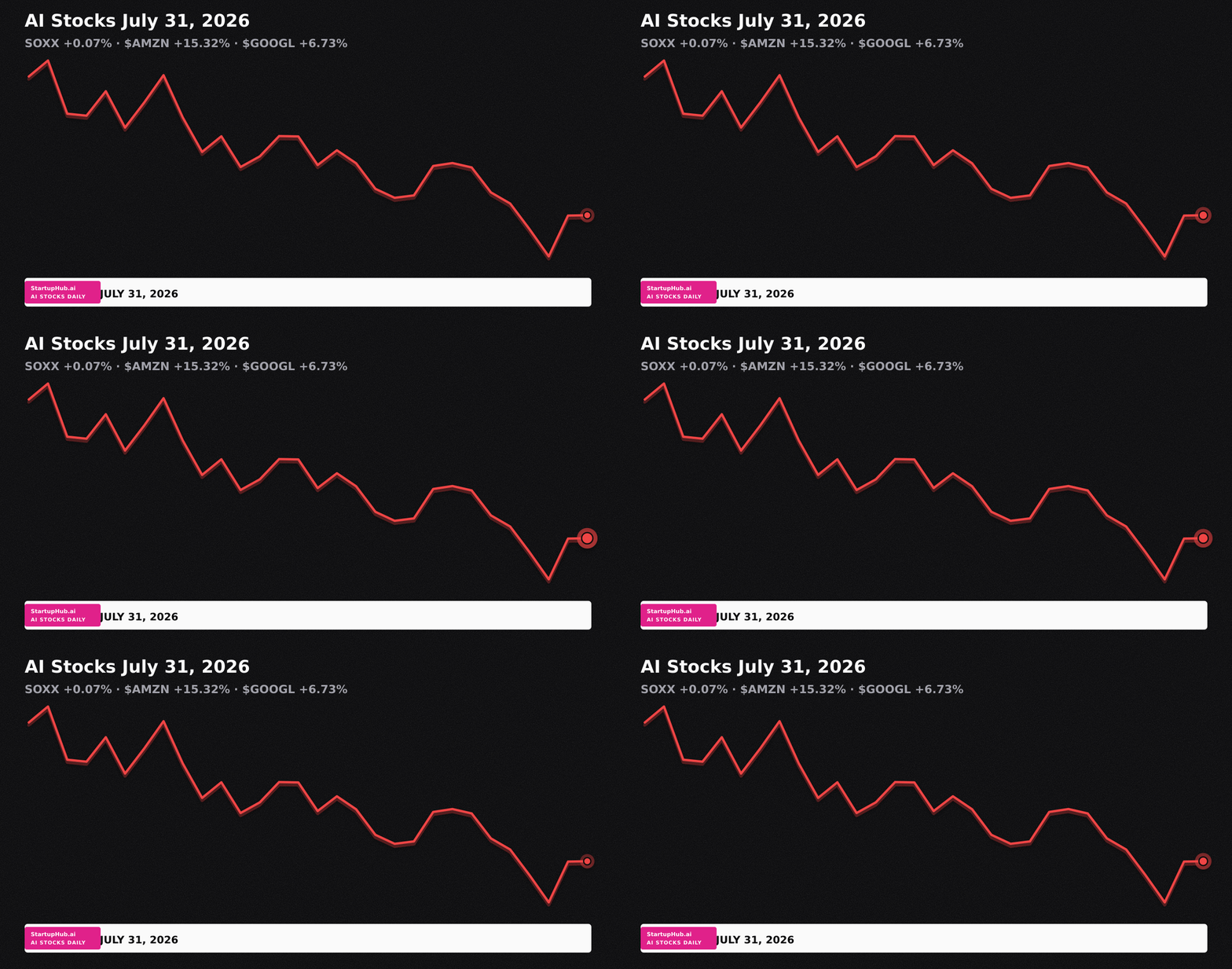
Amazon.com Inc. (NASDAQ: AMZN) surged 15.3% Friday after its second-quarter results showed Amazon Web Services revenue up 37% year over year to $42.2 billion, lifting the entire hyperscaler complex and pushing top AI stocks to their best single-session gain in months. The Nasdaq Composite rose 1.0% to 25,374 and the S&P 500 added 0.7% to 7,490, capping a volatile July on a bullish note. The SOXX semiconductor ETF was essentially flat at +0.07%, a split tape: cloud infrastructure won the day while memory and AI-adjacent chips lagged.
Top AI stocks today: July 31, 2026
| Ticker | Close | Day | 1mo | YTD |
|---|---|---|---|---|
| $AMZN | $271.58 | +15.32% | +11.91% | +19.90% |
| $OUST | $39.01 | +9.79% | -21.73% | +66.92% |
| $GOOGL | $356.13 | +6.73% | -1.05% | +13.00% |
| $BABA | $122.25 | +5.10% | +27.16% | -21.50% |
| $MDB | $337.48 | +3.56% | -4.90% | -15.56% |
| $MU | $823.03 | -5.90% | -15.64% | +160.93% |
| $CRWV | $71.77 | -2.88% | -12.20% | -9.52% |
| $AMD | $476.15 | -1.90% | -8.05% | +113.07% |
| $SNOW | $293.28 | -1.62% | +12.73% | +35.33% |
| $LRCX | $293.02 | -1.58% | -16.62% | +58.34% |
Amazon surges 15% as AWS revenue rockets 37% past estimates
Amazon Web Services delivered $42.2 billion in Q2 revenue, up 37% year over year against analyst consensus of $40.5 billion, per CNBC. Adjusted EPS came in at $1.97 versus the $1.82 estimate, while total revenue of $200.6 billion grew 19.6% year over year. The beat validated a thesis that had faced pressure all year: that AI inference demand, not just model training, is translating into durable hyperscaler revenue growth. CEO Andy Jassy said the company expects capital spending to reach $220 billion in 2026, the largest single-year AI infrastructure commitment from any company on record. GAAP EPS was $5.75, boosted by a non-operating $53.4 billion gain from the company's stake in Anthropic.
The reaction across Magnificent 7 AI stocks was immediate. Microsoft Corp. (NASDAQ: MSFT) gained 3.0%, Meta Platforms Inc. (NASDAQ: META) rose 3.3%, and NVIDIA Corp. (NASDAQ: NVDA) added 2.9%. The read-through is direct: if AWS demand is accelerating to 37% growth, the GPU clusters and AI infrastructure that run it are under-supplied, not over-supplied. Across more than 6,100 AI-native companies StartupHub.ai tracks globally, cloud infrastructure and AI tooling are the two most densely populated verticals, which is why a single AWS quarter can reprice the sector. These are the best AI stocks to buy when the demand signal is this clear, but they also carry the most downside if capex commitments outrun actual workload growth.
Alphabet climbs 6.7% as cloud confidence builds on AWS read-through
Alphabet Inc. (NASDAQ: GOOGL) gained 6.7% as investors revisited the company's own Q2 results, released July 22, in light of Amazon's blowout. Google Cloud grew 82% in Q2 to $24.8 billion, consolidated revenue hit $119.8 billion, up 24% year over year, and operating income rose 30%, per the company's SEC filing. Friday's move reflects a market repricing: the prevailing concern heading into earnings season was that AI capital spending would outrun monetization. Amazon's AWS print and Google Cloud's 82% growth together suggest that concern is easing. GOOGL is up 13.0% year to date and is one of the top 2026 AI stocks to watch for enterprises betting on multi-cloud AI deployments.
Ouster jumps 9.8% on lidar analyst upgrades and capital raise momentum
Ouster Inc. (NASDAQ: OUST) rose 9.8% Friday, continuing a recovery backed by multiple analyst upgrades. Northland raised its price target to $60 from $38 on July 21, and Oppenheimer lifted its target to $57 from $42 on July 15, per Gurufocus. OUST closed at $39.01, meaning both targets imply 46 to 54% upside from current levels. The company completed a $191.9 million equity offering in early July at $55.22 per share. The AI autonomy and lidar theme benefited from the broader AI stocks rally today, with Ouster positioned as infrastructure for robotics and autonomous vehicle sensing. OUST is one of the more speculative AI stocks to watch if autonomy deployment timelines accelerate into 2027.