

AI Spending Justified, Hyperscalers Drive Demand

Celine Woo of Lazard Asset Management discusses justified AI spending, hyperscaler growth, and the demand-supply gap in AI hardware.

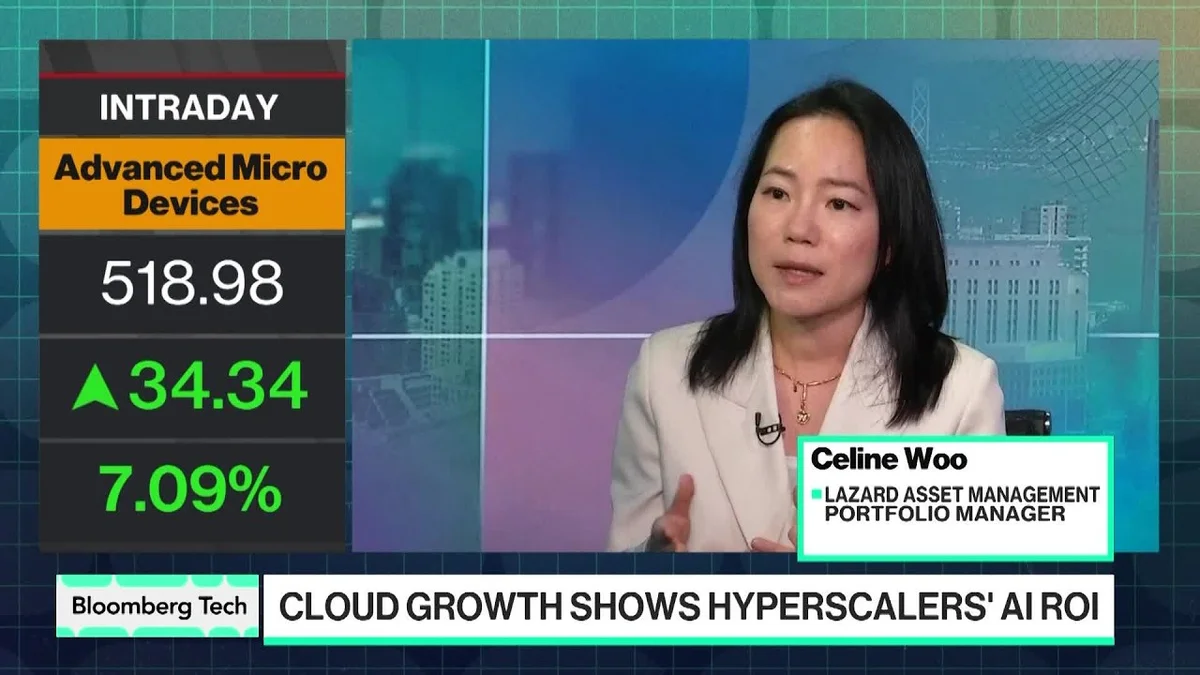
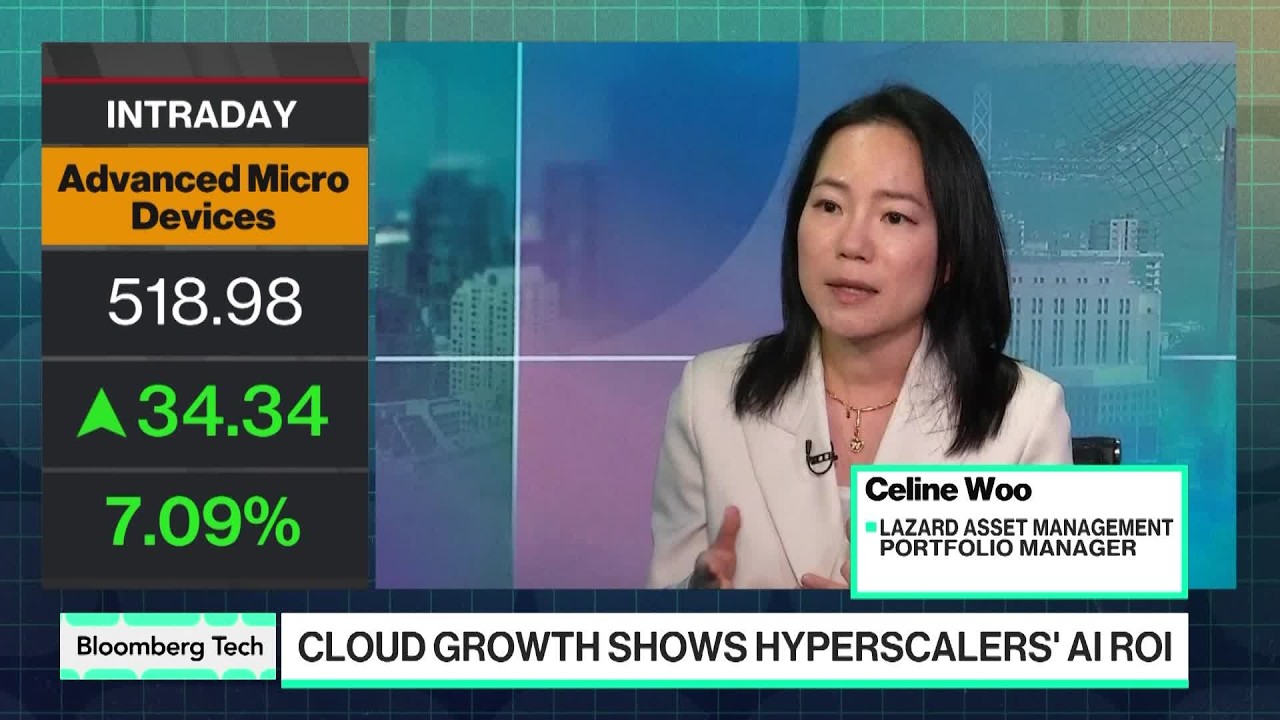
Celine Woo, Portfolio Manager at Lazard Asset Management, interviewed on Bloomberg Tech.
Bloomberg Technology
Visual TL;DR
Hyperscalers Drive DemandCore
major hyperscalers show strong AI ROI, confirming sustained demand for AI hardware
From the article 2 mentionsSpeaking on Bloomberg Tech, Woo highlighted the recent earnings reports from hyperscalers, indicating that the hardware and semiconductor sectors will significantly benefit from sustained demand that currently outstrips supply.
AI Spending JustifiedContext
Lazard Asset Management confirms AI spending is justified and will continue to grow
From the article 3 mentionsThe massive spending on artificial intelligence is not only justified but set to continue its upward trajectory, according to insights shared by Celine Woo, Portfolio Manager at Lazard Asset Management.
Inference Workloads KeyDriver
From the article 2 mentionsWoo noted that the primary catalyst for this growth is the industry's pivot towards inference workloads, a shift that has been confirmed by conversations with industry leaders.
Demand Outstrips SupplyDriver
From the article 5 mentionsSpeaking on Bloomberg Tech, Woo highlighted the recent earnings reports from hyperscalers, indicating that the hardware and semiconductor sectors will significantly benefit from sustained demand that currently outstrips supply.
Hardware Sector BenefitsEffect
From the articleSpeaking on Bloomberg Tech, Woo highlighted the recent earnings reports from hyperscalers, indicating that the hardware and semiconductor sectors will significantly benefit from sustained demand that currently outstrips supply.
TSMC CapEx SignalsOutcome
TSMC's major capital expenditures signal strong confidence in future AI growth
AI Growth ContinuesOutcome
AI spending is set to continue its upward trajectory, benefiting the industry
From the article 4 mentionsWoo pointed out that these three companies collectively delivered a 50% growth rate in their cloud segments, a remarkable acceleration compared to just five quarters prior.
Contents(3)

The massive spending on artificial intelligence is not only justified but set to continue its upward trajectory, according to insights shared by Celine Woo, Portfolio Manager at Lazard Asset Management. Speaking on Bloomberg Tech, Woo highlighted the recent earnings reports from hyperscalers, indicating that the hardware and semiconductor sectors will significantly benefit from sustained demand that currently outstrips supply.

Woo noted that the primary catalyst for this growth is the industry's pivot towards inference workloads, a shift that has been confirmed by conversations with industry leaders. While training AI models still demands significant resources, the day-to-day operation and deployment of AI applications through inference are now the key drivers of compute demand.

The full discussion can be found on Bloomberg Technology's YouTube channel.

AI Spending Is Still Justified, Says Lazard - Bloomberg Technology
AI Spending Is Still Justified, Says Lazard, from Bloomberg Technology

Hyperscalers Show Strong AI ROI

The recent earnings of major cloud providers, including Alphabet Inc. (NASDAQ:GOOGL), Amazon, and Microsoft, have provided a strong validation of their substantial investments in AI. Woo pointed out that these three companies collectively delivered a 50% growth rate in their cloud segments, a remarkable acceleration compared to just five quarters prior. This performance demonstrates a clear return on investment for their commitment to AI infrastructure and signals continued spending.

When assessing the performance of these tech giants, Woo suggested that Microsoft and Amazon particularly impressed relative to expectations. The ability of these companies to exceed forecasts underscores the tangible benefits flowing from their large-scale AI spending commitments into their core businesses.

Demand Outstrips Supply in AI Hardware

A recurring theme in the AI sector is the persistent imbalance between demand and supply. Woo elaborated that this applies to both cloud capacity and the literal supply of chips powering these advanced systems. While a strong demand environment is positive, it necessitates a synchronized effort across the entire supply chain to ensure timely delivery of components, preventing any potential slowdown in AI adoption.

The supply chain's ability to meet this surging demand is often underestimated. Woo cited the example of the memory space, where long-term agreements are becoming more common, a departure from historical practices. This trend indicates a greater degree of forward visibility and customer commitment, with companies like SK Hynix reporting that customers are increasingly willing to sign five-year deals.

TSMC's Major CapEx Signals Confidence

The commitment from key players in the semiconductor manufacturing chain further bolsters the outlook. Woo highlighted that TSMC, the world's largest foundry, has announced a significant $100 billion capital expenditure plan to expand its capacity, including in the U.S. This substantial investment, made in conjunction with hyperscalers, is not a speculative move but a direct response to clearly visible demand that extends over a five-year horizon. It signifies a collective effort across the supply chain, including memory manufacturers, to align supply with this unprecedented growth in AI demand.

© 2026 StartupHub.ai. All rights reserved. You may not republish this article in full without a license. Search engines and AI research tools may crawl and summarize for reference. Bulk reproduction or model training requires a license. See our terms.
Daniel Singer

Written by

Daniel Singer

Editor, StartupHub.ai

Daniel Singer is the editor of StartupHub.ai, a technology expert and thought leader on AI and its applications across sectors, from fintech and healthcare to developer tooling and consumer software. He writes and tests the tools covered here thoroughly and regularly, and built StartupHub.ai to give founders, operators and buyers a clearer read on what they are actually being sold.