

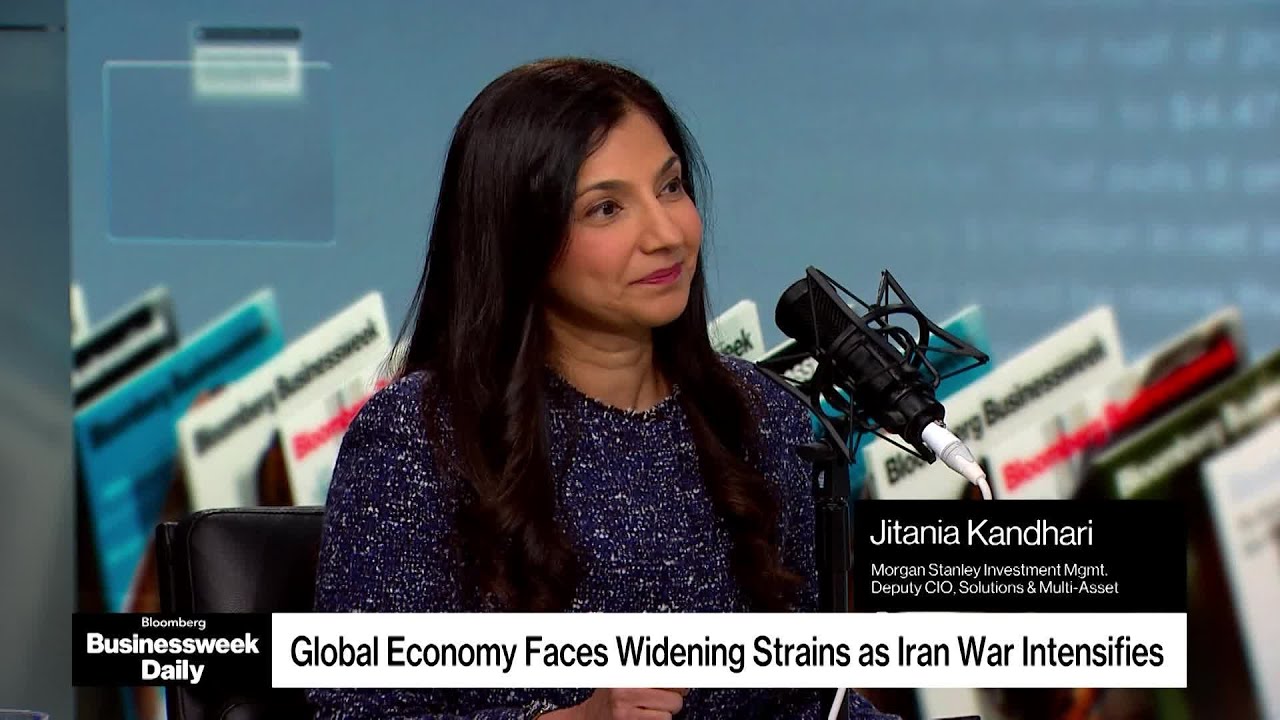
In a recent discussion, Jitania Kandhari, Deputy CIO, Solutions & Multi-Asset at Morgan Stanley Investment Management, offered insights into the evolving global economic and technological landscape, with a particular focus on the impact of geopolitics on AI and emerging markets. Kandhari, a seasoned investment professional known for her strategic approach to multi-asset management, highlighted how current geopolitical shifts are reshaping the AI industry and creating new investment opportunities.
Jitania Kandhari's Perspective
Jitania Kandhari brings a wealth of experience from her role at Morgan Stanley Investment Management. Her expertise lies in navigating complex market dynamics and identifying strategic investment opportunities across various asset classes. Her perspective is grounded in a deep understanding of macroeconomic trends, technological advancements, and the interplay between them. In this conversation, Kandhari emphasized the growing importance of a multipolar world and how this geopolitical reality is influencing the trajectory of artificial intelligence, from its development to its application and the resulting market opportunities.
The multipolar AI landscape
Kandhari posited that the global economy is becoming increasingly multipolar, a trend that is significantly impacting the AI sector. "The story has to move beyond just the model creators," she stated, suggesting that the focus needs to broaden to encompass the actual users and beneficiaries of AI technologies. This shift implies a more distributed and diverse ecosystem for AI development and deployment. She elaborated on how this multipolarity manifests in different regions, with the US and China being key players, but also with emerging markets playing a vital role. "We are seeing the application of AI across the board," Kandhari noted, emphasizing that the technology is no longer confined to a few dominant players but is becoming more accessible and adopted globally.
The full discussion can be found on Bloomberg Podcast's YouTube channel.
Geopolitics and AI Supply Chains
A significant portion of the discussion revolved around the influence of geopolitics on AI supply chains. Kandhari pointed out that geopolitical tensions are leading to a re-evaluation and restructuring of these chains. "You have two spheres of influence, the West and the East, with the US dominating one and China the other," she explained. This dynamic is forcing a rethinking of how critical components, such as semiconductors and specialized AI hardware, are sourced and manufactured. The need for diversified and resilient supply chains is paramount, leading to new investments and collaborations in various regions. Kandhari highlighted that this restructuring is not just about efficiency but also about national security and economic sovereignty. The concept of "deglobalization" or "friend-shoring" is influencing where and how AI components are produced, creating opportunities for countries that can offer reliable and secure supply chains.
Emerging Markets and AI Opportunities
Kandhari also shed light on the burgeoning role of emerging markets in the AI revolution. She noted that these markets are not just consumers of AI but are increasingly becoming creators and innovators. "Emerging markets feed into the AI supply chain," she stated, observing that countries are actively seeking to build their own AI capabilities. This includes developing domestic talent, fostering innovation in AI applications, and securing access to critical resources. Kandhari specifically mentioned the importance of understanding the "bottlenecks" in the AI supply chain, such as advanced manufacturing capabilities for chips and the development of specialized AI hardware. She believes that emerging markets can play a crucial role in addressing these bottlenecks and creating new opportunities. "We are seeing a lot of that going on, where companies are looking to diversify their supply chains and find alternative sources," she added. This diversification is not only driven by the need for resilience but also by the pursuit of cost efficiencies and access to new talent pools.
Investment Strategies in a Multipolar World
For investors, Kandhari suggested that a multipolar world requires a more nuanced and diversified approach. "I do like financial markets, but I also like opportunities outside the US," she remarked, indicating a preference for exploring growth potential in emerging economies. She highlighted the importance of identifying markets that are not only adopting AI but are also actively contributing to its ecosystem, whether through talent development, infrastructure investment, or policy support. The ability to find anti-correlated assets and diversify across different geopolitical regions is key to navigating the current economic climate. Kandhari emphasized that understanding the interplay between AI, geopolitical shifts, and commodity cycles is crucial for identifying promising investment themes. For instance, the demand for specific commodities essential for AI development, like rare earth minerals and semiconductors, is creating new investment avenues. She also pointed to the potential in countries that are strategically positioning themselves to benefit from the shift towards a more distributed AI supply chain.
The Future of AI and Global Economics
Looking ahead, Kandhari anticipates that the global AI landscape will continue to evolve rapidly, driven by both technological advancements and geopolitical forces. The development of AI is increasingly intertwined with national strategies, leading to a complex web of competition and cooperation. She stressed the importance of staying agile and adaptable in investment strategies, as the market dynamics are likely to remain fluid. The conversation underscored that while the core AI models and algorithms are critical, their real-world impact and value creation will depend on the broader ecosystem, including talent, infrastructure, and supportive policies. The ongoing transformation of supply chains and the rise of new economic powers will undoubtedly shape the future of AI and its contribution to global economic growth.


