

Hugging Face CEO on Anthropic's 'Dangerous' Label

Hugging Face CEO Clem Delangue discusses the marketing of 'dangerous' AI labels and the need for transparency in regulating open-source models.

6 min read
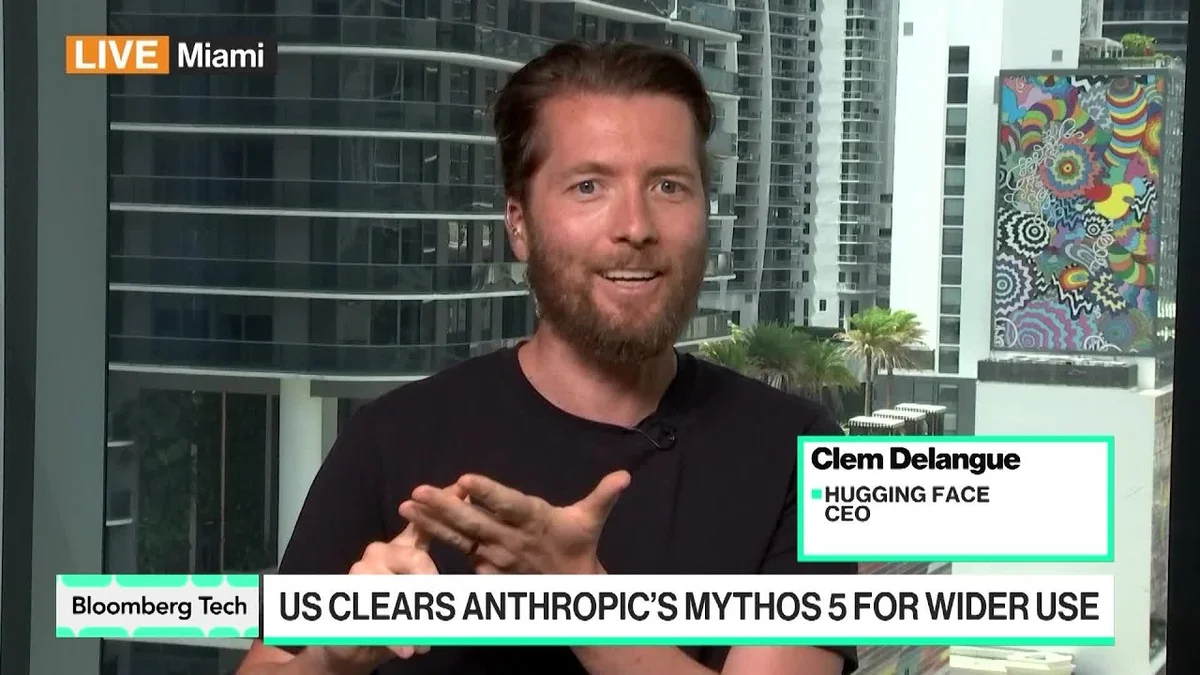
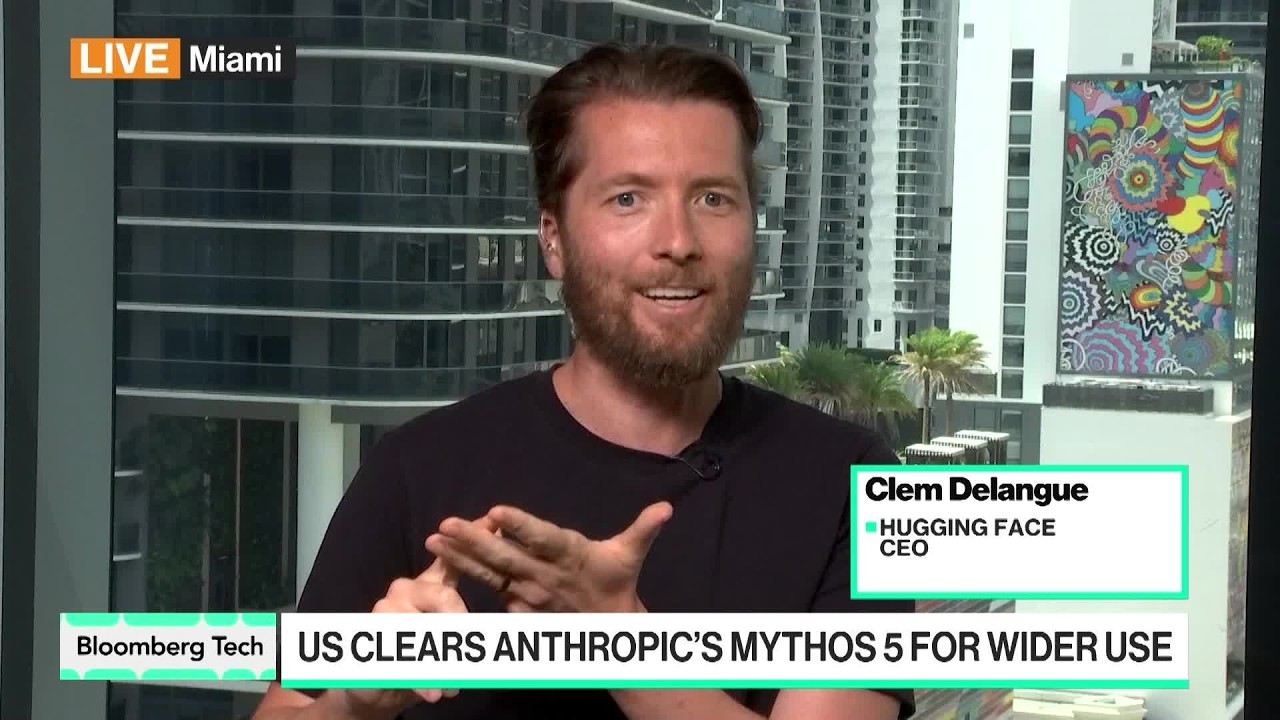
Clem Delangue, CEO of Hugging Face, speaking on a Bloomberg Tech broadcast.
Bloomberg Technology
Visual TL;DR
Anthropic's 'Dangerous' LabelDriver
From the articleHugging Face CEO Clem Delangue offered his perspective on the ongoing debate surrounding AI safety and regulation, particularly in light of Anthropic's decision to label its AI models as potentially 'dangerous.' Delangue suggested that such labels might be more of a marketing strategy than a genuine reflection of risk, especially when it comes to attracting enterprise clients.
Open-Source vs. Closed-SourceContext
debate on transparency in AI models
From the article 7 mentionsA significant portion of Delangue's discussion focused on the challenges of regulating AI, particularly the distinction between open-source and closed-source models.
Hugging Face CEO's ViewCore
labels may be marketing, not genuine risk
From the article 2 mentionsThe Hugging Face CEO also touched upon the increasing adoption of open-source AI by companies worldwide.
Rise of Open-Source AIEffect
growing trend and its implications
From the article 7 mentionsHe argued that regulating open-source AI presents unique difficulties due to its inherent accessibility and distributed nature.
Perceived Risk as MarketingContext
attracting enterprise clients through perceived danger
From the article 2 mentionsIn a recent appearance, Delangue stated, 'Getting regulated by a government because your model is 'too dangerous' is the best marketing (especially for enterprise sales) so everyone is trying to get it now.' This sentiment points to a growing trend where perceived risk is being used as a differentiator in the competitive AI market.
Need for TransparencyOutcome
calls for balanced regulation of AI
From the article 5 mentions'The government needs to get more transparency about what these models are capable of and not capable of,' he asserted.
Hugging Face CEO Clem Delangue offered his perspective on the ongoing debate surrounding AI safety and regulation, particularly in light of Anthropic's decision to label its AI models as potentially 'dangerous.' Delangue suggested that such labels might be more of a marketing strategy than a genuine reflection of risk, especially when it comes to attracting enterprise clients.

In a recent appearance, Delangue stated, 'Getting regulated by a government because your model is 'too dangerous' is the best marketing (especially for enterprise sales) so everyone is trying to get it now.' This sentiment points to a growing trend where perceived risk is being used as a differentiator in the competitive AI market.

The full discussion can be found on Bloomberg Technology's YouTube channel.

Hugging Face CEO Weighs In on Anthropic AI Model's 'Dangerous' Label - Bloomberg Technology
Hugging Face CEO Weighs In on Anthropic AI Model's 'Dangerous' Label, from Bloomberg Technology

The Open-Source vs. Closed-Source Debate on Transparency

A significant portion of Delangue's discussion focused on the challenges of regulating AI, particularly the distinction between open-source and closed-source models. He argued that regulating open-source AI presents unique difficulties due to its inherent accessibility and distributed nature.

'Regulating open source, by contrast, would hurt the very people regulation is supposed to protect...while risking killing competition, slowing AI progress, and reducing transparency even more,' Delangue explained. He elaborated that the open nature of these models allows for broader scrutiny and development, making it difficult to impose uniform regulations without stifling innovation and competition.

Delangue emphasized the need for transparency across the board, suggesting that the government should strive to understand and potentially regulate based on the actual capabilities and limitations of AI models, rather than relying on broad classifications like 'dangerous.' He noted that for open-source models, this transparency is more readily achievable, as their inner workings are often publicly accessible.

The Rise of Open-Source AI and its Implications

The Hugging Face CEO also touched upon the increasing adoption of open-source AI by companies worldwide. He highlighted that many companies are turning to open-source solutions for their AI needs, citing the success and accessibility of these models.

Delangue shared his company's experience, stating, 'We've been doing what we call doom-scrolling for quite many years now. If you remember GPT-2, that was really, I think five, six years ago, was already deemed too dangerous to release.' He contrasted this with the current environment where open-source models are widely available and utilized.

He further elaborated on the benefits of open-source AI in the context of robotics, mentioning the positive reception of Hugging Face's own open-source robotics model, 'Richie Mini.' 'We created this little robot called Richie Mini and we've been really surprised by how it people have been using it... we shipped over 10,000 of them all over the world in the past few months.' This success, he argued, demonstrates the demand for accessible and transparent AI technologies that can be understood and adapted by a wider range of developers and organizations.

Calls for Greater Transparency and Balanced Regulation

Delangue's core message revolved around the importance of transparency and a balanced approach to AI regulation. He believes that the focus should be on understanding what AI models can and cannot do, rather than on broad, potentially misleading, labels.

'The government needs to get more transparency about what these models are capable of and not capable of,' he asserted. He also stressed that the regulatory approach should differentiate between various types of AI development, acknowledging that open-source models offer a different set of challenges and opportunities compared to proprietary systems.

In conclusion, Delangue advocates for a regulatory framework that fosters innovation while ensuring safety and transparency, recognizing the distinct characteristics and benefits of open-source AI development.

© 2026 StartupHub.ai. All rights reserved. Do not enter, scrape, copy, reproduce, or republish this article in whole or in part. Use as input to AI training, fine-tuning, retrieval-augmented generation, or any machine-learning system is prohibited without written license. Substantially-similar derivative works will be pursued to the fullest extent of applicable copyright, database, and computer-misuse laws. See our terms.