

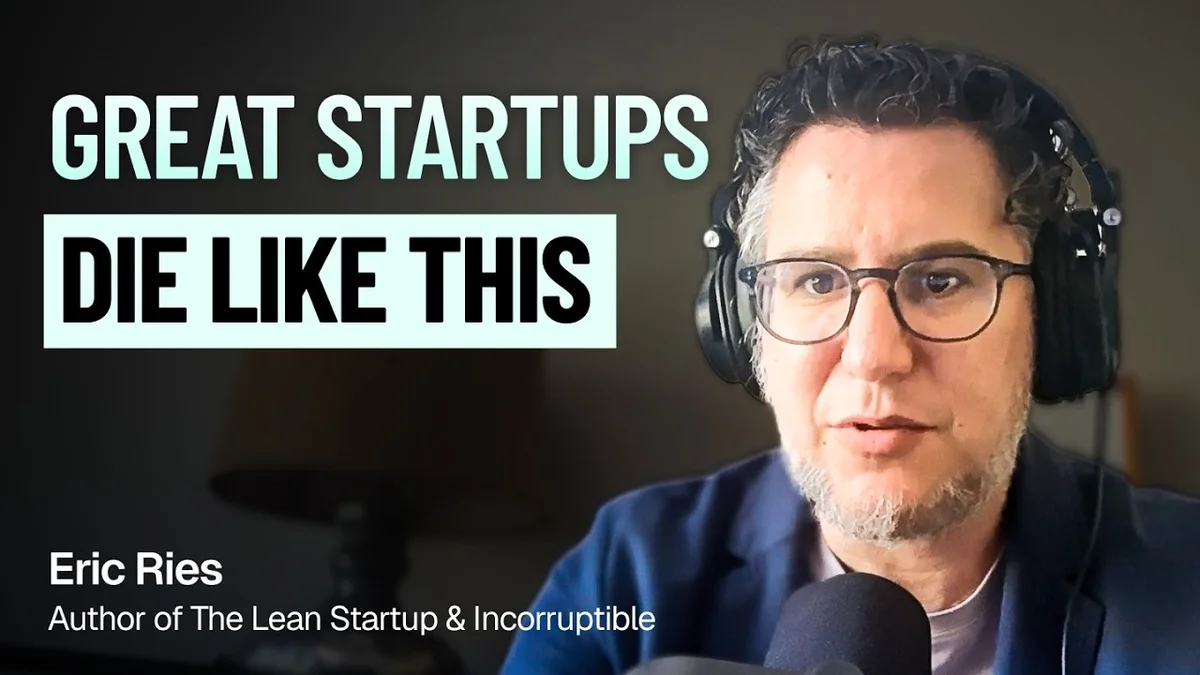
Eric Ries on Building Incorruptible Companies

Eric Ries, author of 'The Lean Startup,' discusses how companies can resist short-term pressures and build enduring, mission-driven organizations.

8 min read
Eric Ries, author of The Lean Startup, speaking about building incorruptible companies.
EO Studio

Visual TL;DR. Short-term Profit Focus leads to Financial Gravity. Financial Gravity causes Value Destruction. Short-term Profit Focus results in Value Destruction. Value Destruction drives need for Incorruptible Companies. Incorruptible Companies requires Long-term Thinking. Incorruptible Companies built on Ethos & Integrity. Long-term Thinking enables Enduring Organizations. Ethos & Integrity fosters Enduring Organizations.

  1. Short-term Profit Focus: modern business practices inadvertently destroy promising ventures in the name of profit
  2. Financial Gravity: corrosive forces and short-term pressures lead companies to their downfall
  3. Value Destruction: companies fail to live up to potential, some 'murdered in the name of profit'
  4. Incorruptible Companies: Eric Ries's new mission to build enduring, mission-driven organizations
  5. Long-term Thinking: a philosophy of long-term thinking is the bedrock of company success
  6. Ethos & Integrity: blueprint for incorruptibility involves strong organizational ethos and integrity
  7. Enduring Organizations: resist short-term pressures and build mission-driven, resilient companies
Visual TL;DR
Visual TL;DR, startuphub.ai Short-term Profit Focus results in Value Destruction. Value Destruction drives need for Incorruptible Companies results in drives need for Short-term Profit Focus Value Destruction Incorruptible Companies Enduring Organizations From startuphub.ai · The publishers behind this format
Visual TL;DR, startuphub.ai Short-term Profit Focus results in Value Destruction. Value Destruction drives need for Incorruptible Companies results in drives need for Short-term ProfitFocus Value Destruction IncorruptibleCompanies EnduringOrganizations From startuphub.ai · The publishers behind this format
Visual TL;DR, startuphub.ai Short-term Profit Focus results in Value Destruction. Value Destruction drives need for Incorruptible Companies results in drives need for Short-term Profit Focus modern business practices inadvertentlydestroy promising ventures in the name ofprofit Value Destruction companies fail to live up to potential,some 'murdered in the name of profit' Incorruptible Companies Eric Ries's new mission to build enduring,mission-driven organizations Enduring Organizations resist short-term pressures and buildmission-driven, resilient companies From startuphub.ai · The publishers behind this format
Visual TL;DR, startuphub.ai Short-term Profit Focus results in Value Destruction. Value Destruction drives need for Incorruptible Companies results in drives need for Short-term ProfitFocus modern businesspracticesinadvertently… Value Destruction companies fail tolive up topotential, some… IncorruptibleCompanies Eric Ries's newmission to buildenduring,… EnduringOrganizations resist short-termpressures and buildmission-driven,… From startuphub.ai · The publishers behind this format
Visual TL;DR, startuphub.ai Short-term Profit Focus leads to Financial Gravity. Financial Gravity causes Value Destruction. Short-term Profit Focus results in Value Destruction. Value Destruction drives need for Incorruptible Companies. Incorruptible Companies requires Long-term Thinking. Incorruptible Companies built on Ethos & Integrity. Long-term Thinking enables Enduring Organizations. Ethos & Integrity fosters Enduring Organizations leads to causes results in drives need for requires built on enables fosters Short-term Profit Focus modern business practices inadvertentlydestroy promising ventures in the name ofprofit Financial Gravity corrosive forces and short-term pressureslead companies to their downfall Value Destruction companies fail to live up to potential,some 'murdered in the name of profit' Incorruptible Companies Eric Ries's new mission to build enduring,mission-driven organizations Long-term Thinking a philosophy of long-term thinking is thebedrock of company success Ethos & Integrity blueprint for incorruptibility involvesstrong organizational ethos and integrity Enduring Organizations resist short-term pressures and buildmission-driven, resilient companies From startuphub.ai · The publishers behind this format
Visual TL;DR, startuphub.ai Short-term Profit Focus leads to Financial Gravity. Financial Gravity causes Value Destruction. Short-term Profit Focus results in Value Destruction. Value Destruction drives need for Incorruptible Companies. Incorruptible Companies requires Long-term Thinking. Incorruptible Companies built on Ethos & Integrity. Long-term Thinking enables Enduring Organizations. Ethos & Integrity fosters Enduring Organizations leads to causes results in drives need for requires built on enables fosters Short-term ProfitFocus modern businesspracticesinadvertently… Financial Gravity corrosive forcesand short-termpressures lead… Value Destruction companies fail tolive up topotential, some… IncorruptibleCompanies Eric Ries's newmission to buildenduring,… Long-termThinking a philosophy oflong-term thinkingis the bedrock of… Ethos & Integrity blueprint forincorruptibilityinvolves strong… EnduringOrganizations resist short-termpressures and buildmission-driven,… From startuphub.ai · The publishers behind this format

Eric Ries, the author of the bestselling book The Lean Startup, has recently embarked on a new mission to explore how companies can resist the corrosive forces that often lead to their downfall. In a recent presentation, Ries delved into the concept of "financial gravity" and how modern business practices can inadvertently lead to the destruction of even the most promising ventures, often in the name of profit.

The Paradox of Profit: Why Value is Destroyed

Ries begins by highlighting a fundamental paradox in the economic system: companies are supposed to compete to create the most value, which in turn should lead to the most profit for investors. Yet, he observes that many companies fail to live up to their potential, with some being "murdered in the name of profit." This mystery, he explains, drove him to write his latest book, Incorruptible.

He diagnoses that a philosophy of long-term thinking is the bedrock of company success, and when evaluating success purely on financial terms, the system seems to reward short-term thinking and cost-cutting without accountability for the consequences. This creates a "gravitational force" that manipulates individuals within organizations to prioritize what the system wants, rather than what the company's core mission dictates.
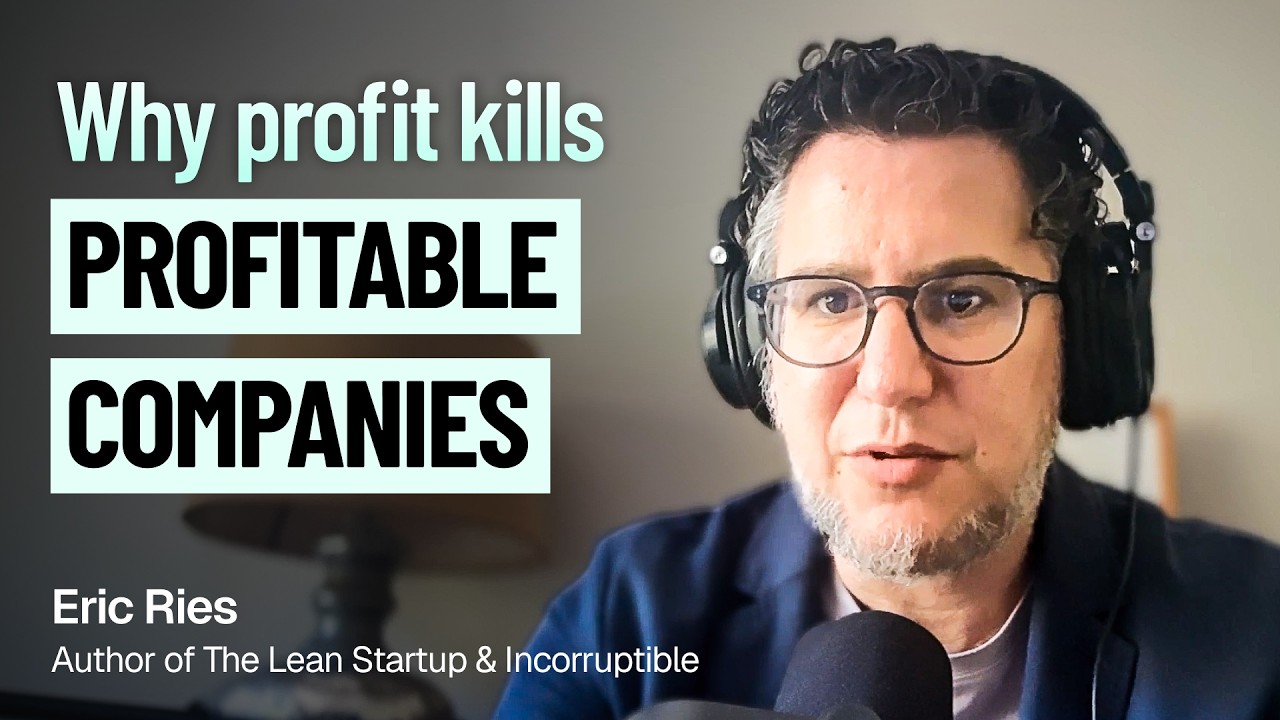
The full discussion can be found on EO Studio's YouTube channel.

The anatomy of a startup death | Eric Ries (Author of The Lean Startup) - EO Studio
The anatomy of a startup death | Eric Ries (Author of The Lean Startup), from EO Studio

Sol Price: A Fiduciary's Legacy

To illustrate his point, Ries recounts the story of Sol Price, the pioneer of the warehouse club model, who founded FedMart in the 1950s. Price, a former lawyer, operated with a fiduciary mindset, always putting his customers' interests first. He famously displayed competitor advertisements in FedMart to ensure customers found the best prices, a move that baffled many but earned him immense trust.

Despite FedMart's success for over two decades, Price's investors grew impatient with his commitment to high wages and low prices, which they saw as sacrificing profit for customer and employee well-being. In 1975, Price was fired by his board, and within seven years, FedMart was liquidated. However, Price's story has a hopeful epilogue: he founded The Price Club, which eventually merged with Costco Wholesale. The latter company continues to uphold Price's ethos, demonstrating that a mission-driven approach can lead to enduring success.

Financial Gravity and the Modern Economy

Ries argues that the current financialized economy rewards short-term gains, leading to a system where cost-cutting is prioritized over long-term value creation, impacting everything from brand quality to environmental sustainability. He notes that while many perceive this as an inevitable consequence of capitalism, the existence of exceptional companies that defy this "financial gravity" proves otherwise.

The Blueprint for Incorruptibility: Ethos and Integrity

Ries identifies a common thread among companies that resist this force: they violate the modern "best practices" taught for building and governing companies. These companies, he suggests, are built with what he calls a "governance fortress", a series of provisions that shield them from external meddling. He calls these protective structures "mission guardians."

He elaborates on two key dimensions for building such companies: ethos and integrity.

  • Ethos: This refers to a company's character and its consistent effort to do the right thing, aligning with human flourishing rather than mere financial extraction. This requires building a business model where profit is tied to purpose and fostering a culture where employees are driven by the mission.
  • Integrity: This relates to a company's structural integrity and its ability to make and keep promises. Corporate promises must be rooted in something deeper than individual intentions, such as legal charters that reject shareholder primacy.

The Vectra Case: A Cautionary Tale

Ries illustrates the perils of shareholder primacy with the example of Vectura, a pharmaceutical company acquired by Philip Morris International. Despite the clear conflict of interest, a cigarette maker owning a lung health company, the board felt compelled by fiduciary duty to accept the higher bid from Philip Morris, leading to the company's destruction within three years. This, Ries argues, demonstrates that value destruction should not be mislabeled as profitability.

The Power of the Public and Future of Entrepreneurship

Ries emphasizes that the public holds the power to shape corporate values, not just CEOs and boards. He also touches upon the role of AI in accelerating validated learning, but stresses that human understanding and judgment remain paramount. For founders, he advises focusing on building incorruptible companies incrementally, emphasizing that the groundwork is everything.

© 2026 StartupHub.ai. All rights reserved. Do not enter, scrape, copy, reproduce, or republish this article in whole or in part. Use as input to AI training, fine-tuning, retrieval-augmented generation, or any machine-learning system is prohibited without written license. Substantially-similar derivative works will be pursued to the fullest extent of applicable copyright, database, and computer-misuse laws. See our terms.