
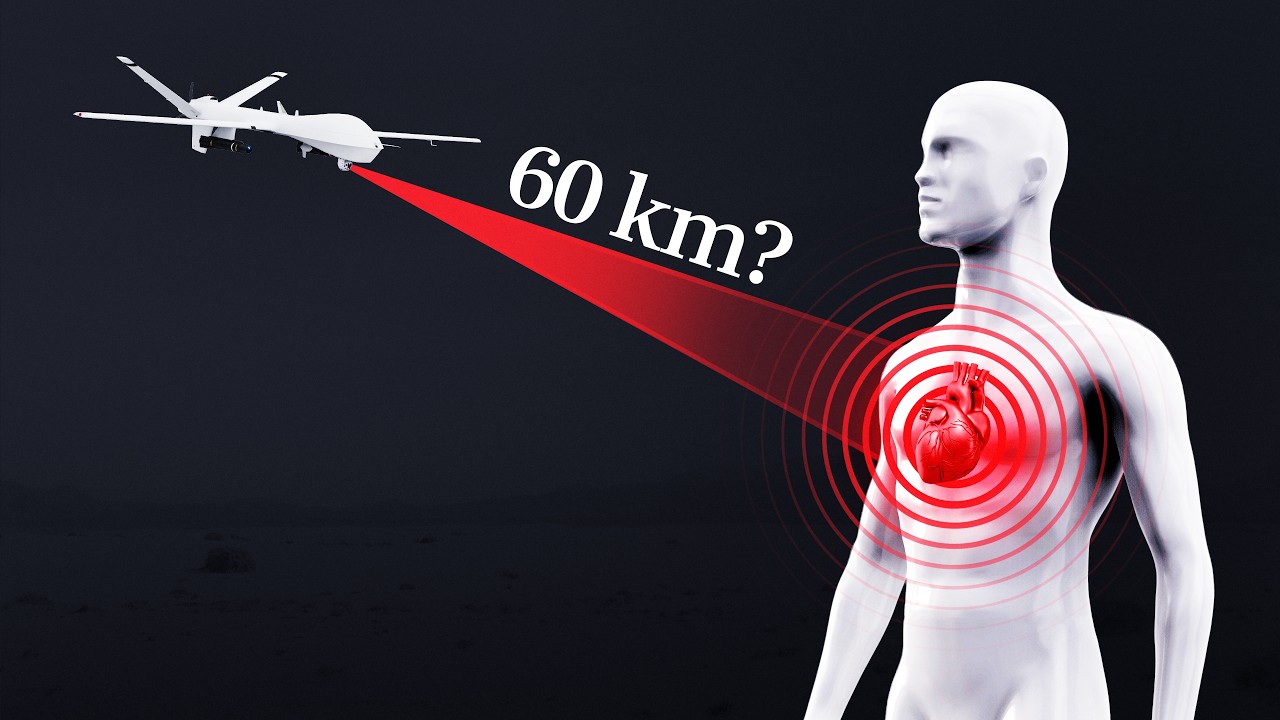
A recent report detailing the CIA's use of a futuristic quantum tool named 'Ghost Murmur' to locate a downed pilot deep within Iran has sparked considerable interest and skepticism. The technology, described as capable of detecting a heartbeat from vast distances, reportedly played a crucial role in the rescue of an American airman whose F-15 jet was shot down. This narrative, however, clashes with the current understanding of magnetic sensing capabilities, prompting scientists to question its feasibility.
The 'Ghost Murmur' Technology Explained
The core of the 'Ghost Murmur' technology is said to be quantum magnetometry, specifically employing sensors built around microscopic defects within synthetic diamonds, known as nitrogen-vacancy (NV) centers. These centers are sensitive to magnetic fields, allowing for the detection of incredibly faint signals. The ability to detect a human heartbeat from kilometers away would represent a significant leap, surpassing current technological limitations.
The Science of Magnetometry and Heartbeats
The human heart generates a faint magnetic field, measurable in picoTesla. Detecting these fields from a distance is a formidable scientific challenge. While quantum magnetometers, particularly those utilizing NV centers in diamonds, have demonstrated extreme sensitivity, enabling measurements in the femtoTesla range, detecting these signals through environmental noise and over vast distances remains a significant hurdle. For context, the Earth's magnetic field is around 20-80 microTesla, orders of magnitude stronger than the signals in question.
Skepticism and Scientific Limits
Many scientists have expressed skepticism regarding the 'Ghost Murmur' claims, pointing out that the reported detection range and sensitivity required for such a feat are far beyond current capabilities. The story highlights the inherent difficulty in isolating such faint biological signals from background magnetic noise, especially over distances of kilometers. While the underlying quantum sensing technology is advancing rapidly, the specific application described by the CIA remains in the realm of speculation for many in the scientific community.
The Reality of Quantum Sensing
Quantum sensing, particularly with NV centers in diamonds, is a burgeoning field with applications ranging from precise magnetic field measurements to advanced imaging. These sensors can indeed detect incredibly weak magnetic fields, but their practical application for long-range biological detection is still in its early stages. The described capabilities of 'Ghost Murmur' would require overcoming substantial technical challenges, including signal amplification, noise reduction, and the development of highly portable and robust sensor systems.