


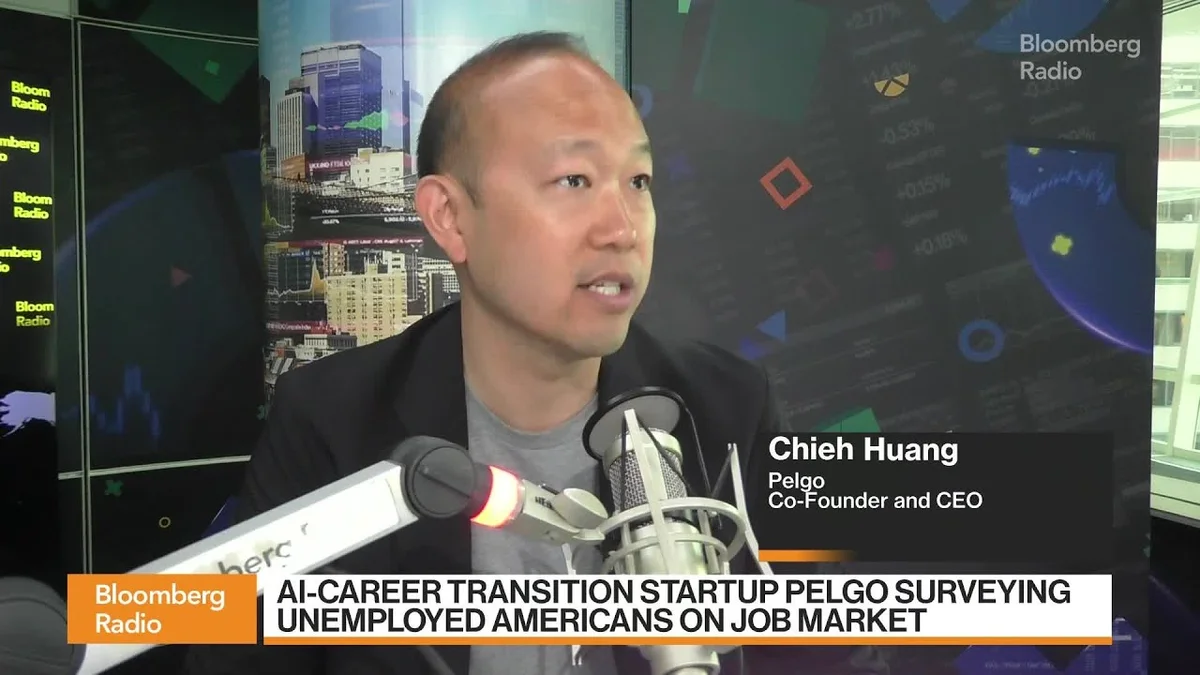
Chieh Huang, co-founder and CEO of Pelgo, a career transition startup, recently shared insights on the evolving job market and the role of artificial intelligence. Speaking on Bloomberg Radio, Huang discussed findings from a survey of 5,000 unemployed Americans regarding their perceptions of AI's impact on employment. The conversation highlighted a notable shift in how individuals view AI's potential to create new job opportunities rather than simply displace existing ones.
Chieh Huang's Perspective
Chieh Huang, as the CEO of Pelgo, is at the forefront of understanding how individuals navigate career changes in an increasingly automated world. Pelgo focuses on helping people transition into new careers, particularly in sectors influenced by technological advancements. Huang's background in this space provides a unique vantage point on the challenges and opportunities presented by AI in the workforce.
AI's Dual Role: Job Creator and Disruptor
Huang presented striking statistics from the survey, indicating that a substantial 6% of unemployed individuals believe AI will lead to the creation of new jobs. This perspective contrasts with a more prevalent fear of job displacement. Huang elaborated on this, stating, "I think in the long run, we'll see AI being a job creator." He drew parallels to historical technological shifts, such as the rise of the internet and social media. "We've seen technologies destroy jobs, and we've seen entire new industries come about," Huang noted. He specifically recalled how jobs like social media managers were unimaginable just a few decades ago, yet are now commonplace.
The full discussion can be found on Bloomberg Podcast's YouTube channel.
The Shifting Skill Landscape
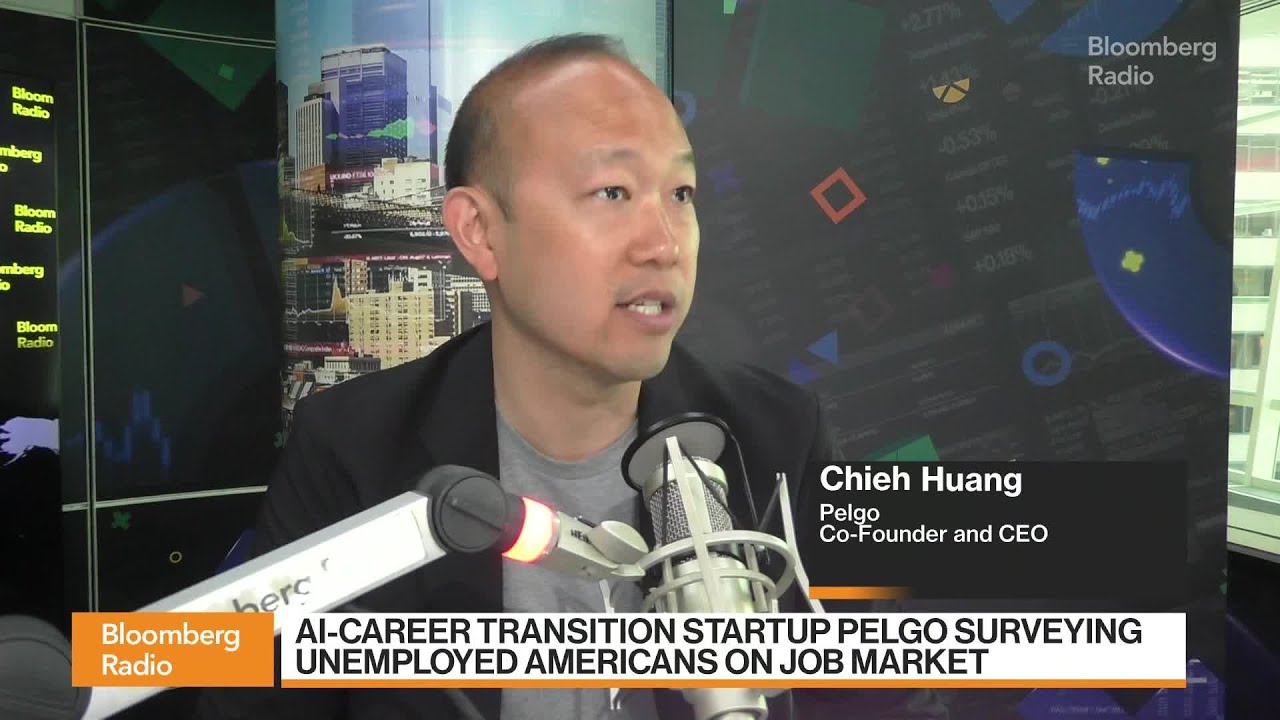
The conversation also focused on the skills that will be most valuable in the future. Huang emphasized the growing importance of adaptability and the ability to work alongside AI. He observed that the traditional path of mastering a single skill for an entire career is becoming obsolete. "What I'm seeing is that people need to be adaptable, they need to be able to reskill, upskill," Huang explained. He highlighted that understanding how to prompt and interact with AI effectively is becoming a critical skill. "It's not about programming the AI, it's about being able to ask the right questions, to be able to direct it," he added.