

AI Funding Frenzy: Bubble or Breakthrough?

Khosla Ventures partner Ethan Choi and Gradient Ventures GP Darian Shirazi discuss the booming AI investment landscape, with Choi emphasizing early-stage potential and Shirazi cautioning about inflated valuations.

5 min read
Ethan Choi of Khosla Ventures and Darian Shirazi of Gradient Ventures discuss AI funding on Bloomberg Tech.
Some AI Firms a Little ‘Overvalued,’ Khosla’s Choi Says — Bloomberg Technology on YouTube

In the rapidly evolving landscape of artificial intelligence, a significant debate is unfolding among venture capitalists regarding the current investment climate and the sustainability of AI startups. Ethan Choi, a partner at Khosla Ventures, shared his insights on the immense demand for AI compute and the potential for a 'bubble' in certain segments of the market during a recent appearance on Bloomberg Tech.

The full discussion can be found on Bloomberg Technology's YouTube channel.
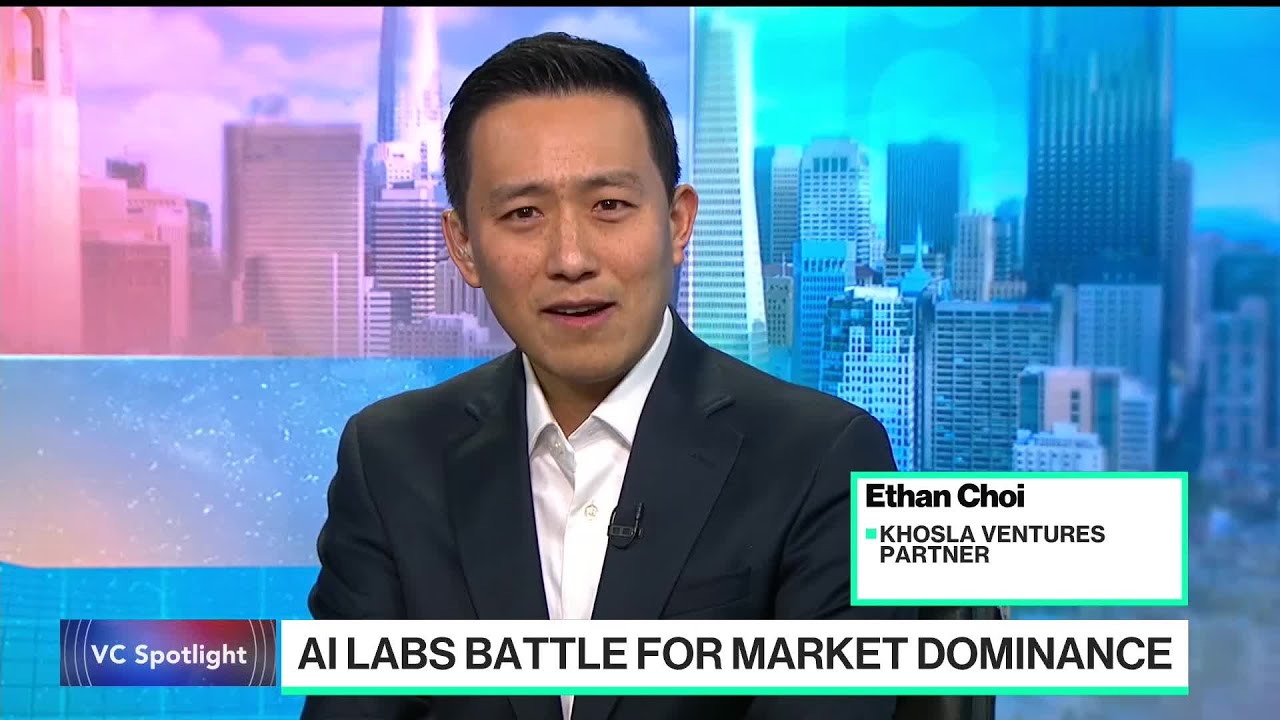
Some AI Firms a Little ‘Overvalued,’ Khosla’s Choi Says - Bloomberg Technology
Some AI Firms a Little ‘Overvalued,’ Khosla’s Choi Says — from Bloomberg Technology

Choi, who has a strong track record of investing in transformative technology companies, highlighted the sheer scale of resources required for state-of-the-art AI development. He noted that the current AI boom, driven by advancements like large language models (LLMs) exemplified by OpenAI's GPT series, necessitates massive investments in research and development, particularly in terms of computational power.

Ethan Choi's Perspective on AI Investment

Ethan Choi, a Partner at Khosla Ventures, is a prominent figure in the venture capital world, known for identifying and backing innovative technology companies. His firm, Khosla Ventures, has a history of strategic investments in cutting-edge sectors, including AI. Choi's participation in the discussion provides a valuable perspective from an investor actively navigating the complex and fast-paced AI market.

Darian Shirazi's Concerns about AI Valuations

Darian Shirazi, General Partner at Gradient Ventures, offered a more cautious outlook, suggesting that a 'bubble' may be forming in specific areas of AI. He pointed to the substantial capital being raised by foundational model companies, noting that the focus on simply raising large sums of money, rather than demonstrating clear paths to profitability, could be a cause for concern. Shirazi specifically mentioned that the valuations attached to some of these cutting-edge AI endeavors might be outpacing their current revenue generation or demonstrable business models.

The AI Compute Arms Race

Both Choi and Shirazi acknowledged the unprecedented demand for AI compute, which is a critical bottleneck and cost factor in developing and deploying advanced AI models. Choi emphasized that the AI industry is still in its nascent stages, comparing it to the early days of the internet. He stated, "We're just at the beginning stages. I'd say we're not even in the first innings yet." This sentiment underscores the vast potential for growth and innovation, but also the significant investment required to realize it.

The conversation highlighted the immense computational resources, often measured in gigawatts of power, needed to train and run sophisticated AI models. Choi suggested that the demand for this compute is effectively infinite, and that the race to develop superior AI capabilities is driving substantial investment. He further elaborated on the nature of this demand, stating, "In terms of demand, I view it as infinite. We haven't even scratched the surface of robotics, we haven't even scratched the surface of our workplaces, our homes, and we're just beginning to have agents that can do things across the enterprise, across the speed of humans."

The Debate on Profitability and Sustainability

Shirazi's concern about the AI bubble stems from the observation that many companies are raising vast sums of capital, sometimes hundreds of millions or even billions of dollars, without a clear path to profitability. He noted, "There are bubbles in some parts of AI, contenders to Google, contenders to OpenAI, contenders to Microsoft, and Anthropic, that are raising a billion dollars here or there. It seems as though those are a lot of venture capitalists or investors that want to chase the next OpenAI."

He further elaborated on the potential disconnect between investment and sustainable business models: "Realistically, the moat at the model layer is just capital. How much money can you raise? You can raise billions of dollars to train models, and that's very, very expensive. And as you think about the cap table, we have to make sure that the founders and the team are incentivized in a way that they're going to build sustainable businesses."

Choi, while acknowledging the high valuations, presented a more optimistic view on the long-term potential, suggesting that the underlying technology and its transformative capabilities justify significant investment. He pointed to the potential for AI to revolutionize various industries and create entirely new markets. However, he also stressed the importance of careful evaluation, stating, "We have to work backwards and say, 'What are the specific outcomes that we're going to see from these investments?'" He believes that while some valuations might seem high, the potential for groundbreaking AI advancements can indeed justify them, provided the companies can demonstrate a clear value proposition and a path to generating revenue.

The Role of Venture Capital in AI's Future

The discussion underscored the critical role of venture capital in fueling AI innovation. Firms like Khosla Ventures are actively seeking out and investing in companies that they believe will shape the future of AI. The presence of companies like OpenAI, Vercel, Ramp, Cyberhaven, Abridge, and Glean in Choi's portfolio, as displayed on screen, showcases the breadth of his firm's interest in the AI ecosystem, spanning foundational models, developer tools, and enterprise applications.

However, the conversation also served as a cautionary tale, with Shirazi's remarks highlighting the need for a balanced approach that prioritizes not just technological advancement but also sound business fundamentals. The debate over whether the current AI boom is a sustainable growth phase or an unsustainable bubble will likely continue as the industry matures and new applications emerge.