

AI for Climate: Priya Dhawale on Data & Solutions

MIT's Priya Dhawale discusses AI's role in climate solutions, the energy cost of AI, and the need for democratization in the field.

Mar 11 at 4:34 PM5 min read
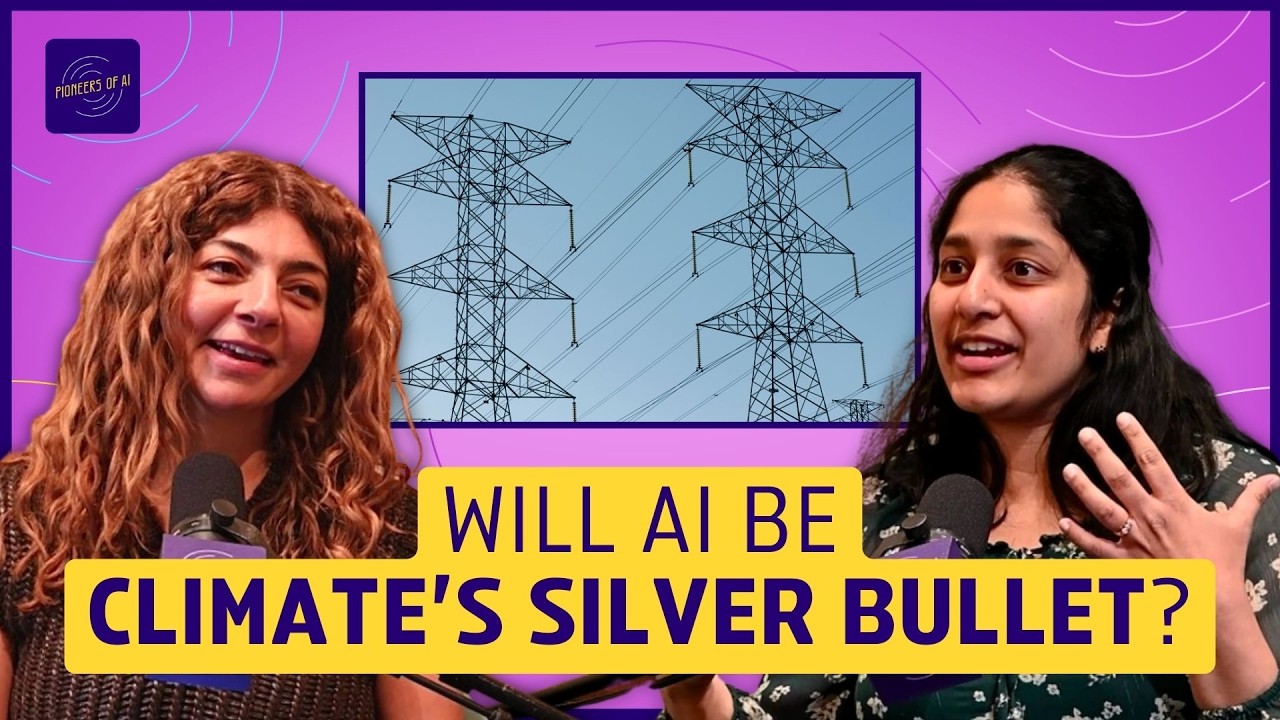
Priya Dhawale speaking at a podcast, with microphones visible.

In a recent discussion on the podcast "Pioneers of AI," Priya Dhawale, a researcher and Assistant Professor at MIT's EECS and LIDS, shared insights into the crucial role of Artificial Intelligence in tackling climate change. Dhawale, whose work focuses on making AI more accessible and applicable to real-world problems, highlighted the potential of AI to revolutionize how we approach environmental challenges.

About Priya Dhawale

Priya Dhawale is an Assistant Professor at the Massachusetts Institute of Technology (MIT), affiliated with the Department of Electrical Engineering and Computer Science (EECS) and the Laboratory for Information and Decision Systems (LIDS). Her research is dedicated to developing accessible and impactful AI solutions, particularly for societal challenges like climate change. Dhawale's work emphasizes interdisciplinary approaches, bringing together expertise in computer science, engineering, and environmental science.

AI as a Tool for Climate Action

Dhawale articulated that AI is not just a theoretical concept but a practical tool with the potential to significantly contribute to mitigating and adapting to climate change. She outlined several key areas where AI can make a difference:

The full discussion can be found on Pioneers of AI's YouTube channel.
We have a power grid problem. Can AI fix it? | Pioneers of AI — from Pioneers of AI
  • Renewable Energy Forecasting: AI models can improve the accuracy of predicting renewable energy output (like solar and wind), enabling better grid management and integration of clean energy sources.
  • Optimizing Energy Efficiency: AI can optimize heating, ventilation, and air conditioning (HVAC) systems in buildings, as well as industrial processes, leading to substantial energy savings and reduced carbon emissions.
  • Climate Modeling and Prediction: Advanced AI techniques can enhance the precision of climate models, helping scientists better understand complex climate patterns and predict future impacts.

Dhawale emphasized that in all these applications, AI plays a supporting role, empowering human decision-making rather than replacing it entirely. She stated, "AI can definitely be like a really useful tool to help address climate change and has all sorts of uses, right? Like better forecasting of renewable energy on the grid, optimizing heating and cooling systems to be more efficient, but I would say that in all of these cases, AI is playing kind of a supportive role."

Addressing Misconceptions: Democratization of AI

The conversation touched upon a common misconception in the AI field: the perception that AI development is exclusively handled by a few dominant tech entities. Dhawale addressed this by highlighting the importance of democratizing AI. She explained that democratization means empowering more individuals and organizations with the skills and tools to build and shape AI systems.

"I've heard some people, and specifically actually Reed Hoffman who's an investor and entrepreneur and a friend of mine on the show, he described AI as the platinum bullet to solve climate change," Dhawale recalled. When asked if she agreed, she humorously responded, "No." She clarified that while AI is a powerful tool, it's not a singular solution. Instead, she advocates for a broader approach where "more people who are empowered with the skills to build and shape AI tools and ecosystems." This inclusive approach ensures that AI development is more representative of societal needs and values.

The Unseen Cost: AI's Energy Footprint

A critical point raised during the discussion was the significant energy consumption associated with training and running large AI models, particularly generative models like those powering large language models. Dhawale expressed concern about this aspect:

"I'm worried about the extent to which AI is going to be developed by a certain set of people, and then the rest of the world is just going to procure it and use it, and not be shaping it," she noted, referencing a common sentiment. She further elaborated on the energy implications, stating, "When we talk about AI's energy use, how it impacts the planet, we have to think about the infrastructure required to support AI, like data centers, energy, water consumption, etc." This highlights the need for a more holistic view of AI's environmental impact, moving beyond just the algorithms themselves.

AI's Role in Equity and Climate Justice

Dhawale drew parallels between her upbringing and her work, noting how witnessing disparities in resources and opportunities, both in the US and India, fueled her passion for equity. She observed that climate change disproportionately affects vulnerable communities, and AI can play a role in addressing these inequities.

"I think that in all of these different ways, both the climate hazards being disproportionately distributed, as well as people's ability to adapt, is driven by the wealth that they have historically had and the infrastructure that they have historically had," Dhawale stated. She believes that AI can be leveraged to create more equitable solutions, ensuring that communities most affected by climate change are not left behind in the transition to a sustainable future.

Future Directions for AI in Climate

Looking ahead, Dhawale emphasized the importance of developing AI solutions that are not only powerful but also responsible and ethical. This includes focusing on:

  • Data Accessibility: Making high-quality datasets available for climate research and AI model development.
  • Interdisciplinary Collaboration: Fostering partnerships between AI experts, climate scientists, policymakers, and community leaders.
  • Transparency and Accountability: Ensuring that AI models are understandable and that their development and deployment are guided by ethical principles.

Dhawale's insights underscore the immense potential of AI to contribute to climate solutions, while also cautioning about the need for responsible development and a focus on equity. The conversation serves as a call to action for a more inclusive and impactful approach to leveraging AI for a sustainable planet.