


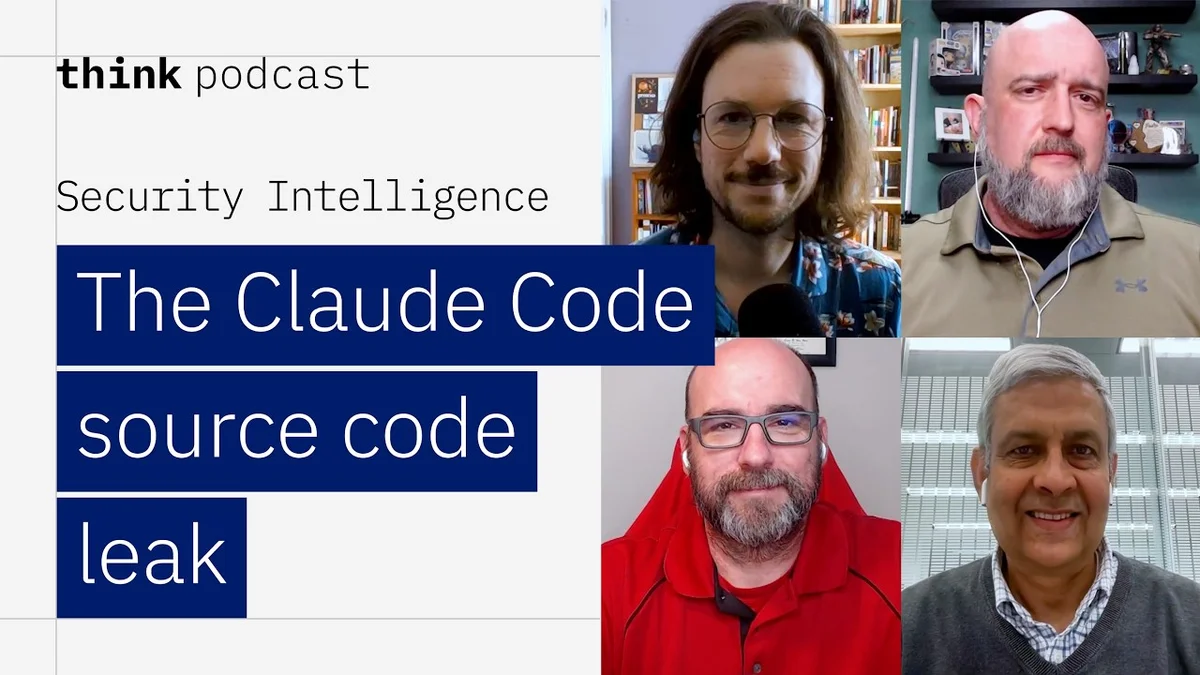
In a recent discussion on Security Intelligence's "think podcast," experts Nick Bradley, Senior Threat Intelligence Manager at IBM, and JR Rao, Fellow and CTO of Security Research at IBM, explored the evolving intersection of artificial intelligence and cybersecurity. The conversation delved into recent breaches and the broader implications for AI adoption and security practices within organizations.
Expert Insights on the Current Threat Landscape
Matt Kosinski, host and Security Intelligence journalist, guided the discussion, highlighting how recent events, such as the "Claude Code leak," signal a new era of cyber threats. This leak, where a version of the Claude AI tool was accidentally published with its source code, provided attackers with insights into its workings, potentially enabling them to exploit vulnerabilities or develop more sophisticated attacks.
Nick Bradley, drawing on his expertise in threat intelligence, emphasized the dual nature of AI in cybersecurity. While AI can be a powerful tool for defense, it also presents new avenues for malicious actors. He pointed out that the leak allowed attackers to potentially weaponize the AI's capabilities, such as creating more convincing phishing attempts or automating the discovery of system weaknesses.
The full discussion can be found on IBM's YouTube channel.
JR Rao, a Fellow and CTO at IBM, provided a broader perspective, framing these incidents not just as isolated "leaks" but as indicators of a larger shift in the cybersecurity landscape driven by AI. He argued that the core issue is less about the specific AI model and more about the underlying supply chain security, particularly concerning package management systems like npm.