

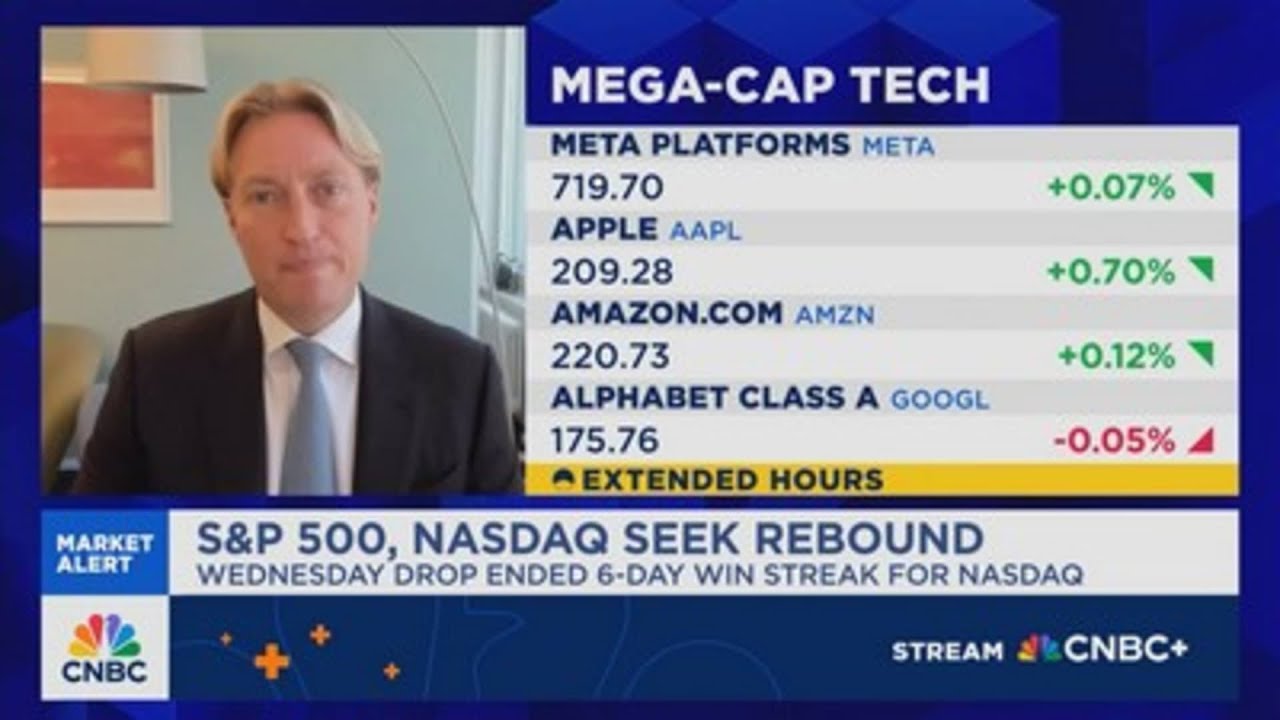
“AI is just the game in town over the next couple of years,” declared Mark Andersen, Co-Head of Global Asset Allocation at UBS Global Wealth Management, in a recent CNBC interview.
Andersen spoke with CNBC about the prevailing market conditions and the strategic allocation of assets for the latter half of the year. His commentary centered on the reduction of geopolitical and fiscal uncertainties, the impending shift in interest rate policies, and the profound impact of structural growth trends, with AI at the forefront.
Despite lingering concerns about the extent of an economic slowdown and inflation, Andersen conveyed a largely constructive outlook for the market. He noted that many of the risks associated with geopolitics, fiscal uncertainty, and trade have diminished over recent months. This reduction in risk, combined with the anticipation of central banks, including the Federal Reserve, cutting interest rates, creates an appealing environment for global investors. Indeed, he emphasized, “That’s an environment that global investors are just very appreciative of these days.”
A key insight from Andersen’s analysis points to the weakening US dollar as a favorable condition for US-based international companies, especially those in the technology sector that derive substantial revenue from abroad. This currency dynamic translates into constructive earnings for these firms, bolstering their global competitiveness. Consequently, UBS Global Wealth Management anticipates the US equity market will likely outperform its European counterparts. Emerging markets are also highlighted as an attractive region, benefiting from lower rates and a weaker dollar.
AI adoption among US companies has also doubled in the last six months, moving from approximately 5% to nearly 10%. This exponential growth signals a broader integration of AI into business operations. “That number is only going to go higher. So AI and tech is still a place that we really like to look at,” Andersen affirmed. Beyond direct AI companies, he also sees significant opportunity in sectors that underpin this technological revolution, such as power and resources. Companies that facilitate the creation of essential materials, enhance energy efficiency, or advance battery technologies are poised to benefit immensely from the AI transition.