

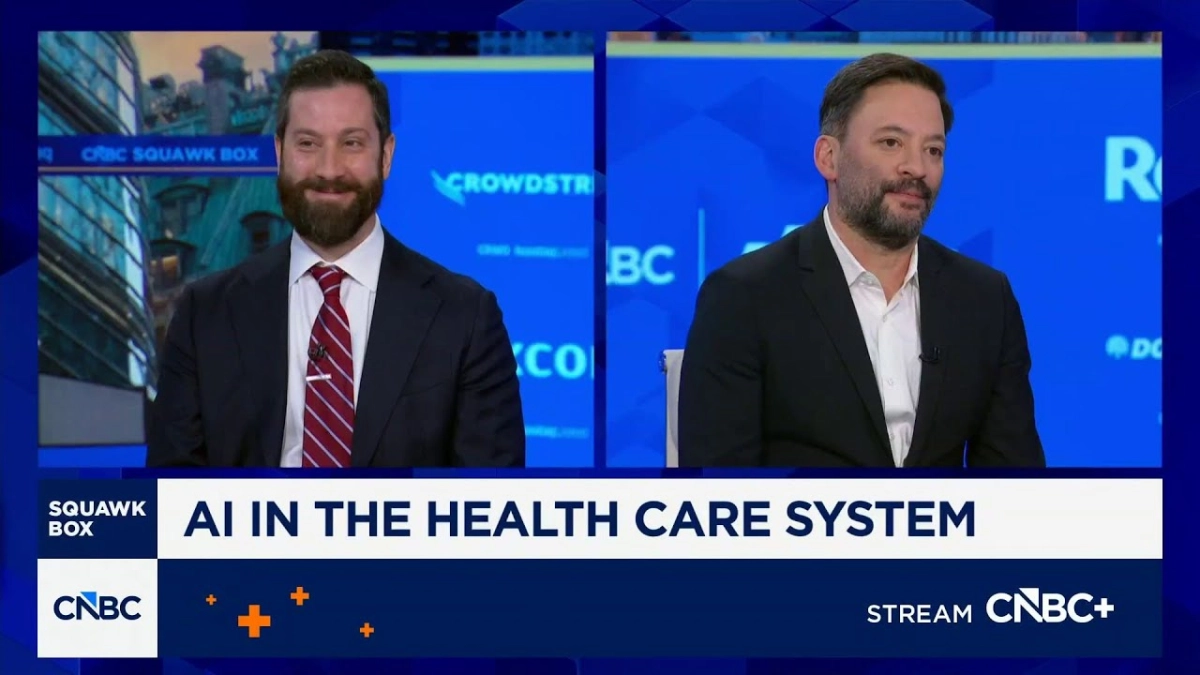
The concept of an AI doctor prescribing medicine has moved swiftly from speculative fiction to regulatory reality. This profound shift, driven by startups focused on automating high-volume, low-risk administrative tasks, promises to fundamentally redefine primary care economics and accessibility. Doctronic co-founders Dr. Adam Oskowitz and Matt Pavelle recently spoke on CNBC’s Squawk Box about their AI health tech startup, which is pioneering automated prescription renewal in Utah, marking a critical inflection point in the deployment of regulated artificial intelligence within the U.S. healthcare system.
The core problem Doctronic aims to solve is not medical complexity, but clinical throughput and accessibility, a problem that has plagued the American healthcare model for decades. Patients often face significant delays simply to renew routine medications. Pavelle highlighted the stark reality of the current bottleneck: “It takes about 26 days for somebody to see their primary care physician today.” This inefficiency is not just an inconvenience; it contributes to medication non-compliance, which the U.S. government pays an estimated $100 billion for annually.
Doctronic’s solution addresses this head-on by automating the renewal process for a specific formulary of approximately 200 low-risk drugs, eliminating the need for a human doctor to review every routine request. For patients who are stable on chronic medications, the requirement for frequent, mandatory check-ins with a physician often serves primarily as a revenue driver or a bureaucratic hurdle, rather than a necessary clinical intervention.
This automation yields a radical cost advantage, a key insight for investors tracking disruptive health tech models. Instead of paying for a full physician visit, Doctronic charges only $4 for the AI-driven renewal. This low price point targets both insured patients with high co-pays and, crucially, the uninsured population who often rely on expensive emergency room visits for basic medication refills. Pavelle emphasized the disruptive economics: “An important aspect about this whole process in Utah too is we're only charging $4 for the AI to do that whole renewal process and that will be reduced at scale.” This model suggests that the future of routine primary care will be defined by scale, not high per-visit fees.
The discussion quickly pivoted to the inherent concerns surrounding safety and the potential for errors, particularly when dealing with large language models (LLMs) known for their capacity to "hallucinate." Oskowitz was keen to clarify that the Doctronic system is far from a simple, unchecked chatbot. The process is governed by stringent clinical decision protocols and layered safety architecture, not pure generative AI.
