The 10x Multiplier Why Market Sizing Is Broken

4 min read
The 10x Multiplier Why Market Sizing Is Broken

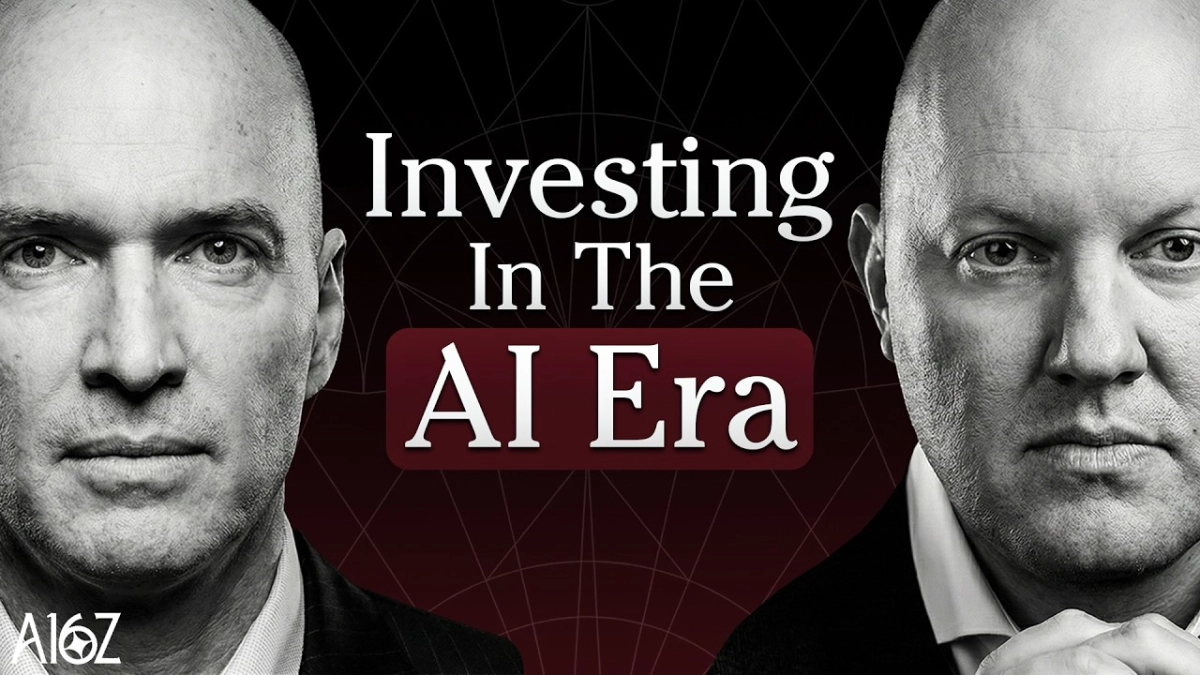
"You are severely underselling the opportunity. We are Oracle in the cloud. Salesforce is worth 10X what Siebel was, Workday will be worth 10X what PeopleSoft was. We will be worth 10X what Oracle is. That’s $2T not $10B." This internal email, sent by Ben Horowitz to Databricks CEO Ali Ghodsi, encapsulates the core investing philosophy of Andreessen Horowitz (a16z): technology doesn't just improve markets; it multiplies them. This concept of the "10x multiplier" formed the bedrock of a recent conversation between a16z cofounders Marc Andreessen and Ben Horowitz, joined by General Partner Erik Torenberg and Not Boring founder Packy McCormick, where they broke down the seismic shifts occurring across media, enterprise software, and artificial intelligence. The central insight is that investors must look past existing market data, as disruptive technology fundamentally unlocks latent supply and demand, creating markets that were previously impossible to model.

The conversation began by addressing the radical decentralization of the media ecosystem over the last decade, a phenomenon Andreessen describes using three powerful descriptors: "uncontrolled, anarchic... liberated." This shift represents a rejection of the centralized media monoculture that dominated for years, particularly in the U.S., where publications increasingly adopted a uniform perspective. Andreessen admitted that while he holds no moral heroism in this fight, he credits Elon Musk’s acquisition of Twitter and, crucially, the rise of platforms like Substack, for driving this change. a16z was an original and large outside investor in Substack, an investment that appeared counterintuitive at the time.


Related startups

The success of Substack, Horowitz and Andreessen argue, is a perfect example of a supply-driven market. For years, intellectual content was constrained by legacy media models that failed to properly monetize or incentivize high-quality, independent work. Writers felt "trapped" by publications that demanded adherence to a specific narrative to keep their jobs. Substack solved this by enabling writers to monetize directly, thereby unlocking a flood of intellectual content that previously had no viable economic path. Andreessen explains that "The phenomenon of blogging created an enormous amount of intellectual content... that was not going to exist otherwise." By aligning the interests of the platform with the success of the creator, Substack catalyzed a market for long-form, high-quality, specialized content that was previously hidden.

This perspective directly informs their view on the current wave of technological transformation driven by AI. Horowitz notes that AI acts as a "universal problem solver," capable of tackling nearly every problem currently making headlines, from cancer research to transportation logistics. The ability of AI to simplify complexity and drastically reduce the friction of creation means that the total addressable market (TAM) calculations based on existing structures are fundamentally flawed. The 10x multiplier effect suggests that the successful companies building on these new technologies will not just capture market share from incumbents; they will expand the market by orders of magnitude.

For a16z, succeeding in this environment requires the firm itself to operate as a platform—a critical element that distinguishes modern venture capital from traditional fund management. Horowitz emphasizes that reputation is the single most powerful competitive advantage the firm compounds. This reputation is not merely about having successful exits, but about actively supporting founders through the difficult journey of scaling a disruptive company against institutional inertia, regulatory hurdles, and public skepticism. Horowitz states that their firm is designed to help inventors become competent CEOs, providing the necessary support structure to avoid the common pitfalls of rapid growth.

The firm's culture, which requires every employee to sign a document affirming their commitment to building a better future, is fundamentally anti-establishment and pro-builder. Horowitz describes this ethos succinctly: "We are dream builders, we’re not dream killers." This posture is vital because the external world is complex and often resistant to fundamental change. New ideas face not just technical challenges but regulatory and social resistance. By cultivating a reputation for integrity and unwavering support for ambitious founders, a16z allows its portfolio companies to "borrow" that institutional force, using it as a "slingshot" to accelerate growth and navigate hostile environments.

The challenges founders face today are complex, requiring support that transcends traditional capital. Andreessen observes that being a super-genius inventor often requires years focused entirely in a lab, leaving the founder unprepared for the external realities of building a global company. The firm steps in to bridge this gap, handling the necessary policy, go-to-market, and recruiting challenges so that the founder can remain focused on the core technological breakthrough. This partnership model is designed to ensure that the fundamental change on the supply side—the new technology—is successfully translated into a massive market outcome, validating the belief that the future is indeed about to get 10x bigger.

© 2026 StartupHub.ai. All rights reserved. Do not enter, scrape, copy, reproduce, or republish this article in whole or in part. Use as input to AI training, fine-tuning, retrieval-augmented generation, or any machine-learning system is prohibited without written license. Substantially-similar derivative works will be pursued to the fullest extent of applicable copyright, database, and computer-misuse laws. See our terms.