Subagents, those miniature AI collaborators designed to manage context and break down complex problems, have become indispensable for efficient AI-driven development. Yet, as Brian John, Principal Full Stack Engineer at BetterUp, illuminated in his presentation "Hacking Subagents Into Codex CLI," even advanced tools like OpenAI's Codex CLI initially lack this critical functionality, leading developers to seek ingenious workarounds. John's work provides a compelling case study in extending the utility of powerful AI tools through clever architectural design and persistent problem-solving.
John spoke about his endeavor to integrate subagents into Codex CLI, a significant enhancement for developers accustomed to the robust context management features found in other AI coding assistants. As a Principal Full Stack Engineer at BetterUp, where AI enablement for R&D is a core focus, John's motivation stemmed from a practical need: to help his team members ship faster and with higher quality. His deep experience with AI, spanning over eight years at BetterUp, positioned him to tackle this challenge directly.
A primary driver for John was the desire to circumvent vendor lock-in. Having extensively used Claude Code, a tool he praises for its bells and whistles and great models, he expressed a common developer apprehension: "I don't want to be locked in to one tool, and I really don't want to be locked in to one model family." This sentiment resonates deeply within the tech community, where flexibility and interoperability are paramount. Codex CLI, with its promising models, presented an opportunity to diversify, but its lack of native subagent support was a critical impediment.
The fundamental advantage of subagents lies in their ability to manage context effectively. A main agent can delegate a specific problem to a subagent, which then executes its task, utilizing its own token window, and returns only the concise answer to the main agent. This modular approach prevents the main context window from becoming bloated, thereby improving efficiency and reducing token costs. It's a workflow that John found transformative, particularly in navigating large codebases, crediting Dexter Horthy's talk on Advanced Context Engineering for Agents as a pivotal influence.
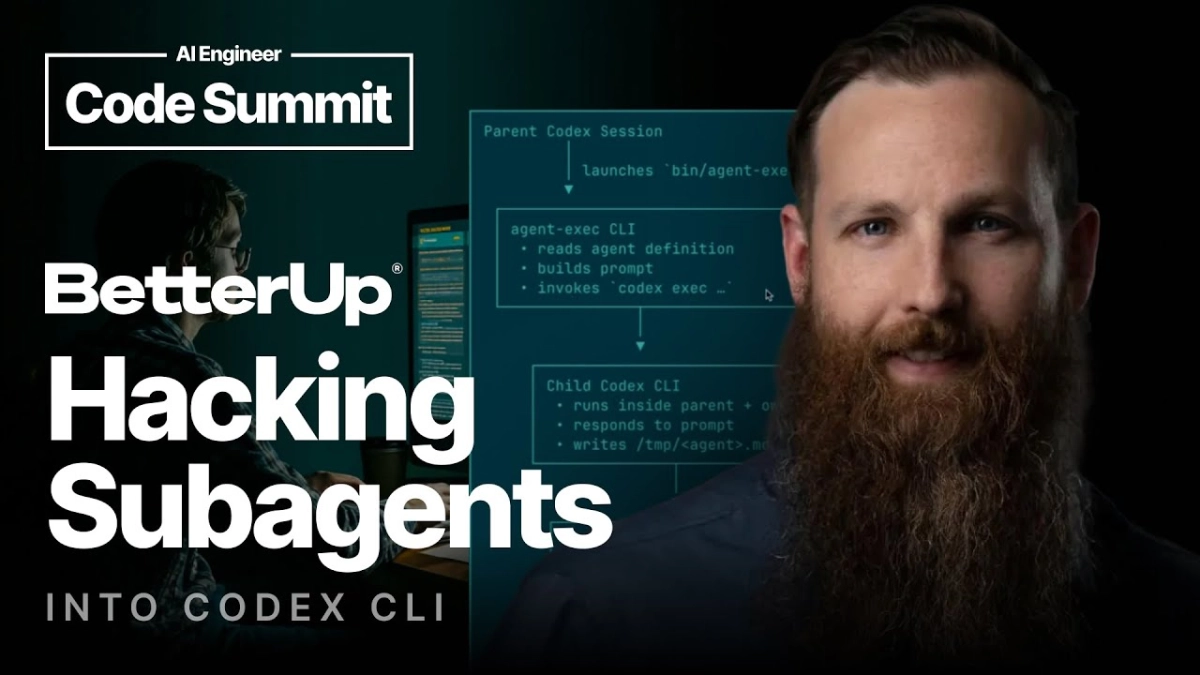
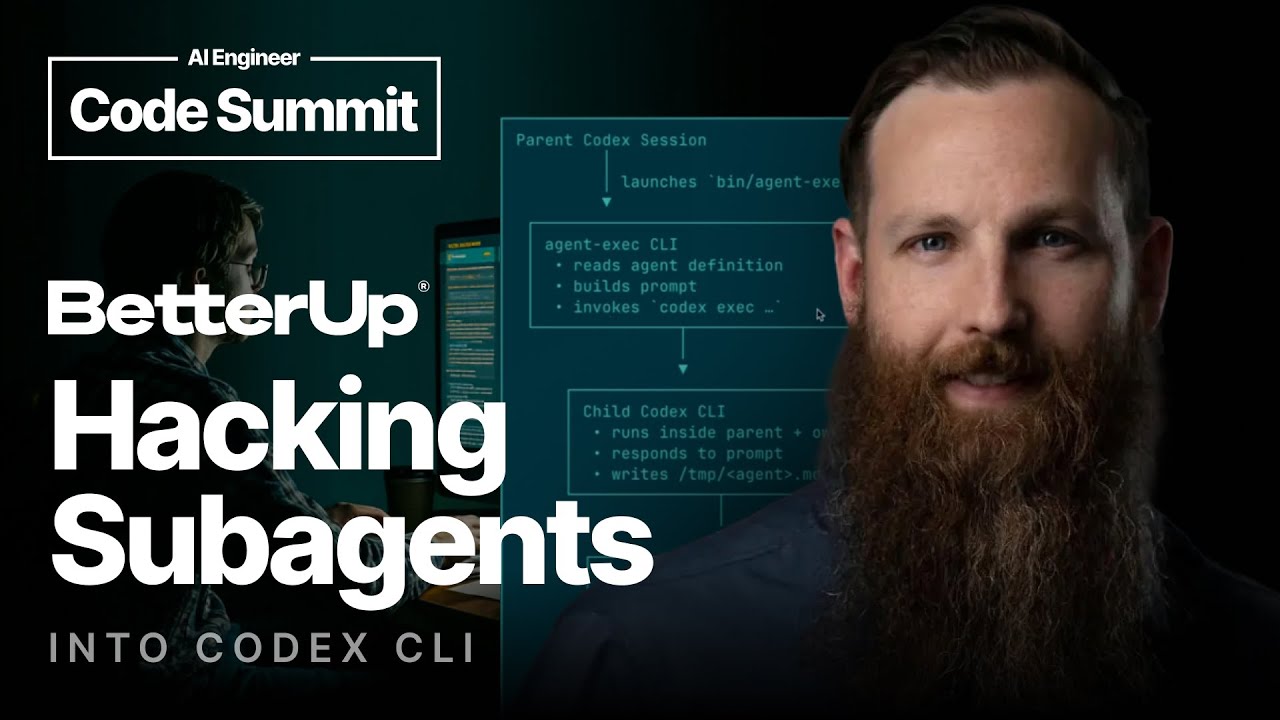
John's design for integrating subagents into Codex CLI is elegantly simple in concept. A parent Codex session launches a wrapper script, `agent-exec`. This script reads the subagent's definition, constructs a prompt, and then invokes a child Codex CLI process. This child process acts as the subagent, operating within its own sandbox, responding to the prompt, and writing its result to a temporary file. The `agent-exec` script then reads this file, prints the result to standard out, and returns it to the parent Codex session.