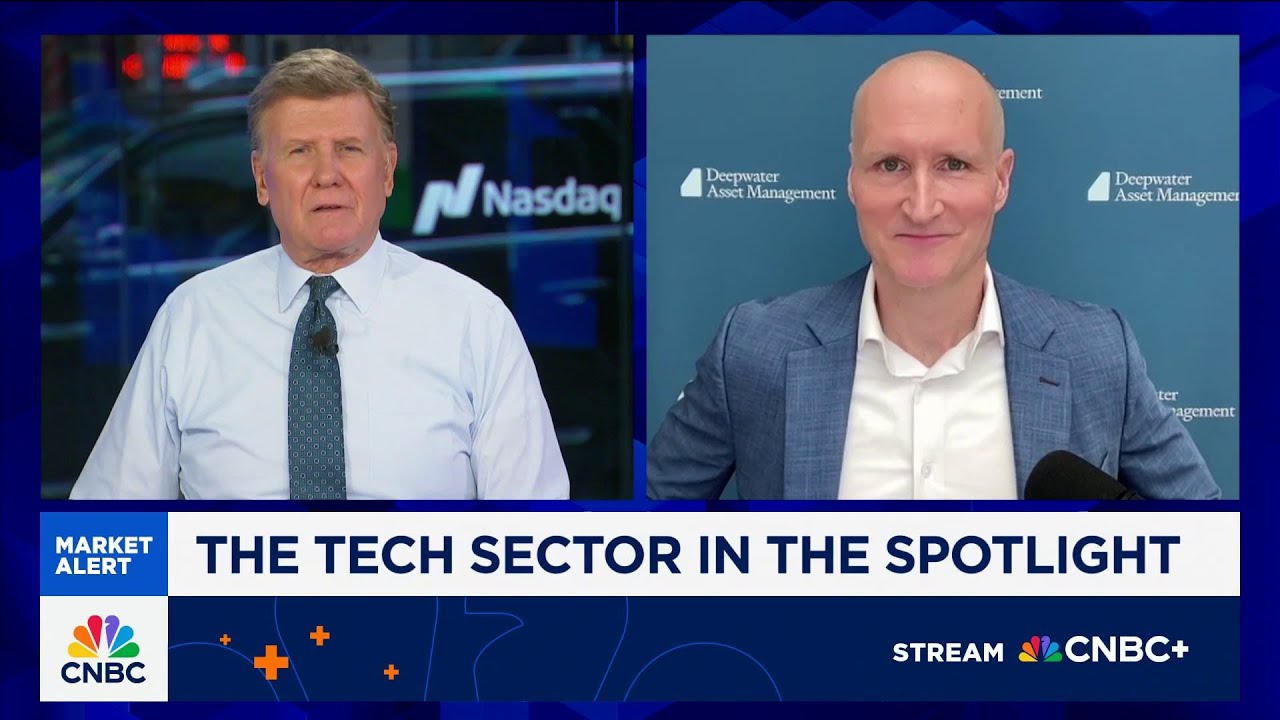
"The device side of AI really hasn't taken off yet," stated Gene Munster, managing partner at Deepwater Asset Management, during his appearance on CNBC's "Squawk Box." Munster spoke with the show's anchors about the current state of the tech sector, his outlook on the Magnificent Seven stocks, and the broader AI landscape. His perspective offers a nuanced view on the generative AI revolution, particularly concerning its integration into consumer devices.
Munster's core argument is that while the potential for AI is immense, its practical application on devices is still nascent. He highlighted that despite the significant investment and buzz surrounding AI, no company has yet released a truly transformative AI-powered device that has captured widespread consumer adoption. This suggests that the current AI wave is primarily focused on the software and cloud infrastructure side, with hardware integration lagging behind. This observation is crucial for understanding the future trajectory of both technology companies and the venture capital investments that fuel them.
When discussing the broader tech sector, Munster expressed cautious optimism, noting a potential shift in investor sentiment. He specifically predicted that Apple would be the top-performing Magnificent Seven stock over the next six months. This prediction is rooted in his belief that Apple is well-positioned to capitalize on the next phase of AI integration, particularly within its ecosystem of devices. He pointed out that "the device side of AI really hasn't taken off yet," implying that Apple's established hardware base and user loyalty provide a significant advantage once compelling AI-driven device functionalities emerge.
Munster elaborated on the concept of an "AI cycle," drawing parallels to previous technological shifts. He suggested that while the current excitement around AI is palpable, investors should approach it with a degree of measured expectation. He noted that the AI cycle is still in its early stages, and the market is still trying to discern which applications will truly gain traction. This is particularly relevant when considering the vast sums being invested in AI startups and the potential for market correction if initial expectations are not met.
A key insight from Munster's commentary is the distinction between AI as a concept and AI as a tangible product. While many companies are developing sophisticated AI models and algorithms, the challenge lies in translating this power into user-friendly, everyday applications on devices. He emphasized that "the device side of AI really hasn't taken off yet," underscoring the gap between the potential and the current reality. This implies that companies that can successfully bridge this gap by integrating AI seamlessly into their hardware will be the ones to lead the next wave of innovation and market growth.