Surfing the AI Tsunami: Strategic Navigation for Disruption

4 min read
Agentic AI tools

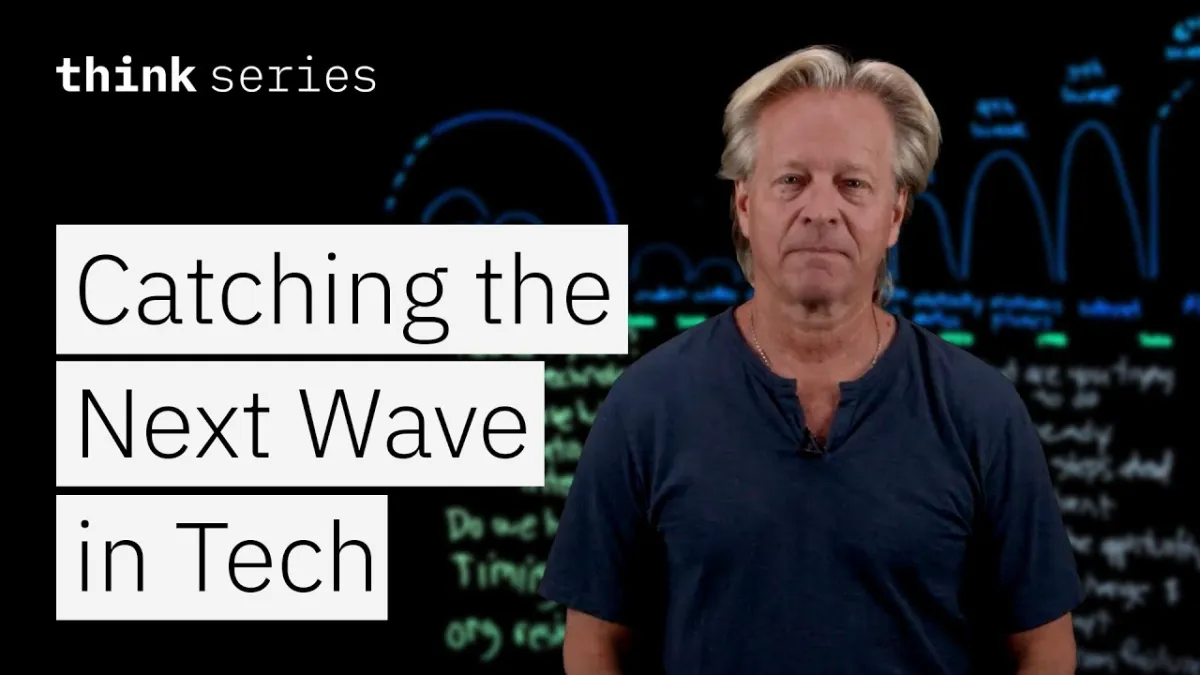
Navigating the turbulent waters of AI adoption requires more than just technical prowess; it demands the strategic foresight and agility of a seasoned surfer. Grant Miller, a Distinguished Engineer at IBM, masterfully articulated this perspective in a recent video, drawing parallels between the historical "technology waves" that have reshaped society and the current, accelerating surge of artificial intelligence. His commentary offers a vital framework for founders, investors, and AI professionals grappling with the pace of innovation.

Miller anchored his discussion in the concept of technology waves, initially introduced by economist Joseph Schumpeter in 1942, which describe how disruptive innovations periodically sweep through economies. He outlined six such waves, each building upon the last to fundamentally alter how society and business operate. The first wave, the Industrial Revolution, introduced machines and water power, enabling faster production. Subsequent waves brought steam and electricity, then electronics and computers, each dramatically increasing the speed of manufacturing and the reach of information. The fifth wave, the internet, transformed connectivity, connecting 2.3 million people in 1990 to 3.4 billion by 2016, pushing information globally at near-instantaneous speeds.

The current, sixth wave, according to Miller, is AI, which began its ascent around 2020. This wave is not just about faster computation or better connectivity; it's about transforming the very nature of work by operating on information at unprecedented speeds. Within this broader AI wave, Miller identified distinct phases, starting with the early "birth" of AI concepts in the 1950s (pioneered by figures like Alan Turing), followed by a "winter" period where overhyped promises failed to materialize. The "modern AI" era saw a resurgence, driven by advancements in machine learning and data, exemplified by IBM Deep Blue’s chess victory in 1996 and the emergence of consumer-facing AI like Alexa and Siri.


We are now experiencing what Miller describes as a "surge," a veritable tsunami of AI capabilities. This surge encompasses generative AI that can produce information, large language models (LLMs) that can chat and interact naturally, and "agentic AI" that can autonomously perform tasks and learn from actions. Looking ahead, Miller even anticipates "physical AI" that will interact directly with our tangible world. "These are agents," Miller explained, "that can actually go do actions on our behalf, not just bring us information, but actually do tasks." This progression highlights a shift from AI as an analytical tool to an active, autonomous participant in processes.

Yet, this rapid evolution presents significant challenges for organizations seeking to integrate AI. Miller cleverly likens these hurdles to the complexities of surfing. The first question many ask is, "How do I start?" This mirrors a surfer deciding which beach or break to tackle. Then comes the choice of "which technologies" – LLMs, chatbots, assistants, open-source frameworks like LangChain – much like a surfer choosing between a longboard, shortboard, or specific fin setup.

A critical challenge is data readiness. "Do I have what I need?" Miller asks, emphasizing that data must be clean, prepped, and capable of integration with existing legacy systems. This is akin to a surfer ensuring their board has the right wax and leash for optimal performance. The "timing" of AI adoption is equally crucial; rushing into implementation without proper preparation can be detrimental. Organizations often face "organizational resistance," a cultural inertia that resists rapid technological shifts, similar to the unspoken rules and localism at a popular surf break.

Related Reading

To navigate these challenges, Miller offers practical lessons derived from the surfing analogy. First, define your "What are you trying to do?" Focus on desired outcomes, not merely adopting AI for its own sake. Second, "Be ready" – ensure you have the necessary skills, data infrastructure, and technological components in place. Third, "Look 2 steps ahead." Don't just react to the immediate wave; anticipate future trends and position your strategy accordingly. "Don't rush to adopt a technology that may be the wrong technology up front when you should wait a little bit and get the right technology."

Patience is paramount. Waiting for the right moment, much like waiting for the perfect wave, is essential. When that moment arrives, "Seize the opportunity" – commit fully and confidently. Finally, "Embrace change and adapt." Every wave is different, requiring flexibility and continuous learning. And crucially, "Learn from failure." Just as a surfer learns from every wipeout, organizations must embrace setbacks as opportunities for growth and refinement. This iterative cycle of readiness, seizing, adapting, and learning is key to sustained success.