
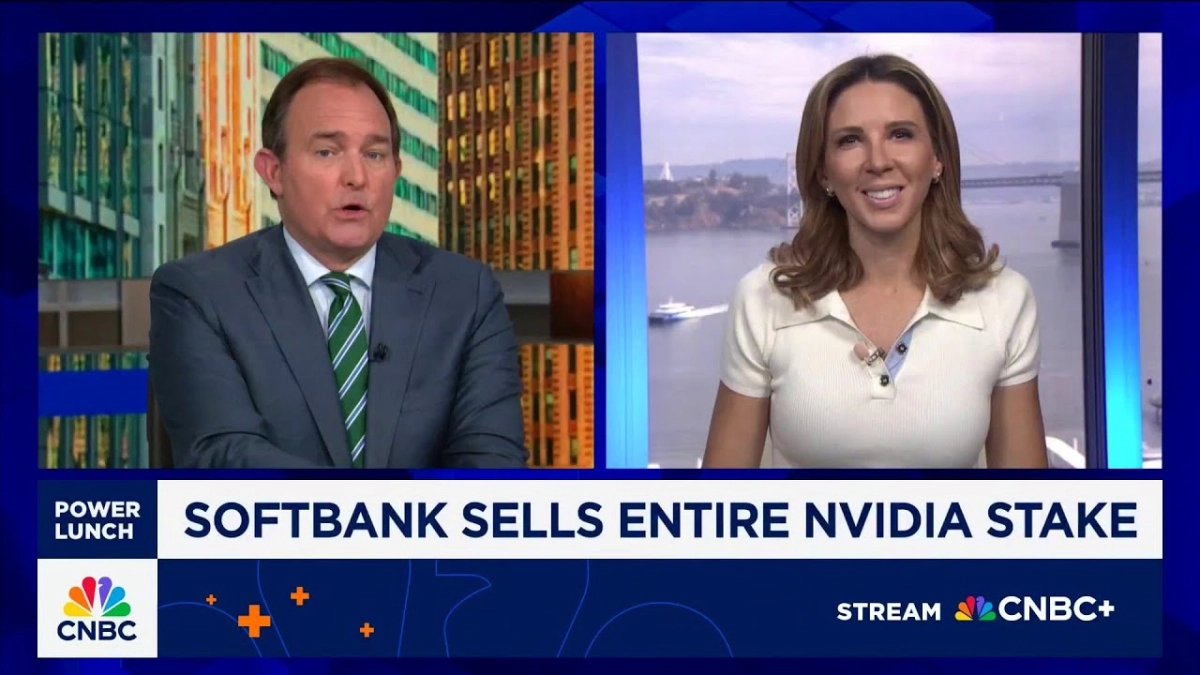
SoftBank has executed one of the most significant strategic pivots in the current artificial intelligence cycle, selling its entire stake in chip-making behemoth Nvidia to funnel capital into OpenAI. This move, totaling nearly $6 billion from the Nvidia divestment alone, signals a profound shift in investment philosophy, moving away from the foundational infrastructure of AI to the application layer where direct user and business interaction occurs. The decision by SoftBank, led by Masayoshi Son, is not merely a divestment but a complete reorientation of capital toward what they perceive as the next frontier of value creation in AI.
This dramatic repositioning was discussed on CNBC's Power Lunch, where Brian Sullivan spoke with CNBC Business News reporter MacKenzie Sigalos about the implications of SoftBank's actions. Sigalos detailed SoftBank’s aggressive cash-raising efforts, which included selling over $9 billion in T-Mobile stock and leveraging its Arm stake, all to finance its deepening involvement with OpenAI. The firm is not only participating in OpenAI’s recent secondary share sale but is also reportedly leading a substantial $40 billion primary funding round.
MacKenzie Sigalos highlighted the rationale behind this pivot: "It is not a call against Nvidia's future... it is about where they see that next wave of value creation and it's not in the infrastructure layer, but it's in the interface, the platforms, agents, those tools that consumers and businesses are actually using." This perspective underscores a belief that while Nvidia's hardware underpins the AI revolution, the true economic leverage will ultimately reside in the user-facing applications and platforms that directly deliver AI capabilities. It’s a classic venture capital thesis: move up the stack to capture more value as the underlying technology commoditizes or matures.