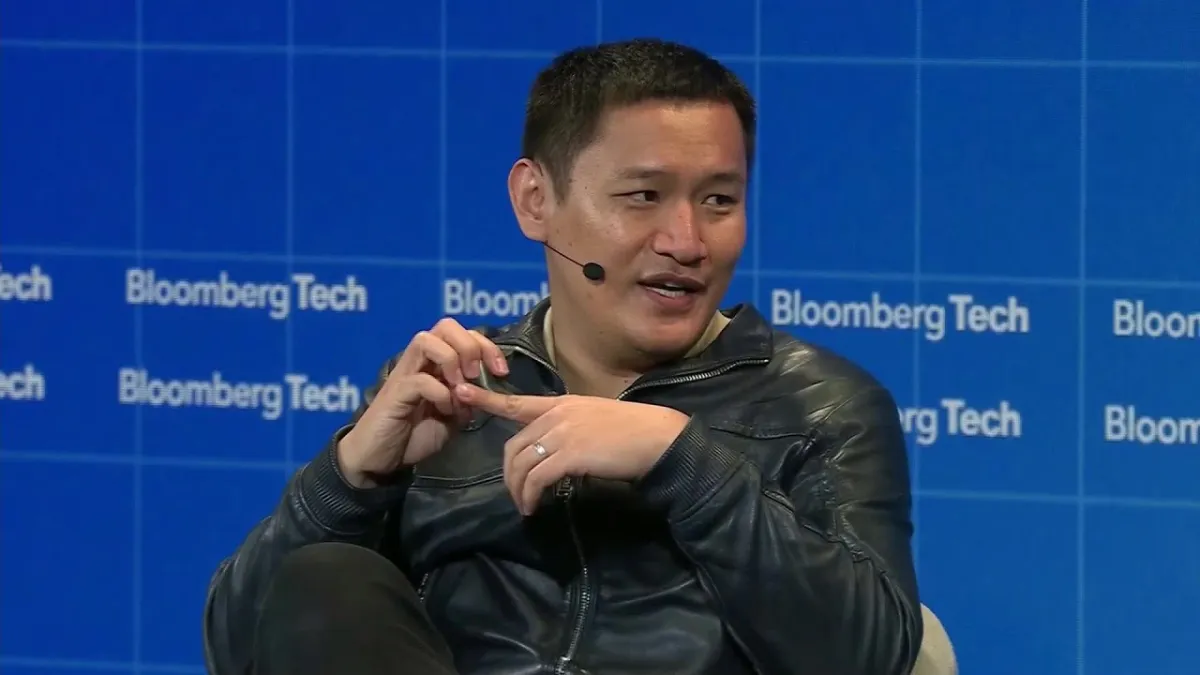
The future of customer service, often imagined as a sterile, automated exchange, took a distinctly human turn at Bloomberg Tech in London, as PolyAI co-founder and CTO Shawn Wen showcased the capabilities of their AI voice agents. The demonstration, led by Bloomberg’s Tom Mackenzie, offered a compelling glimpse into a world where artificial intelligence not only understands complex requests but also navigates nuanced human emotions and historical context with impressive fluidity. Mackenzie spoke with Wen at Bloomberg Tech in London, primarily about PolyAI’s latest agentic AI product and its implications for customer experience across various industries.
The demonstration began with Mackenzie placing a call to a fictional "Restaurant Cucina Bloomberg," powered by PolyAI's agentic technology. The AI voice agent, named Charlotte, immediately identified Mackenzie, greeting him warmly. This initial interaction set a high bar, as Charlotte effortlessly recalled details from his previous visit: "I see you last dined with us on the 11th of October, along with Mr. Johnson and a party of six." This seamless personalization, pulling historical data to enrich the current interaction, was a stark departure from typical, impersonal IVR systems.
Mackenzie, playing the role of a disgruntled customer, then recounted a "terrible experience," citing poor service and an unfortunate seating arrangement near the toilets, despite the food being "pretty good." Charlotte’s response was notably empathetic, stating, "I'm truly sorry to hear that, Mr. Mackenzie. That's not the standard we pride ourselves on." This was more than just a pre-programmed apology; it was an acknowledgment of dissatisfaction, followed by a proactive and relevant resolution. The AI agent, demonstrating remarkable business acumen and empathy, immediately offered a "20% discount on the tasting menu for your next visit" and promised a better seating arrangement.
The interaction continued to showcase the AI’s robust conversational capabilities. Mackenzie, now mollified by the offer, proceeded to book a new reservation for a colleague's leaving party. He specified the date (November 7th) and time (7:30 PM), and after a slight pause for processing, Charlotte confirmed the details, even asking if it was for a special occasion. When Mackenzie added requests for "pink frills around the table, golden balloons, and a bottle of Barolo," Charlotte acknowledged the "lovely touch" and explained that while decor wasn't directly handled, their team could coordinate with partners via email for such special arrangements. This demonstrated the AI's ability to handle complex, multi-faceted requests, identifying its own limitations while still offering a pathway to resolution.
Shawn Wen later elaborated on the underlying technology, explaining that PolyAI’s agents are "an AI system that is powered by LLM, but it does a lot of autonomous decisions by itself within certain kind of guardrails." This "agentic system" goes beyond simple chatbots by making independent choices based on context and predefined parameters. Wen also touched upon the potential for multi-agent systems, where one AI agent can hand off a complex query to another specialized agent. For instance, if Mackenzie had requested a private dining room or a larger party (more than eight people), the system would have seamlessly transferred him to a different AI agent, perhaps one with a "Northern voice" for a specialized private dining experience, as initially planned for the demo.
The personalization capabilities are a cornerstone of PolyAI’s offering. By leveraging customer data, the AI can recognize callers and tailor interactions, moving beyond generic scripts. Wen highlighted that this intelligence extends to "emotional touch," enabling the AI to understand and adapt to the user's emotional state, further enhancing the human-like quality of the interaction. This deep understanding allows for more nuanced and satisfactory customer engagements, transforming routine calls into genuinely helpful conversations.
Related Reading
- AI's Relentless March: From Desktop Supercomputers to Agentic Intelligence
- Claude Code Redefines Developer Productivity with Autonomous Agent
- AI's Human Touch: F1 and Salesforce Chart a New Course at Dreamforce 2025
PolyAI is already seeing significant traction in sectors like retail, healthcare, and financial services. In these industries, the master AI agent can initiate calls, then launch "several outbound smaller AI agents" in the background to gather information from suppliers or check healthcare plan applicability across different clinics. This multi-agent approach allows for complex, multi-step tasks to be handled efficiently, freeing up human agents for more intricate problem-solving.
Addressing the critical question of job displacement, Wen offered a balanced perspective. He noted that while these agents don't typically "directly replace jobs," they do "gradually slow down hiring" or prevent the need for new hires. This allows businesses to redeploy existing human talent to higher-value, more complex tasks, ultimately improving overall service quality and operational efficiency. The goal, it seems, is not to eliminate human interaction but to augment it, ensuring that customers receive the best possible service, whether from a human or a highly sophisticated AI.