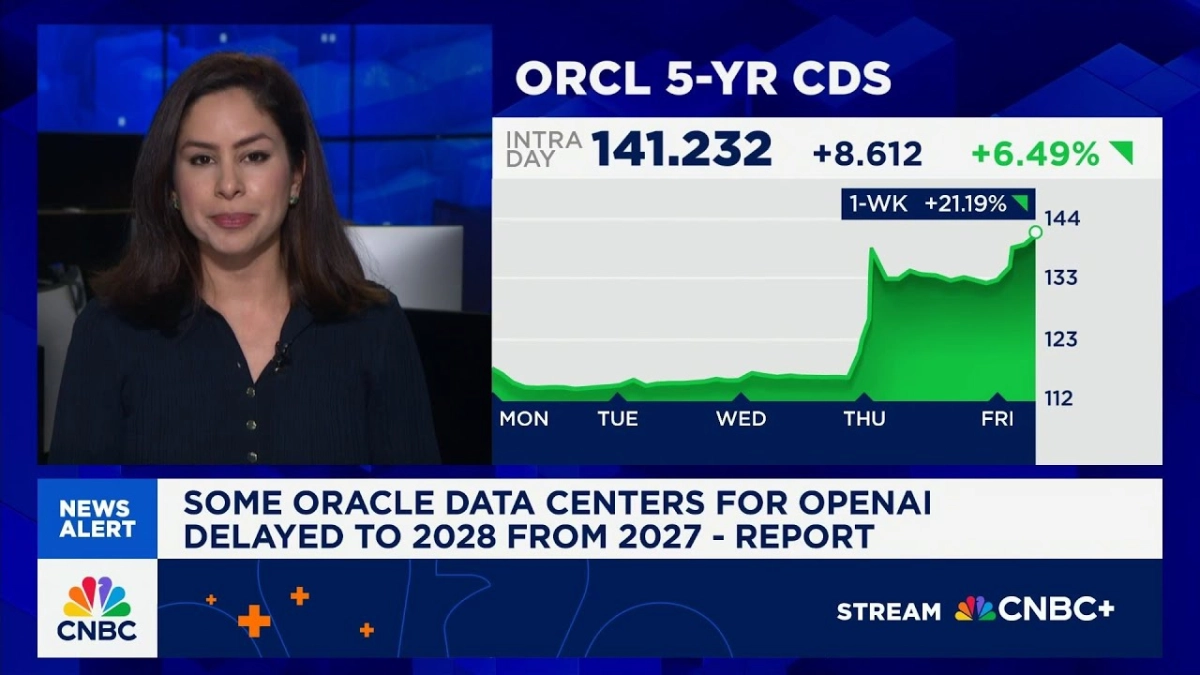
The ambitious timeline for AI infrastructure build-out is encountering tangible friction, as evidenced by recent reports indicating a delay in some Oracle data centers designated for OpenAI. This development underscores the immense logistical and resource challenges inherent in scaling the computational backbone necessary for advanced artificial intelligence, a reality that reverberates across the tech landscape from nascent startups to established giants.
On a recent CNBC broadcast, reporter Seema Mody delivered a crucial update regarding the collaboration between Oracle and OpenAI, specifically detailing the reported postponement of certain data center deliveries. Her report highlighted the significant implications of these delays, not only for the immediate operational capacity of OpenAI but also for Oracle's financial outlook and market perception.
Mody reported that "some of the data centers for OpenAI will be delayed to 2028 from 2027," citing a Bloomberg report that attributes these postponements directly to "labor and material shortages." This is not merely a bureaucratic hiccup but a fundamental constraint in the physical world. The global supply chain, already strained by various geopolitical and economic factors, is now contending with an unprecedented demand surge for specialized components, skilled labor, and energy infrastructure required to power the next generation of AI. Data centers are not abstract entities; they are massive, complex construction projects requiring vast amounts of land, power, cooling systems, and, critically, high-end GPUs and other networking equipment. The delay of even a single year in such a rapidly evolving field can have substantial downstream effects. For OpenAI, a company at the forefront of generative AI, every month of delayed infrastructure translates to lost opportunities for model training, iteration, and deployment, potentially impacting their competitive edge and product roadmap.