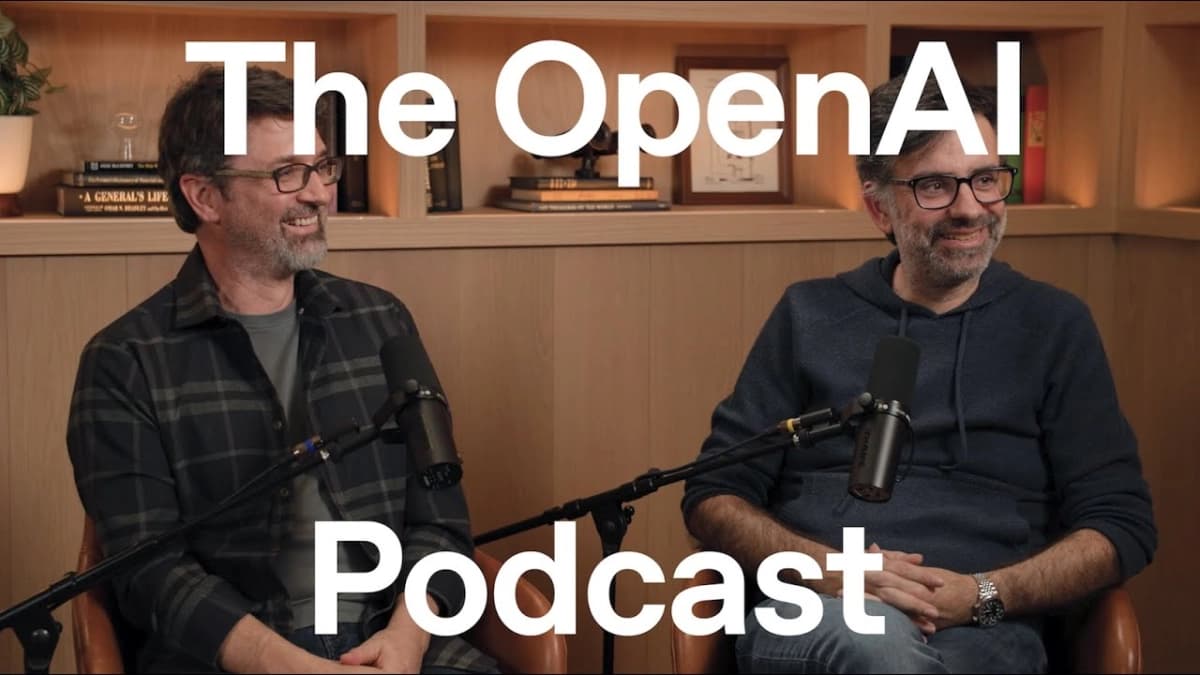
OpenAI's strategic foray into the web browser arena with ChatGPT Atlas marks a pivotal moment, signaling a bold ambition to redefine how users interact with the internet in an AI-first world. This move, debated by host Tim Hwang and panelists Aaron Baughman, Abraham Daniels, and Martin Keen on the "Mixture of Experts" podcast, suggests a deeper play than simply launching another browser; it’s about controlling the very entry point to digital experience. The discussion, following a news rundown by Aili McConnon, delved into the implications of Atlas, the future of AI agents, and the sobering realities of large language model development.
Abraham Daniels articulated the strategic imperative, stating, "I think it just makes perfect sense for them... model development is not necessarily as hot as it used to be. So I think OpenAI has been really diligent in terms of finding new avenues to capitalize on their user base." This highlights OpenAI's recognition that while foundational model development remains crucial, the true battleground is now user interaction and platform ownership. By integrating AI directly into the browsing experience, OpenAI seeks to become the default gateway, much like how previous tech giants leveraged their browser dominance to shape the internet.
The introduction of ChatGPT Atlas, with its integrated AI capabilities, immediately raises questions about the future of traditional browsers. Martin Keen shared his experience, noting the convenience of asking the AI within the browser about a scientific article or even finding a specific book with precise conditions. "I wanted to ask, did one of the beers look more oxidized than the other... and it found the one image that was actually related to that... it analyzed the image and it told me actually no, I can't see any difference. So it worked, it worked, right?" This exemplifies the intuitive, context-aware assistance promised by AI-powered browsers.
However, the vision extends beyond mere convenience. Aaron Baughman posited a radical shift: "The paradigm's changing... OpenAI... are looking at turning our computer, our computing devices into a playground... it's trying to become more like an operating system... orchestrating AI tools, workflows, plugins." This suggests a future where the browser is less a window to the web and more an intelligent agent, performing complex tasks across applications and the internet on behalf of the user. This AI-orchestrated environment would abstract away much of the manual navigation, making the internet feel less like a collection of websites and more like a responsive, intelligent assistant.
Yet, this ambitious future is tempered by significant technical hurdles and inherent risks. Andrej Karpathy, a prominent figure in AI, has voiced skepticism, asserting that current AI agents "just don't work" due to insufficient intelligence, lack of multi-modality, and limited computer interaction capabilities, estimating a decade to resolve these issues. This underscores a core insight: the path to truly autonomous and reliable AI agents is fraught with challenges.
Related Reading
- OpenAI’s Atlas Rethinks Browser Tabs for AI-Native Workflows
- ChatGPT Unlocks Enterprise Data with New Company Knowledge Feature
A critical concern raised is the phenomenon of "AI brain rot," where large language models, when continuously trained on increasingly "shallow" or synthetic data generated by other LLMs, begin to exhibit a decline in performance. Aaron Baughman highlighted this: "The decline of these LLMs, it was persistent and systematic... The risk is that, as we put these systems in the wild and more training data becomes shallower and shallower... we need to continually evaluate these models because this brain rot can happen." This mirrors human cognitive decline from exposure to low-quality information, leading to degraded reasoning, diminished long-context understanding, and even the emergence of "dark traits" or undesirable behaviors. The non-deterministic nature of current AI models also presents a challenge, as consistent, predictable outcomes remain elusive for complex tasks. This lack of reliability, coupled with data privacy concerns, necessitates careful consideration as these powerful tools become more integrated into daily life.
OpenAI's venture with ChatGPT Atlas is more than a product launch; it's a strategic maneuver in the ongoing redefinition of the digital landscape. While the allure of an AI-powered browser and the promise of intelligent agents are undeniable, the path forward demands rigorous technical advancement, careful ethical consideration, and a clear-eyed understanding of the inherent limitations and potential pitfalls in this rapidly evolving field.