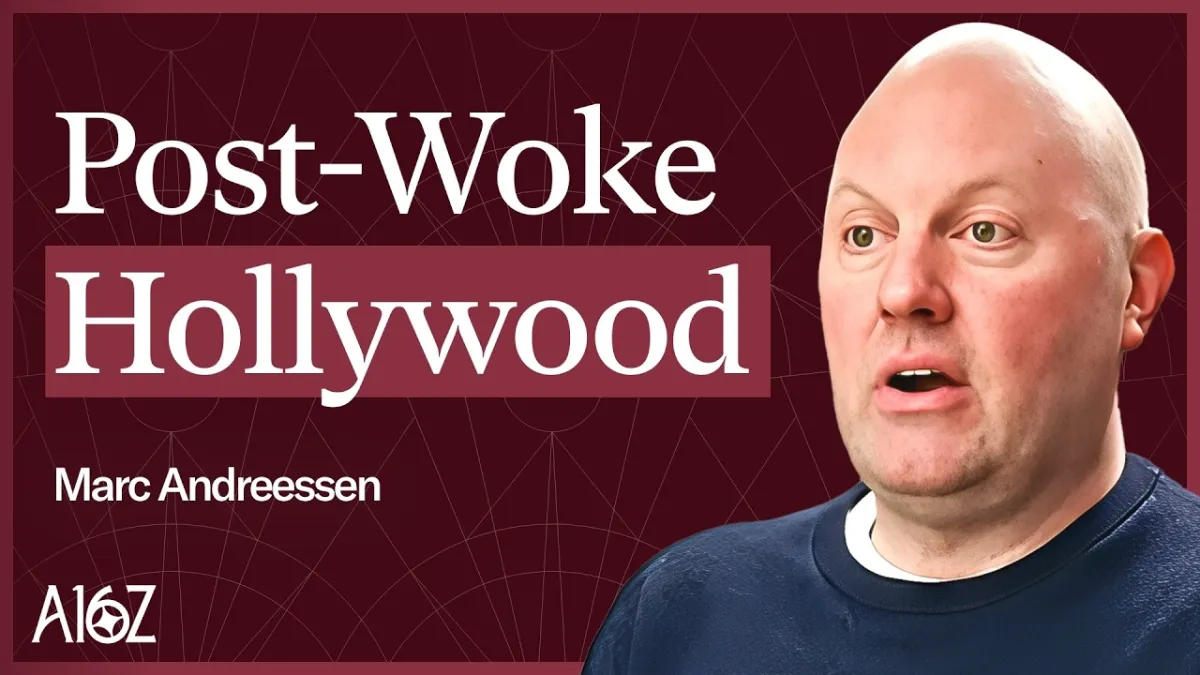
The intersection of technology and cultural narrative is rarely static, yet few industries have weathered the seismic shifts of recent years quite like Hollywood. In a compelling discussion on the a16z podcast, venture capitalist Marc Andreessen, joined by Erik Torenberg and Katherine Boyle, offered a sharp analysis of the film industry's tumultuous decade, dissecting its cultural stagnation, economic upheaval, and the potential for artificial intelligence to spark a new creative renaissance. Their conversation provided a candid, incisive look into why movies matter, how they lost their way, and what the future might hold for storytelling in an increasingly fragmented world.
Andreessen opened by positing that movies occupy a unique, almost sacred space in modern culture, fulfilling a role once held by ancient myths and classic literature. "I think movies play the role in our culture that myths and legends used to play in ancient cultures or that novels used to play 100 years ago," he stated. He emphasized that film is "the art form that is capable of basically containing and expressing and making permanent the most important aspects of a culture, or of a civilization." This foundational belief underscored the gravity of their subsequent critique, framing Hollywood's recent struggles not just as business failures, but as a crisis of cultural significance.
Katherine Boyle swiftly highlighted a stark inflection point: 2019. "There were a lot of great films in 2019... and then like just a memory hole of like what great film has come out since then?" she observed. She noted a palpable shift in the industry, where "the scripts that are being written, the types of things that are being made today are very, very different than what was happening in 2018, 2019." This abrupt decline, they argued, stemmed from a confluence of factors, primarily the financial missteps of the streaming era and Hollywood’s increasing susceptibility to what Andreessen controversially termed "the message."
Andreessen elaborated on "the message" as a pervasive ideological current that began to overshadow genuine storytelling. He pointed to a phenomenon where, in an attempt to be culturally relevant or progressive, films became vehicles for overt political or social agendas, often at the expense of narrative depth and universal appeal. This wasn't merely about diverse representation, but a prescriptive adherence to certain viewpoints that stifled artistic freedom and alienated broad audiences. He wryly noted that a popular YouTube critic aptly summarized this trend, calling it simply "the message."
Compounding this cultural capture were the broken economics of the streaming wars. Initially, the influx of capital from platforms like Netflix, spending "unprecedented amounts of money" on content, created a euphoric period. However, this eventually led to a "cost-plus" model, where creators were paid a flat fee with little upside for exceptional success. The traditional revenue streams of theatrical box office, DVD sales, and syndication, which once allowed hits to generate enormous, long-tail profits, vanished. This shift, Andreessen contended, effectively removed the economic incentive for "wildcatting" – taking creative risks on genuinely groundbreaking projects.
The result was a perceived dearth of "Capital-A Art" and a noticeable decline in genuine comedy. These were replaced by content designed to fulfill quotas or convey prescribed viewpoints, often leading to forgettable or preachy films. Yet, amidst this landscape, glimmers of hope emerged, suggesting a potential return to authentic storytelling and humor.
Related Reading
- AI Supercharges Entertainment, Democratizing Creativity
- CEOs Brace for AI-Driven Job Transformation Amid Mild Economic Slowdown
- AI's Economic Ripple: Beyond Tech to Main Street and Labor Markets
Andreessen expressed cautious optimism that AI could be the catalyst for this much-needed renaissance. Drawing an analogy to the democratizing effect of digital cameras in the 90s, he suggested that AI tools could dramatically lower the barrier to entry for independent filmmakers. This technological empowerment could allow a new generation of storytellers to bypass traditional gatekeepers and produce diverse narratives unburdened by commercial or ideological constraints. The rise of AI could foster an explosion of creative output, leading to a new era where compelling stories, rather than production budgets or political correctness, once again reign supreme.
The conversation ultimately painted a picture of a Hollywood in flux, grappling with the aftershocks of self-inflicted wounds and disruptive technologies. The challenge, as laid out by Andreessen and his co-hosts, is for the industry to reclaim its role as a purveyor of timeless myths, embracing genuine artistic expression over didactic messaging, and leveraging new tools to empower diverse voices. The path forward remains uncertain, but the appetite for authentic, impactful storytelling endures.