

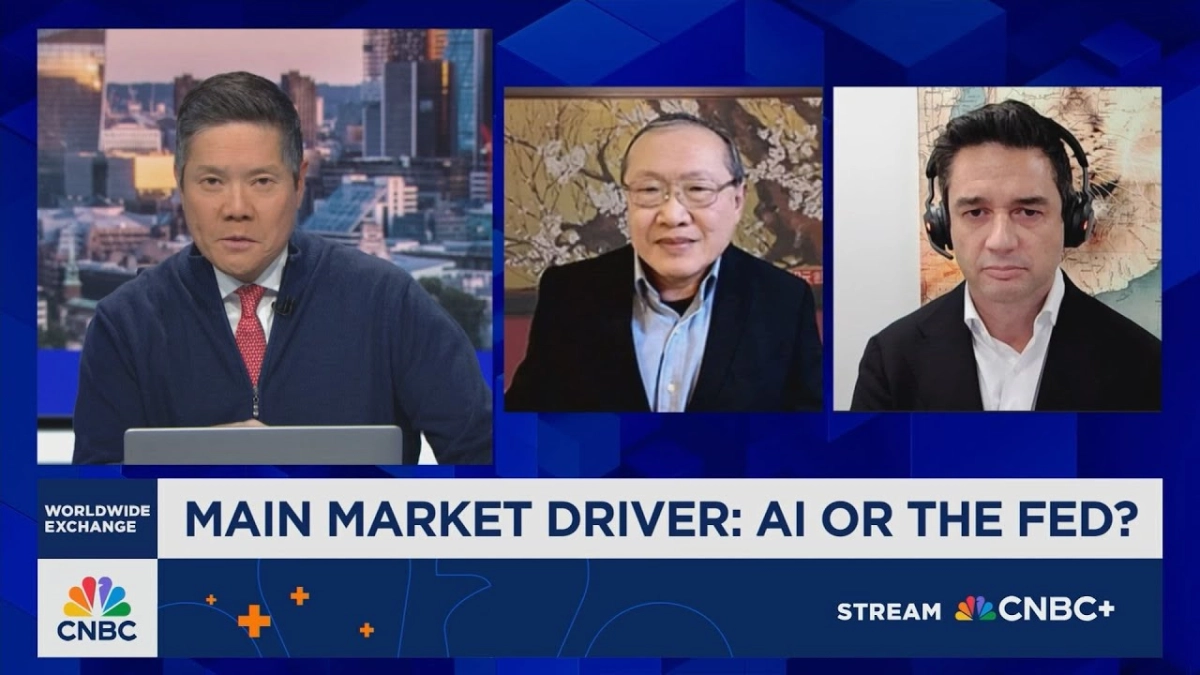
The current market narrative is a complex interplay between the transformative promise of artificial intelligence and the looming shadow of central bank monetary policy. While the Federal Reserve's future actions often dominate financial headlines, the underlying structural shifts driven by AI are increasingly dictating where true value is being created and captured. This dynamic tension was a central theme in a recent CNBC Worldwide Exchange discussion featuring William Lee, Chief Economist at the Milken Institute, and Storm Uru, Global Innovation Team Co-Head at Liontrust Asset Management, as they dissected the primary drivers of market action.

Dom Chu, the host, steered the conversation towards the pivotal question: is the AI boom or the Fed the biggest driver of market action? Their insights provided a nuanced perspective for founders, venture capitalists, and AI professionals navigating this unprecedented economic landscape.
William Lee articulated a clear consensus regarding the Federal Reserve's trajectory. He stated, "I don't think there's any debate at all that the Fed is going to be easing," underscoring a widespread expectation among economists and market participants. The true uncertainty, he clarified, lies not in the direction, but in the pace and timing of these cuts, driven by the varying data interpretations and perspectives among FOMC members. Despite differing hawkish or dovish leanings, Lee observed a universal agreement that the neutral rate is below current levels, and all FOMC members aspire to reach that equilibrium. This suggests a fundamental belief that current rates are restrictive, implying a future path towards lower borrowing costs, regardless of immediate data fluctuations.
Transitioning to the AI phenomenon, Lee highlighted a critical divergence in market perception. He pointed to the contrasting fortunes of tech giants like Google (Alphabet) and Nvidia. Google, with its new Gemini 3 model, presented clearer "visibility of cash flow," which investors are gravitating towards. Conversely, Nvidia, a bellwether for AI infrastructure, faces questions regarding its long-term infrastructure trade, suggesting a more speculative or cyclical component to its valuation. For Lee, this distinction led to a provocative conclusion: "the markets are more concerned about the AI trade than the Fed," assuming the consensus on easing holds true.
Storm Uru of Liontrust Asset Management echoed the sentiment of AI's profound impact, characterizing it as "without a doubt a very large structural shift." He pointed to the staggering scale of investment, with projections of $3 to $4 trillion in AI infrastructure buildout by 2030. This monumental capital expenditure, according to Uru, signifies a significant reorientation of the technology sector's value chain. He also noted an important reset in market sentiment over recent weeks, presenting timely opportunities for investors to build positions in key enablers of this shift.