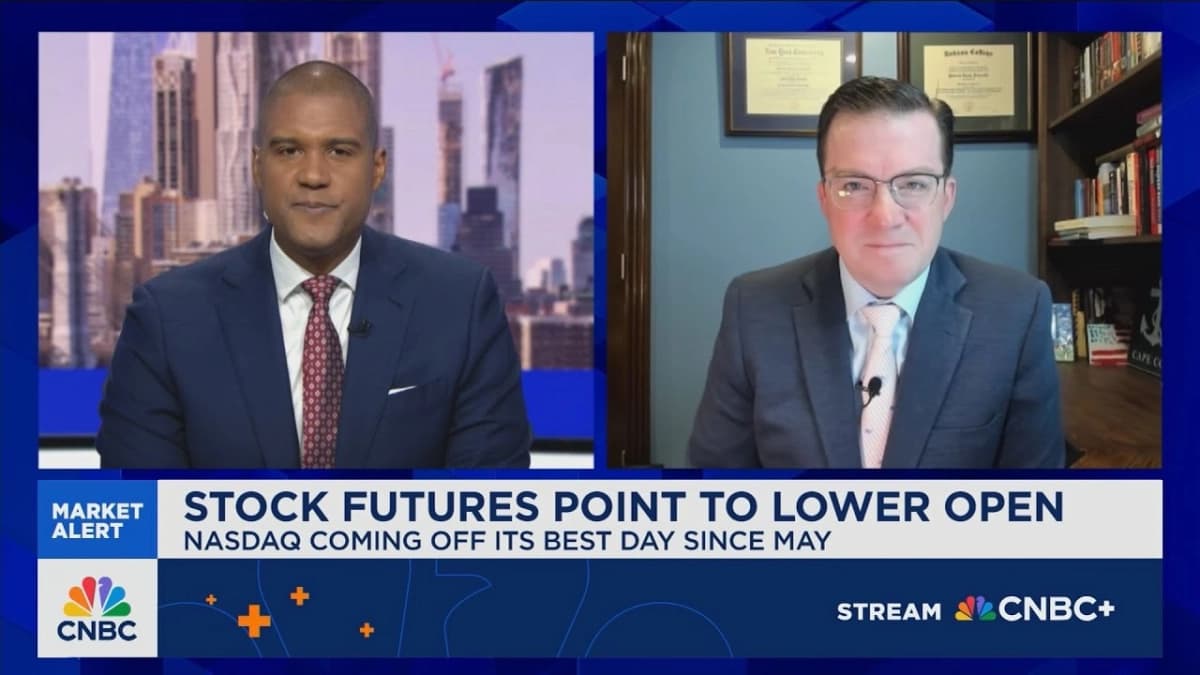
"There will be big winners and big losers in this whole trade," asserted Patrick Fruzzetti, Managing Director, Partner, and Portfolio Manager at Rose Advisors at Hightower, encapsulating the prevailing sentiment around the artificial intelligence investment landscape. His commentary underscores a critical juncture in the market, where unprecedented technological advancement meets a complex economic backdrop, demanding a discerning eye from investors and industry leaders alike.
Fruzzetti recently engaged with CNBC's Frank Holland, offering a nuanced perspective on the evolving AI landscape, the implications of key economic data, and strategic sector plays. The discussion traversed the high-stakes world of AI capital expenditures, the competitive dynamics among tech giants, and the surprising resilience of the healthcare sector as a long-term investment. This conversation provides valuable insights for founders, venture capitalists, and AI professionals navigating both the technological revolution and broader market forces.
A significant portion of the interview centered on the AI capital expenditure (CapEx) cycle, an area Fruzzetti views with both opportunity and caution. While acknowledging the substantial move-up in valuations seen across AI-related stocks, he highlighted a subtle but crucial shift in financing. "I think the fact that some of this is being more debt financed than equity financed, I think it's going to put some pressure on the space," he observed. This move from equity to debt financing for CapEx suggests a maturing market where easy capital is less abundant, potentially increasing scrutiny on profitability and sustainable growth, a vital consideration for startups and established players alike.
The competitive landscape within AI also drew considerable attention, particularly concerning the reported interest of Meta in acquiring chips from Alphabet, a potential challenge to Nvidia's perceived dominance. For a market that once considered Nvidia's chips "irreplaceable," this development signals a burgeoning competitive field. Fruzzetti posited that if Meta proceeds with Alphabet, "Google will certainly be a beneficiary in the trade." This scenario illustrates the fluid nature of technological leadership, where strategic alliances and internal innovation can rapidly alter market dynamics. The revelation that Broadcom's CEO serves on Meta's board further highlights the intricate web of connections influencing these high-value decisions, suggesting that chip procurement is not merely a transactional affair but a deeply strategic one, capable of creating "some disruption in the industry."
Beyond the technological front, Fruzzetti emphasized the importance of macroeconomic indicators, particularly the Producer Price Index (PPI). He stressed its relevance for monetary policy, stating, "PPI is certainly important... when it comes down to the Fed making a decision around lowering rates, whether it's, you know, in December or early next year." This prioritization of PPI over retail sales data, which he deemed "somewhat backward-looking," signals a keen focus on leading indicators that directly inform central bank decisions, a critical factor for capital allocation and market sentiment.
Related Reading
- Alphabet's Vertical AI Dominance Threatens Nvidia-OpenAI Ecosystem
- AI's Foundational Shift: Beyond the Bubble Talk
- AI's Data-Driven Future: Beyond the Bubble Hype
Amidst the potential "frothiness" in certain AI segments, Fruzzetti identified the healthcare sector as a compelling long-term play. His analysis pointed to historical trends, noting, "Next year's a midterm election year. 11 of the last 13 midterm election years, the healthcare sector has outperformed the S&P 500." This historical outperformance during election cycles positions healthcare as a potentially defensive yet growth-oriented sector, offering stability in times of political uncertainty. This insight is particularly salient for investors seeking resilient assets beyond the tech-heavy growth narratives.
Within healthcare, his specific stock pick was Abbott Labs, a diagnostics company whose products monitor conditions like diabetes and contribute to adult nutrition. He lauded its strategic positioning, particularly following its acquisition of Exact Sciences, which propels Abbott into the "high-growth cancer diagnostics business." This acquisition is anticipated to be "accretive long-term," signaling a robust growth trajectory within a stable and essential industry. Fruzzetti's focus on medical devices and pharmaceuticals as specific sub-sectors within healthcare further refines his investment thesis, presenting a targeted approach to a broad industry. This strategy highlights the importance of identifying companies with strong fundamentals and strategic foresight, even within sectors considered less glamorous than cutting-edge AI.