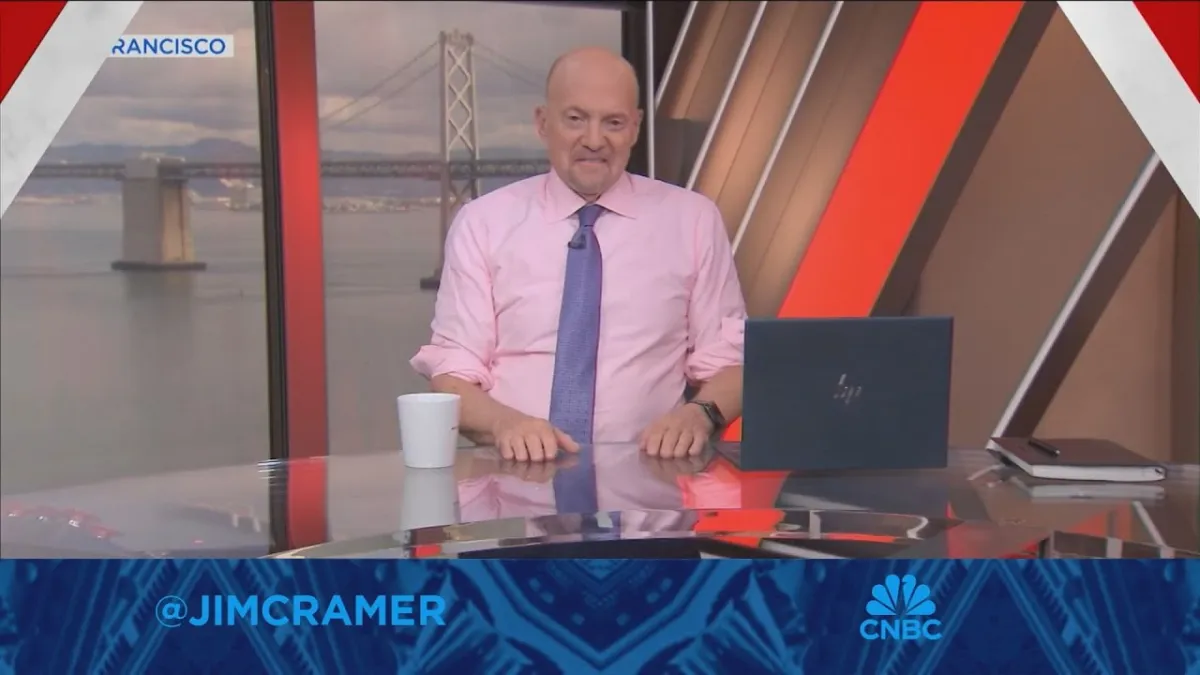
"We can't get our silly little heads around the need to spend fortunes building out the data centers for artificial intelligence." This provocative statement from Jim Cramer on a recent episode of *Mad Money* encapsulates the market's current dilemma regarding the AI revolution. Speaking from San Francisco, Cramer dissected why, despite the undeniable transformative power of artificial intelligence, a significant portion of the financial world is exhibiting skepticism, even bearishness, largely due to the staggering costs associated with building out the necessary infrastructure.
Cramer argues that the prevailing sentiment among many money managers and hedge fund analysts is one of caution, if not outright concern, about the immense capital expenditure required to bring advanced AI to fruition. He posits that "it's the cost of the AI buildout that is turning money managers into bears," observing a pervasive "growling and pawing at everything in the AI food chain." This skepticism stems not from a disbelief in AI's potential, but from a struggle to comprehend the scale of investment needed before tangible, widespread profitability becomes evident.
The CNBC host framed AI as nothing less than the "Fourth Industrial Revolution," drawing parallels to the steam engine, mass production, and the advent of semiconductors and personal computers. Each of these prior revolutions demanded massive initial investment and reshaped global industries, creating new winners and losers. However, the sheer scale of the current AI infrastructure investment, particularly in "compute"—the raw processing power and storage—is unprecedented, making it difficult for even seasoned investors to fully grasp.
He highlighted Salesforce as a prime example of this market apprehension. Despite CEO Marc Benioff's keynote speech at Dreamforce detailing the company's "Agentforce" initiative, a significant push into enterprise AI utilizing its own technology, the stock experienced a notable dip. Wall Street, Cramer noted, remains skeptical that Agentforce will meaningfully impact Salesforce's stock until AI visibly drives the company's revenue numbers. This illustrates a broader market impatience, demanding immediate financial returns from investments that are, by their very nature, long-term and foundational.
The financial mechanisms supporting some AI ventures also raise red flags for Cramer. He mentioned companies like OpenAI, the creator of ChatGPT, engaging in what he termed "circular deals." This practice, he explained, is a "legal way of describing vendor financing, where a company offers money to a customer so the customer can afford to buy what the vendor wants to sell." Such arrangements, he pointed out, were last seen at the peak of the dot-com bubble in the late 1990s, fueling concerns about inflated valuations and unsustainable business models in the nascent AI sector.
Cramer drew a compelling historical analogy to the early days of railroads. When the railway system first emerged, numerous companies aggressively laid tracks, often overbuilding with borrowed money. Many of these individual railroads eventually collapsed under the weight of their debt and overexpansion. Yet, the underlying technology—the railroad itself—persisted and ultimately revolutionized transportation, leading to the rise of enduring, powerful companies once the initial shakeout occurred.
Related Reading
- ING's Treon: AI Spending is Real CapEx, Not a Bubble
- AI spending looks impressive but it's probably the peak, says Barclays' Jonathan Millar
- AI Spending: Peak Hype or Broadening Foundation?
This historical perspective offers a nuanced view of the current AI landscape. The "buildout will have casualties," Cramer conceded, just as the steam engine, assembly line, and internet revolutions did. However, the enduring lesson is that the technology itself, when truly transformative, survives and thrives beyond the initial speculative frenzy. The key, he implies, is to distinguish between the speculative bubbles and the fundamental, world-altering innovation.
Ultimately, Cramer expressed unwavering faith in the architects of this new industrial age. "The people behind the AI revolution are the best we have—I wouldn't bet against them," he declared. He acknowledged the visionary leadership of figures like Mark Zuckerberg, Elon Musk, Jensen Huang, Lisa Su, Sam Altman, and Andy Jassy. While he cannot dictate market sentiment or individual investment decisions, his personal "Mad Money" trust is invested in these leaders. His advice to investors grappling with the perceived risks and costs is to identify the core innovators and "hold on for the ride," recognizing that while there will be turbulence and failures, the long-term trajectory of AI is upward.