

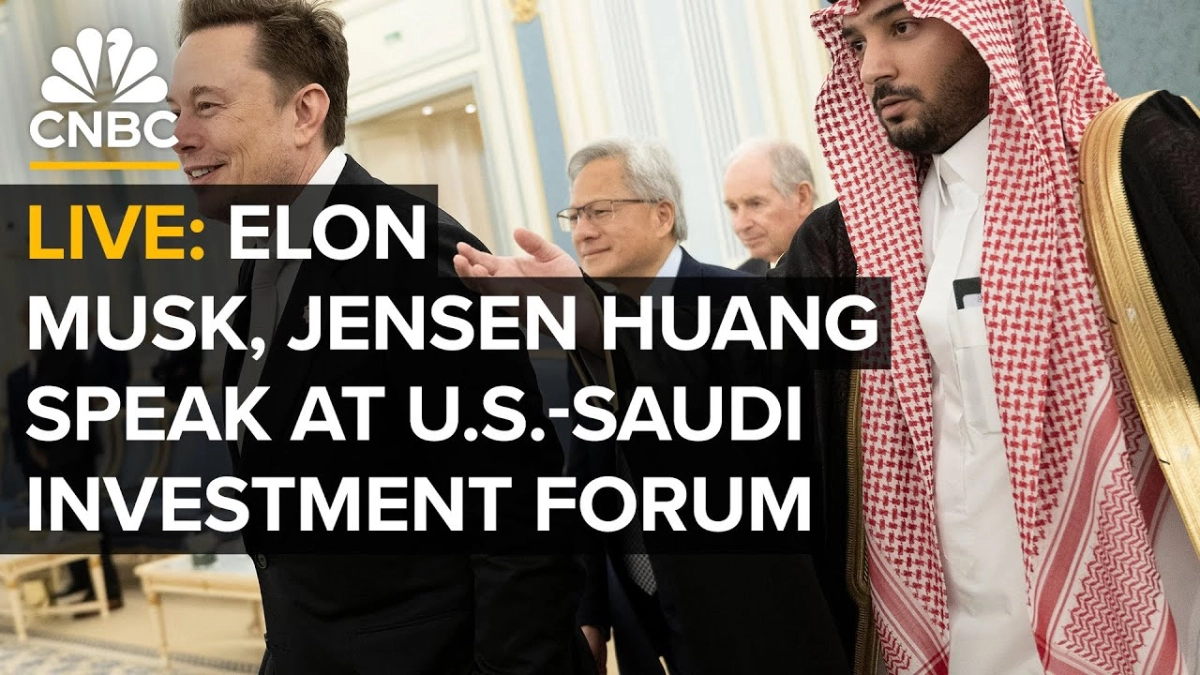
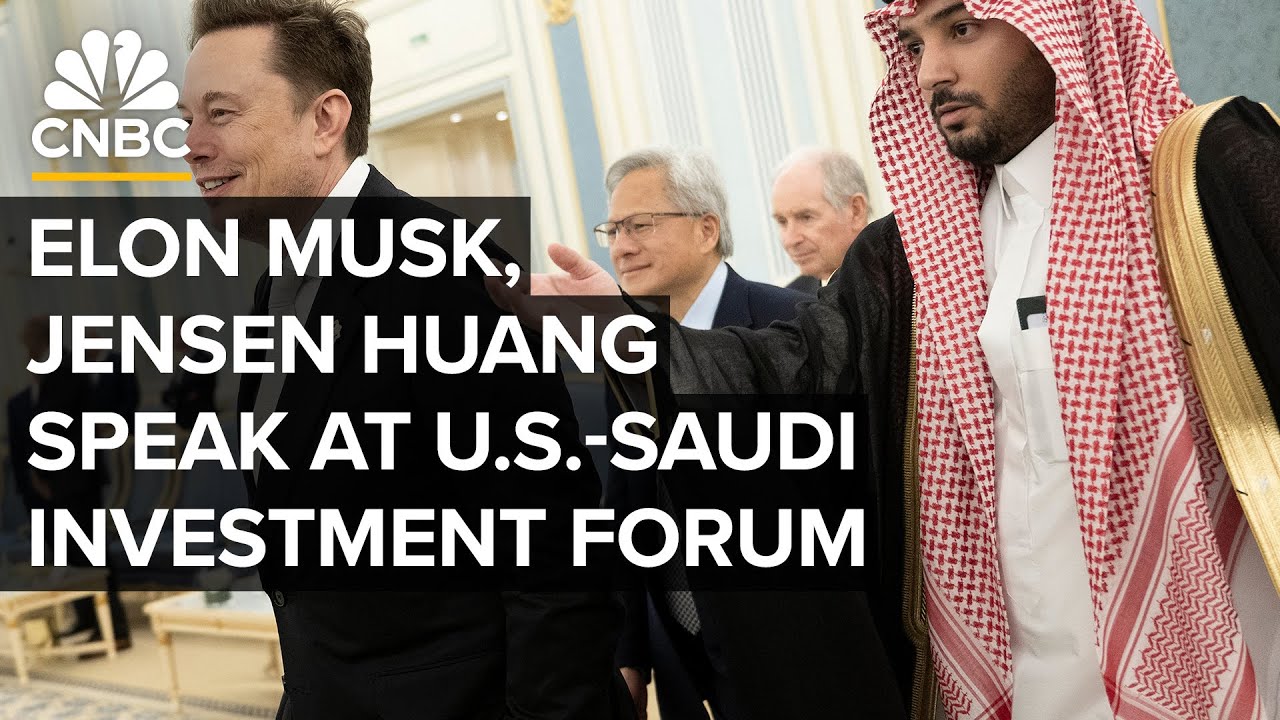
The recent U.S.-Saudi Investment Forum in Washington, D.C. served as a high-stakes arena for a profound discussion on the trajectory of artificial intelligence, featuring two of the industry's most influential figures. Tesla, SpaceX, and xAI CEO Elon Musk, alongside Nvidia Founder and CEO Jensen Huang, engaged in a candid exchange with CNBC's Becky Quick, dissecting everything from the scarcity of compute power to the potential advent of Artificial General Intelligence (AGI) and its societal implications. Their dialogue illuminated both the immense promise and the formidable challenges lying ahead for this transformative technology, offering a rare glimpse into the minds shaping its future.
A central theme emerging from their conversation was the stark reality of compute as the new bottleneck. Elon Musk was unequivocal in his assessment, stating, "The constraint on AI right now is compute. You can't get enough compute." He painted a picture of an industry ravenous for processing power, where the limiting factor isn't just funding or talent, but the sheer physical infrastructure required to train and run increasingly complex models. This scarcity, Musk argued, extends beyond specialized chips to the foundational energy required to power these vast computational networks, positing that electricity generation itself will soon become a critical choke point for AI's expansion.
Jensen Huang, while acknowledging the immense demand, offered a more optimistic counterpoint, rooted in Nvidia's relentless innovation. He highlighted the exponential improvements in chip architecture and software, which continuously drive down the effective cost of computation. "We're seeing a renaissance of computing," Huang declared, emphasizing how advancements in hardware and algorithms are making AI more accessible and efficient. This perspective suggests that while the raw demand for compute is undeniable, the industry's capacity for innovation in silicon and systems design is working to meet that demand, democratizing access to powerful AI tools rather than centralizing it due to scarcity.
The discussion also veered into the more philosophical realm of AI's transformative power and potential risks. Musk, ever the provocateur, did not shy away from the existential questions surrounding AGI. He reiterated his long-held belief that AI will be the most profound technological development in human history, exceeding even the internet or electricity in its impact. His concern centers on the potential for AI to surpass human intelligence, and the imperative to manage this transition responsibly, even advocating for some form of regulation, a stance he has consistently championed.
Huang, while equally impressed by AI's capabilities, maintained a focus on its current and near-term practical applications. He spoke of AI as a tool that enhances human capabilities, driving productivity and scientific discovery across countless domains. His vision is one where AI empowers individuals and industries, rather than immediately posing an existential threat. This difference in emphasis highlights a fundamental divergence: Musk often speaks of AI's ultimate destination, while Huang focuses on the journey of continuous innovation and practical deployment.